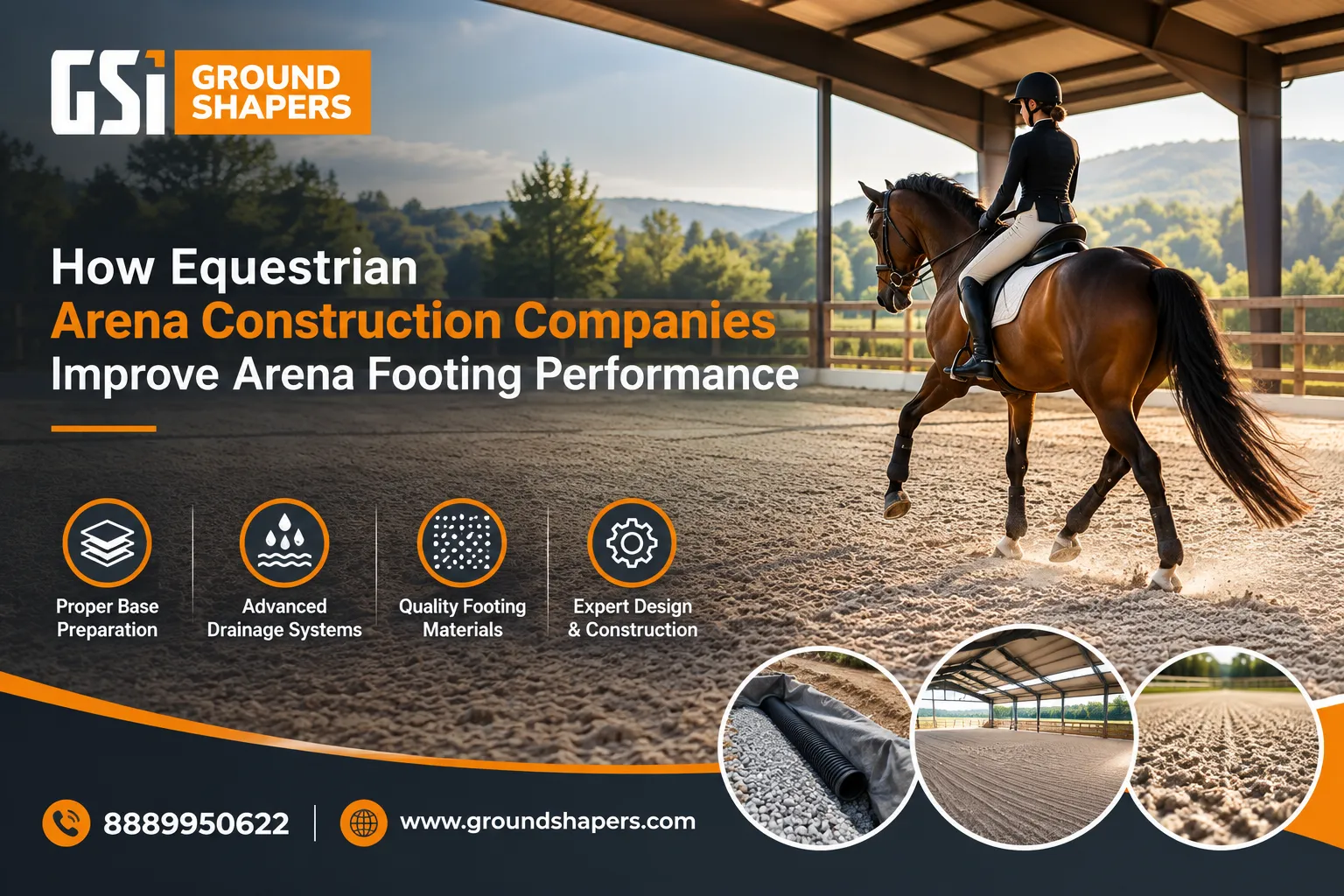

A quality riding arena is more than an open space covered with footing. The surface needs to provide stability, traction, cushioning, and consistent performance while supporting the comfort and safety of both horse and rider. Achieving these qualities requires careful planning from the ground up.
Professional equestrian arena construction companies consider factors such as site conditions, drainage, base preparation, footing materials, arena usage, and maintenance requirements when developing a riding surface. A properly constructed foundation can make a significant difference in how an arena performs over time.
Understanding the Importance of Arena Footing
Arena footing is the upper surface layer where horses and riders train, exercise, and compete. Its characteristics can influence movement, traction, and overall riding experience.
Footing that is excessively hard may provide insufficient cushioning, while footing that is too loose can make movement more difficult. Uneven or poorly maintained footing can also develop areas with different levels of firmness.
The goal is to create a surface with predictable characteristics across the arena. This requires more than simply selecting a particular footing material. The layers underneath the footing are equally important.
Starting with Proper Site Preparation
One of the first steps toward better footing performance is preparing the site correctly. Before construction begins, the site should be evaluated for slope, soil conditions, existing drainage patterns, and water movement.
Professional equestrian arena construction companies can use this information to develop an appropriate site-preparation strategy. Depending on local conditions, this may involve excavation, grading, compaction, or improvements to the existing ground.
A properly prepared site creates a stable platform for the arena's base layers. Without adequate preparation, problems such as settling, unevenness, and water accumulation can eventually affect the riding surface.
Building a Stable Base
The base beneath the footing plays a major role in arena performance. It provides structural support and helps distribute loads across the surface.
A properly installed base generally consists of carefully selected and compacted aggregate materials. The specific materials and thicknesses depend on factors such as soil conditions, climate, arena design, and intended use.
Compaction is particularly important. If the base is inconsistent, weak areas can develop beneath the footing. These areas may eventually contribute to depressions or changes in surface firmness.
Experienced equestrian arena construction companies understand that a durable footing system begins below the visible surface.
Managing Drainage Effectively
Water management is another critical component of footing performance. Excess moisture can alter the characteristics of many footing materials and potentially weaken the layers underneath.
An effective drainage design helps move water away from the arena rather than allowing it to remain trapped beneath the riding surface.
Drainage planning may include grading, perimeter drainage, subsurface drainage systems, and appropriate base materials. The correct approach depends on the site's soil, climate, topography, and expected water flow.
Good drainage can help maintain more consistent footing conditions and reduce problems associated with standing water or saturated subgrade materials.
Selecting Appropriate Footing Materials
There is no single footing material that works perfectly for every arena. Different disciplines, usage levels, climates, and maintenance preferences can require different approaches.
Common arena footing materials may include various types of sand, engineered blends, fiber additives, or other specialized materials. The important consideration is how the material performs as part of the complete arena system.
Factors to consider include:
- Traction
- Cushioning
- Stability
- Dust control
- Moisture retention
- Maintenance requirements
- Expected frequency of use
Professional equestrian arena construction companies can help facility owners understand how different footing options may perform under their specific site and usage conditions.
Creating Consistent Surface Depth
Even high-quality footing can perform poorly if it is distributed unevenly. Consistent footing depth helps create predictable conditions across the arena.
During construction and installation, contractors should account for the intended footing depth and ensure the surface is properly leveled. After installation, regular dragging and maintenance can help redistribute material that has shifted through use.
High-traffic areas may require particular attention because repeated movement can cause footing to migrate or compact differently from less-used sections.
Considering the Arena's Intended Use
An arena designed for casual schooling may have different requirements from one used for frequent jumping, dressage, training, or multiple equestrian disciplines.
Horse movement, traffic patterns, and usage frequency can all influence footing requirements.
Before construction, facility owners should communicate how the arena will be used. This allows equestrian arena construction companies to consider the expected demands when planning the base, drainage, and footing system.
A thoughtful design can help the arena accommodate its intended activities without unnecessary modifications later.
Maintaining Footing Performance
Construction establishes the foundation for performance, but ongoing maintenance remains essential.
Regular maintenance may include dragging or leveling the surface, removing debris, monitoring footing depth, and addressing areas that become compacted or uneven. Moisture management may also require attention depending on the climate and footing material.
Arena managers should regularly inspect the surface for changes. Early correction of minor problems can help prevent them from becoming larger maintenance issues.
Avoiding Common Footing Problems
Several common construction and maintenance mistakes can affect arena performance. These include inadequate site preparation, poor drainage planning, inconsistent compaction, inappropriate footing selection, and insufficient maintenance.
Trying to reduce construction costs by overlooking critical foundation or drainage work can potentially result in greater maintenance requirements later.
Working with experienced equestrian arena construction companies can help facility owners address these considerations during the planning stage rather than correcting avoidable problems after construction.
Final Thoughts
High-performing arena footing starts beneath the surface. Site preparation, base construction, drainage, footing selection, installation, and ongoing maintenance all contribute to the overall riding environment. Professional equestrian arena construction companies can bring these elements together into a coordinated construction plan based on the property's conditions and the arena's intended use. For facility owners planning a new riding arena or improving an existing one, focusing on the complete footing system—not just the visible top layer—can provide a stronger foundation for consistent performance, easier maintenance, and long-term arena usability.





















Sign in to leave a comment.