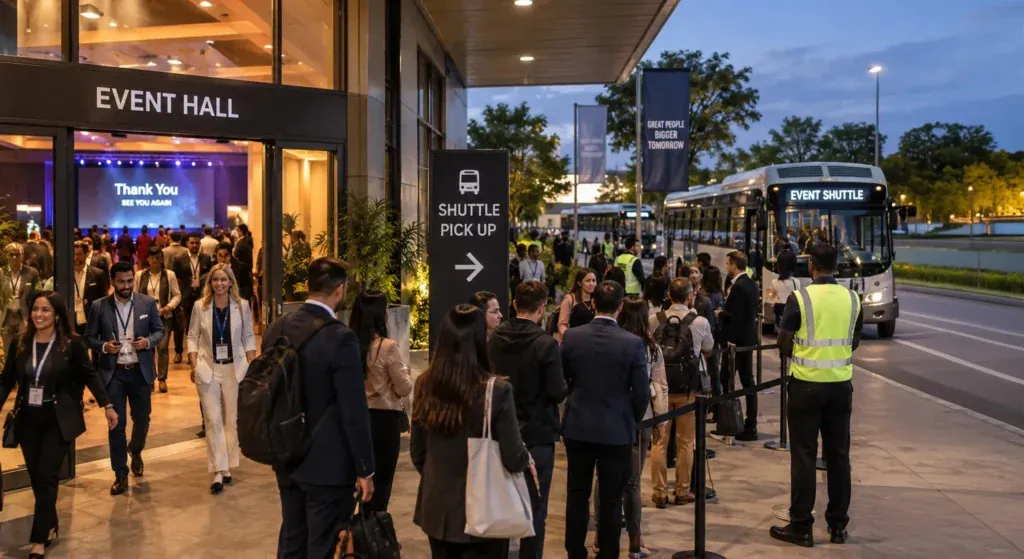

Event transportation creates a continuous flow of operational information. Vehicles complete trips, passengers move between locations, schedules change, and unexpected delays can occur. Reviewing this information after the event can help transportation teams understand actual performance and prepare for future operations.
Post-event transportation analytics focuses on turning operational records into useful insights. Teams can examine vehicle utilization, trip volume, on-time performance, delays, average and actual ETAs, route and stop performance, passenger volumes, pickup and drop-off activity, incidents, response times, idle time, and vehicle operating hours.
Passenger data is especially useful when evaluating transportation demand. PAX counting can show how many passengers used a particular route, vehicle, or service. This allows event teams to identify periods of higher demand and routes that may have been underused. These insights can support decisions around vehicle allocation and scheduling.
Real-time vehicle tracking provides another important source of information. By recording vehicle movements during the event, tracking systems allow teams to review actual routes, stops, travel times, delays, and deviations afterward. This can help identify differences between planned and actual operations.
An event transportation management platform can bring these different data points together. Tracking information, passenger counts, ETAs, alerts, and reports can provide a more complete view of transportation activity.
Once the analysis is complete, teams can use the findings to refine future event plans. They may review routes, adjust vehicle numbers, change schedules, or investigate repeated delays.
Consistent analysis creates a cycle of operational learning. Each event provides data that can help transportation teams better understand demand, fleet usage, and route performance for the events that follow.
Reference Blog: https://eventfalcon.com/a-guide-to-post-event-analytics-key-metrics-for-measuring-event-operational-performance/




























Sign in to leave a comment.