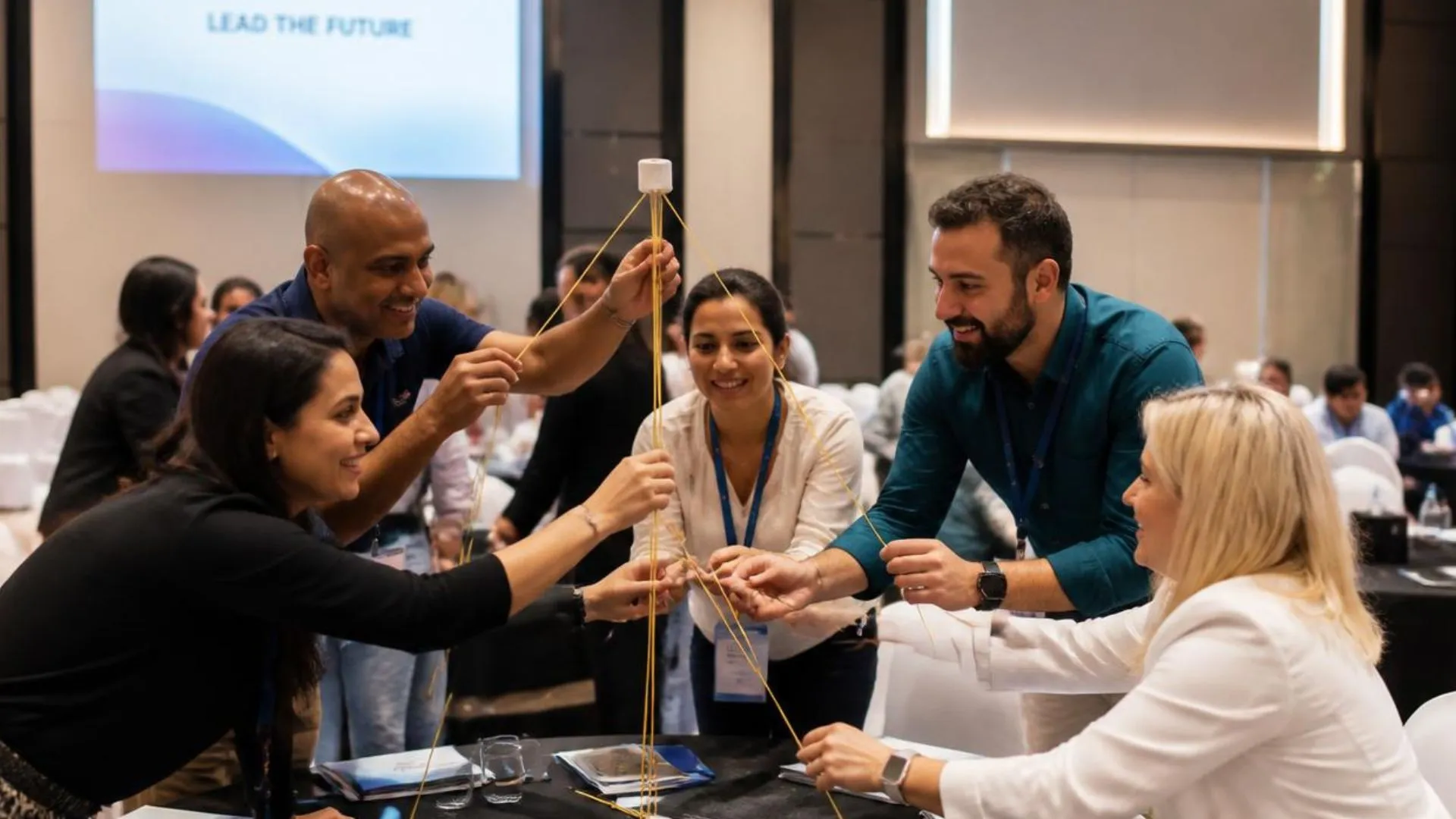


Corporate conferences have an important role to play in bringing people together, communicating business priorities and creating a shared sense of direction. However, a conference can lose its impact when attendees spend most of the day listening to presentations without having an opportunity to participate.
Experiential activities provide a practical way to change this. Instead of simply discussing leadership, strategy, collaboration or business performance, participants can explore these themes through realistic challenges, simulations and team-based exercises.
The result is a conference that does more than deliver information. It gives people an opportunity to apply ideas, work with colleagues and reflect on how the experience relates to their day-to-day roles.
Why traditional conference formats can lose engagement
Presentations, keynote speeches and panel discussions remain valuable for communicating information. The challenge is maintaining attention when an event relies almost entirely on passive learning.
Attendees may understand the message being presented but have limited opportunities to test their understanding or consider how it applies to their own work.
Experiential activities introduce a different dynamic. Participants have to make decisions, solve problems or work towards a shared objective. This encourages active involvement and can give people a stronger connection with the themes being discussed.
Choosing activities that support the purpose of the event
The most effective conference activities are not included simply for entertainment. They should support the reason the organisation is holding the event in the first place.
For example, a strategy-focused conference could use a business simulation that asks teams to make decisions affecting a fictional organisation. This can help participants explore strategic priorities, trade-offs and the wider consequences of business decisions.
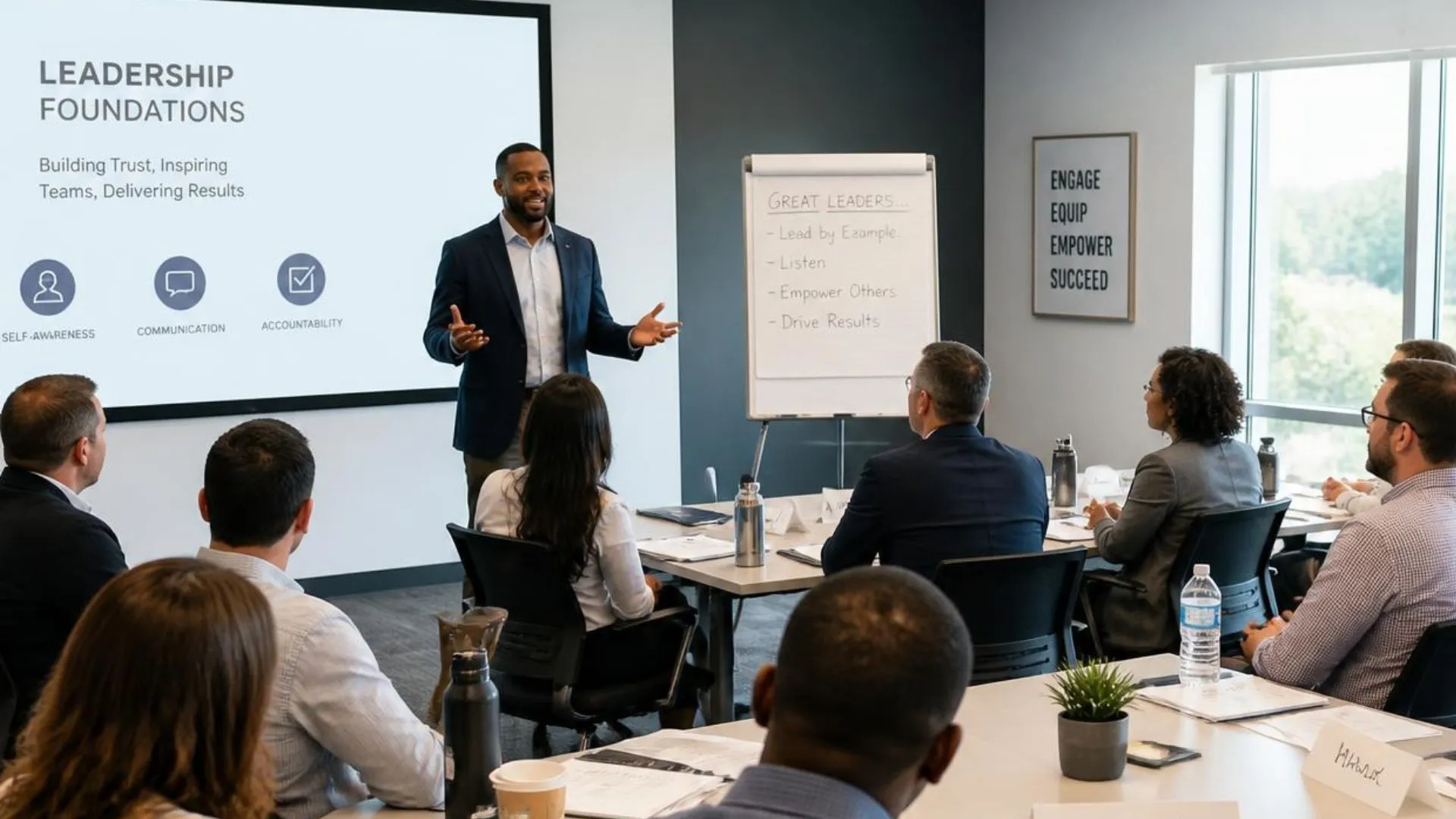
A leadership conference could use realistic scenarios that require participants to respond to changing circumstances, manage competing priorities and make decisions under pressure.
For a change-focused event, an interactive scenario could allow teams to explore how different decisions influence the implementation of organisational change.
This approach makes the activity part of the conference narrative rather than an unrelated break from the main programme.
Turning attendees into active participants
One of the biggest benefits of experiential learning is that it changes the role of the attendee.
Instead of listening to someone explain the importance of collaboration, participants may have to collaborate to complete a challenge. Instead of hearing about strategic decision-making, they may need to make strategic choices themselves.
Business simulations are particularly useful for this purpose. Participants can be given information about a realistic business situation and asked to decide how they would respond.
They might need to balance revenue against costs, respond to market changes, allocate resources or manage competing priorities. The exercise creates a practical environment in which participants can experience the consequences of different choices.
Creating stronger connections between teams
Corporate conferences often bring together people who would not normally work closely with one another. This can include employees from different departments, locations, business units and levels of seniority.
Experiential activities can take advantage of this mix by creating teams that include different perspectives.
A structured challenge may require participants to share information, challenge assumptions and reach a decision together. This can encourage communication while helping people understand how colleagues approach problems.
For larger organisations, these experiences can also help create stronger connections across functions and support a greater sense of shared purpose.
Using simulations to bring business challenges to life
A conference theme can be easier to understand when participants have the opportunity to experience it.
A simulation can recreate aspects of a real business environment without exposing the organisation to the consequences of real-world experimentation. Participants can test different approaches, make decisions and review the results.
For organisations considering experiential conference activities, simulations can therefore provide a structured way to connect conference themes with practical business situations.
The value is not simply in the activity itself. Facilitated discussion afterwards can help participants understand what influenced their decisions and what the experience might reveal about their normal ways of working.
Designing activities for different types of conferences
Experiential activities can be adapted to suit different corporate events.
Annual conferences can use team challenges to reinforce company priorities and encourage collaboration.
Sales conferences can incorporate commercial scenarios that require teams to consider customers, markets and business performance.
Leadership events can use decision-making simulations to explore how leaders respond to uncertainty and competing demands.
Strategy conferences can use business simulations to help participants understand trade-offs and the wider impact of strategic choices.
Team away-days can combine practical challenges with reflection to strengthen communication and collaboration.
The key is to match the activity with the intended outcome rather than choosing an exercise simply because it appears engaging.
Making learning more memorable
People often remember experiences differently from information presented to them. When participants actively make decisions and work through a challenge, the learning becomes connected to something they have actually done.
This can help reinforce important conference messages.
For example, a discussion about cross-functional collaboration may be forgotten after the event, while an activity in which participants experience the consequences of poor communication can provide a more memorable reference point.
This does not mean every conference needs to become a full training programme. Even one well-designed experiential session can provide a useful change of pace and reinforce the wider event theme.
Reflection turns activity into learning
Experiential activities are most valuable when participants have an opportunity to reflect afterwards.
A facilitator can ask what happened during the exercise, why particular decisions were made and what the experience might reveal about the way teams work.
Participants can then consider how the lessons apply to their own organisation. This could involve identifying communication challenges, decision-making habits or opportunities to collaborate differently.
Reflection helps move the experience beyond entertainment and towards meaningful workplace learning.
Creating a conference with a clear purpose
A successful corporate conference should give attendees more than a collection of presentations. It should create opportunities to understand business priorities, connect with colleagues and consider how ideas can be applied in practice.
Experiential activities can support this by making participants active contributors to the event. Simulations, business challenges and team exercises can bring abstract themes such as strategy, leadership and collaboration into a practical setting.
The most effective approach is to start with the desired outcome and then select an activity that supports it. When experiential learning is connected to the purpose of the conference, it can make the event more engaging, relevant and memorable while giving attendees something they can take back into the workplace.























Sign in to leave a comment.