The crew arrives at a decades old warehouse that is about to get a second life. New racking systems, taller than anything the original engineers imagined, need to bolt into concrete that was poured for a very different load. Somewhere in that gap between what the building was built for and what it now needs to carry someone has to make a decision about how the new steel actually connects to the old concrete. Get it wrong, and the failure shows up years later, quietly, in a crack or a shift nobody notices until it is too late. Get it right, and nobody ever thinks about it again. That second outcome is the whole point of a good anchoring system, and it rarely gets the attention it deserves until something goes wrong.
The Quiet Problem Behind Every Retrofit
Construction in 2026 looks less like clean slates and more like additions, extensions and retrofits layered onto existing structures, things like seismic codes have tightened while infrastructure timelines have compressed and a growing share of projects now involve connecting new elements to concrete that already exists, rather than pouring everything from the beginning. This shifts the burden onto post installed connections, especially on the rebar splices, the anchor bolts and the structural ties that have to perform as if they were part of the original pour. This sounds typical and actually it is because even one minor flaw and the structure loses its strength.
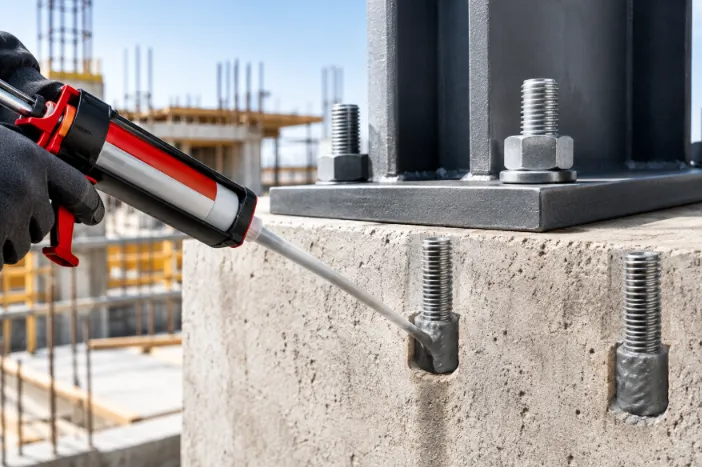
The major problem is that not every drilled hole behaves the same way. Concrete has a tendency to crack under load and temperature shifts, for example water tables interfere with dry installation assumptions, or diamond core drilling, now common in retrofit work, leaves a smoother bore than a standard hammer drill would. A mechanical anchor that relies on friction or expansion can struggle in these conditions. This is where Fischer injection mortar earns its place, because it does not depend on friction at all. It bonds.
Industry research across Asia Pacific, including India, keeps pointing to the same trend. Chemical anchoring adoption is growing faster here than almost anywhere else largely because urbanisation and infrastructure spending are colliding with stricter seismic and safety codes. Contractors are not choosing chemical anchors because they are fashionable they are choosing them because mechanical fixings are running out of room to perform under these newer harder conditions.
What Actually Happens Inside an Injection System
Here is the part that rarely gets explained well. The Fischer injection mortar system is not a single tube of adhesive. It is a two component epoxy resin, kept in separate chambers, that only mixes at the point of use. When the cartridge is loaded into the applicator, resin and hardener travel together through a static mixer and combine only as they are extruded into the drilled hole. Nothing activates early. Nothing cures in the cartridge before it reaches the concrete.
That detail is the real player and the main character here, a mortar that cures unevenly or too early creates weak points that no inspection catches until load testing or worse until real use. Keeping the two components separate until the moment of application means every batch behaves the same way on site, whether it is the first cartridge of the day or the last.
There is also flexibility built into how deep the anchor sits. The rod or threaded anchor can be set at variable anchorage depths which lets an engineer match the embedment to the actual load the connection needs to carry rather than defaulting to a one size answer. That single adjustment can be the difference between over-engineering a connection out of caution and getting a calculated, efficient design that still holds.
Picture a bridge widening project, where new rebar has to tie into an existing deck slab. The engineer is not just drilling a hole and hoping. The system is rated for rebar connections from 8 mm up to 40 mm in diameter, and its European Technical Assessment supports a service life of up to 100 years for post installed rebar connections. That number is not marketing language. It comes from third party structural assessment the kind that engineers actually check before signing off on a design.
Handling the Conditions Standard Mortars Struggle With
So what happens when the concrete itself is compromised? This is where Fischer FIS EM Plus becomes the more specific answer. It is formulated to hold its load-bearing capacity in cracked concrete, not just the ideal, uncracked slabs that textbooks describe. It also performs in steel fibre reinforced concrete, which behaves differently under stress than plain concrete does.
Two more approvals matter here and they are not ignorable. The mortar carries approval for diamond drilled and water filled drill holes which covers two of the most common headaches in retrofit and infrastructure work. Diamond drilling produces a smoother bore that some resins struggle to grip and a water filled hole can wash out weaker formulations before they cure. FIS EM Plus is also rated for seismic performance categories C1 and C2 which speaks directly to earthquake prone regions where a connection has to survive not just a static load but repeated unpredictable stress.
Let us imagine a retrofit project that is tying new structural steel into an older building that predates current codes. The concrete already has hairline cracking from decades of settling. A standard adhesive might bond well in a lab sample, but this is not a lab. The structural chemical mortar approach behind FIS EM Plus was built for exactly this kind of imperfect, real world substrate, which is why it keeps showing up in code driven retrofit work rather than only new construction.
Why This Extends Beyond Rebar
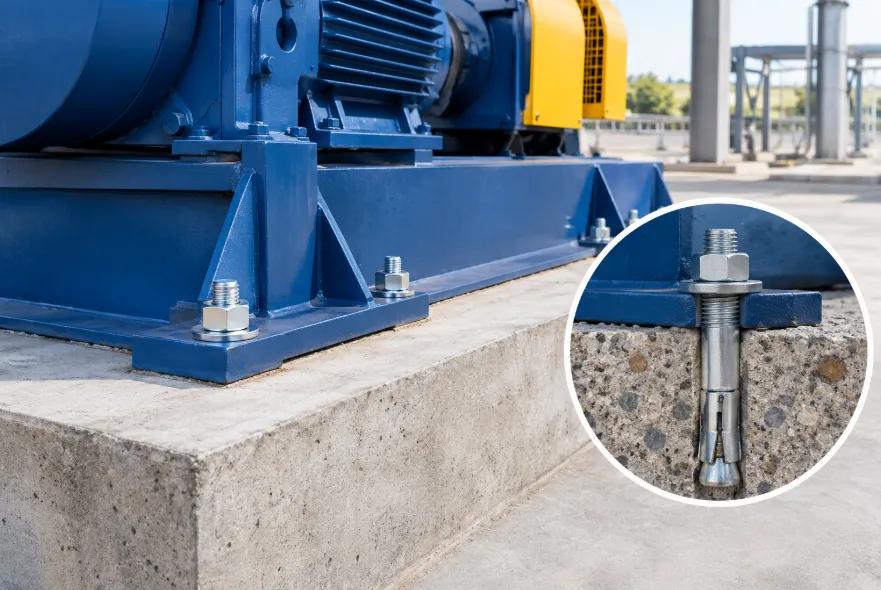
It would be easy to assume this technology is only about steel bars going into concrete, but that undersells what a heavy duty concrete injection resin actually does on a job site. The same system handles facade fixings, heavy racking installations, shear connectors between concrete layers, and structural steel connections, indoors and outdoors. It even carries approval for anchoring into glued laminated or solid timber, spruce, fir and pine specifically, which opens the door to timber concrete steel hybrid connections that are becoming more common in sustainable and mixed material construction.
There is a practical scheduling benefit too. The mortar can be processed at temperatures down to minus 5 degrees Celsius which matters more than it seems on paper cold weather has traditionally forced contractors to pause chemical anchoring work or accept slower cure times that throw off a project schedule a resin that stays workable in colder conditions keeps a retrofit or infrastructure project moving through seasons that would otherwise stall it.
Choosing the Right System Instead of Guessing
None of this is useful if the wrong variant gets specified for the wrong job. Cartridge size, cure time and substrate compatibility all shift depending on whether the application is a small facade fixing or a large diameter rebar connection on a bridge deck. This is where procurement and engineering teams earn their keep by checking the actual documentation rather than assuming one injection mortar behaves like another.
What should someone actually ask for before signing off on a supplier? The real answer is documentation not marketing claims. European Technical Assessments and Declarations of Performance exist precisely so that an engineer or procurement head can verify a product is rated for performance rather than take a data sheet at face value asking for current valid certification is not bureaucratic caution. It is the same due diligence that separates a connection built to last decades from one that merely looks fine on installation day.
The Connection Nobody Notices Until It Fails
There is something almost invisible about good anchoring work. Nobody photographs a rebar splice for a project brochure. Nobody praises a facade fixing that quietly holds for thirty years without incident. The entire value of a system like this shows up in the absence of a problem which makes it easy to underinvest in until something goes wrong.
Maybe that is the real question worth sitting with. As more of the next decade's construction becomes retrofit and extension rather than fresh builds, how much of a structure's long term safety will come down to a connection point that almost nobody ever thinks about twice?



























Sign in to leave a comment.