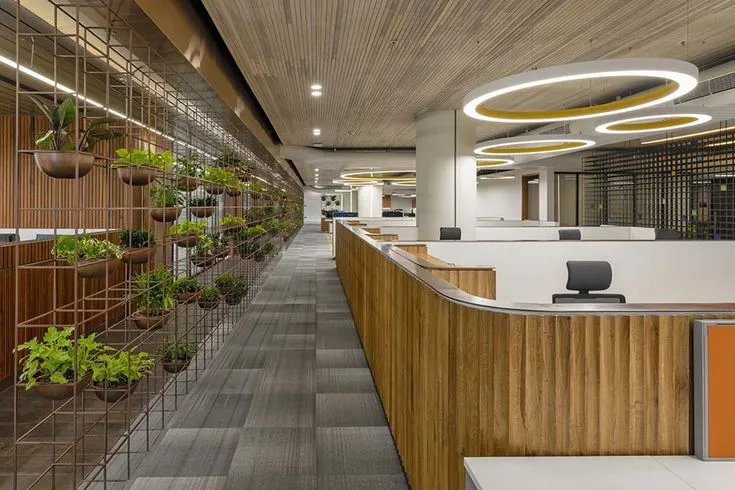

Two or three years into hybrid work becoming permanent rather than temporary, a lot of offices across Gurgaon are starting to feel out of sync with how people actually use them. Rows of assigned desks that sit empty three days a week, meeting rooms built for a headcount that no longer comes in daily, and layouts designed for a five-day-a-week office culture that simply doesn't exist anymore. This mismatch is now driving one of the biggest waves of office interior design activity the city has seen in recent years.
Why Old Office Layouts Don't Work Anymore
Most offices in business hubs like Cyber City, Udyog Vihar, and Golf Course Road were originally designed around fixed seating — one desk per employee, department-wise seating blocks, and a handful of large conference rooms. That model made sense when everyone came in five days a week. It makes far less sense when average daily occupancy has dropped to 50-60% on most days, with sharp spikes on specific "anchor days" when teams coordinate to come in together.
Companies that haven't adjusted their office interiors to this pattern often end up with a strange mix of empty desks on quiet days and overcrowded, chaotic floors on peak days — which is exactly the kind of problem well-planned office interior design is meant to solve.
What a Hybrid-Ready Office Actually Looks Like
A few clear patterns have emerged among companies in Gurgaon that have successfully redesigned their offices around hybrid work:
- Neighborhood seating instead of fixed desks — teams get a designated zone rather than individual assigned desks, giving flexibility for daily headcount changes without total chaos.
- A higher ratio of collaboration space to individual desks — since focused solo work often happens from home, in-office time is increasingly reserved for meetings, brainstorming, and team syncs.
- Smaller, bookable meeting pods — replacing a few large conference rooms with more numerous small meeting spaces that match how hybrid teams actually collaborate.
- Technology-integrated spaces — better video conferencing setups, hybrid meeting rooms with cameras and mics built into the room design itself, not added as an afterthought.
The Design Challenge Nobody Talks About
The tricky part of designing for hybrid work isn't adding more meeting rooms or removing some desks — it's designing a space that still feels good on both a quiet Tuesday and a packed all-hands Thursday. An office that feels empty and lifeless most of the week, but suddenly overcrowded on specific days, creates a poor experience either way.
This is a genuinely difficult balance to get right, and it's why many companies redesigning their offices in Gurgaon are now involving experienced office interior designers early in the process, rather than trying to solve it internally through trial and error. Getting the ratio of flexible-to-fixed space wrong is expensive to correct after the fact — walls, electrical points, and furniture systems aren't easy to undo once installed.
Where SKV Fits Into This
This is where SKV, an experienced office interior design company, tends to make a real difference — they've worked across enough hybrid-office redesigns in Gurgaon to know which layout decisions hold up over time and which ones look good on paper but fall apart once real usage patterns kick in.
A Few Mistakes Worth Avoiding
Companies redesigning for hybrid work in Gurgaon commonly run into a few avoidable issues:
- Removing too many desks too quickly, without data on actual occupancy patterns, leading to seating shortages on peak days
- Over-investing in tech for empty rooms, adding expensive AV setups to meeting rooms that end up underused
- Ignoring acoustics in open collaboration zones, which becomes a bigger problem as more of the office shifts to shared, informal space
Treating this as a one-time redesign, when hybrid work patterns themselves keep evolving and offices need to be built with some future adjustment in mind.
Gurgaon's office market is going through a genuine shift, not just a temporary adjustment. Companies that redesign their interiors around how their teams actually show up to work — rather than how they used to show up pre-pandemic — are the ones creating offices that feel purposeful five days a week, whether ten people are in or a hundred.






















Sign in to leave a comment.