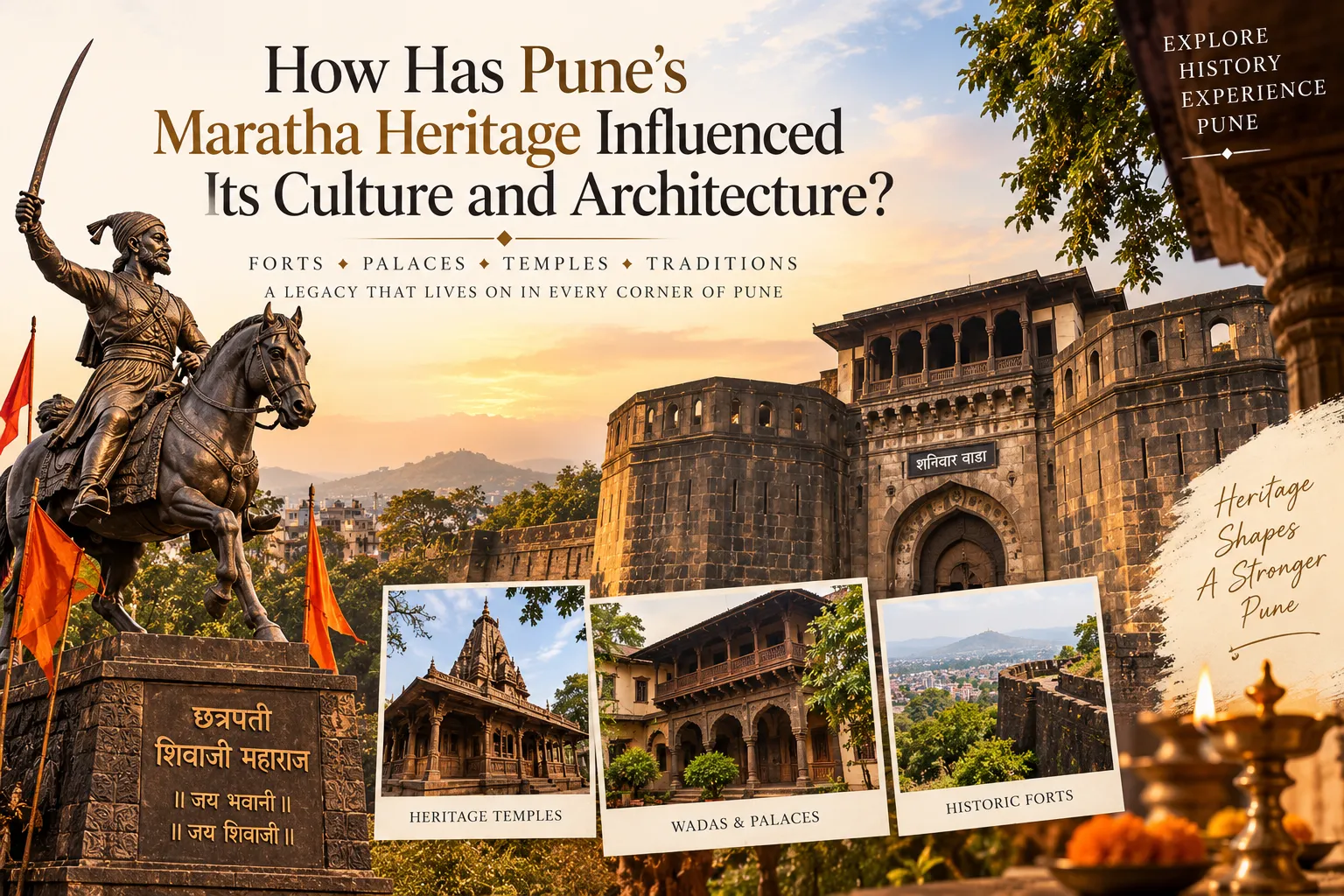

Pune’s identity is deeply connected with its Maratha heritage in Pune, which has shaped the city’s traditions, architecture, festivals, food, and everyday cultural life. From the historic lanes around Shaniwar Wada to ancient forts and temples, Pune reflects the legacy of the Maratha and Peshwa eras. Today, this heritage continues to make Pune an interesting destination for travellers who want to explore Maharashtra’s history while experiencing its modern urban character. For visitors planning a heritage trip, choosing one of the conveniently located hotels in Pune can make exploring the city easier.
Pune’s Rise as a Centre of Maratha History
Pune became increasingly important during the 17th and 18th centuries, particularly as the Maratha Empire expanded. The city later emerged as an important political and administrative centre under the Peshwas. During the time of Peshwa Bajirao I, Pune experienced considerable urban development and became a centre for cultural activities.
This historical transformation can still be seen across the city. Traditional neighbourhoods, temples, old residential areas, and historic structures provide glimpses into Pune’s past. As a result, the city’s heritage is not limited to individual monuments; it forms part of Pune’s broader cultural landscape.
For travellers interested in exploring the city's heritage, staying at a hotel near Shaniwar Wada can provide convenient access to one of Pune’s most recognised historical landmarks.
How Maratha Architecture Shaped Pune
One of the most visible influences of Maratha rule is architecture. Shaniwar Wada, built by the Peshwas, remains one of Pune’s most recognised historical landmarks and an important reminder of the city’s Peshwa-era past.
Maratha-era architectural traditions often combined practical planning with decorative details. Forts, gateways, courtyards, temples, wooden structures, and defensive features reflected the needs of the period. Nearby destinations such as Sinhagad and Shivneri also demonstrate the strategic importance of fort architecture in Maratha history. Sinhagad, for example, played a significant role in the expansion and consolidation of Maratha power.
These structures make exploring Pune historical places an opportunity to understand how architecture was connected with administration, defence, religion, and community life.
Travellers searching for the best hotels in Pune can consider accommodation that offers convenient access to the city’s major heritage and cultural attractions.
Cultural Traditions That Continue Today
The influence of the Maratha period extends beyond buildings. Pune’s cultural identity has developed through generations of festivals, religious traditions, performing arts, food, and community celebrations.
Ganeshotsav is particularly important to Pune’s cultural story. The public celebration of Ganeshotsav was popularised in Pune by Bal Gangadhar Tilak in the late 19th century, transforming the festival into a large public gathering with wider social and cultural significance.
Traditional Marathi cuisine, local markets, religious sites, and cultural events further contribute to the city’s distinctive character. Visitors can therefore experience Pune cultural heritage not only by visiting monuments but also by observing the city’s living traditions.
Exploring Pune’s Heritage Today
For travellers, Pune offers a convenient combination of history, culture, food, and contemporary experiences. Historic attractions such as Shaniwar Wada, Sinhagad Fort, Parvati Hill, Kasba Ganpati, and Shivneri Fort provide different perspectives on the region’s past. Maharashtra Tourism also identifies Pune as a major cultural and historical destination with attractions spanning religious, historical, and natural experiences.
For visitors planning a comfortable stay while exploring the city, Sayaji Pune is located on the Mumbai-Bangalore Bypass Highway in Wakad. The property offers contemporary rooms, dining experiences, and event spaces, making it suitable for travellers combining heritage exploration with a modern stay. Its location also provides a practical base for experiencing Pune’s attractions and wider city life.
As a premium hotel in Pune, Sayaji Pune provides a comfortable setting for travellers returning after a day of exploring historical sites and cultural attractions. Its location in Wakad also makes it a practical option for visitors looking for a hotel near Wakad while exploring Pune.
Conclusion
The Maratha heritage in Pune has influenced far more than the city’s historic buildings. It has shaped its architecture, religious traditions, festivals, neighbourhoods, and cultural identity, creating a connection between Pune’s past and present. Exploring Pune historical places offers travellers an opportunity to understand this legacy while experiencing the city’s evolving character. For a comfortable Pune stay, consider Sayaji Pune as a base for discovering the city’s history, culture, and modern attractions.





















Sign in to leave a comment.