Power cables are subject to moisture, dust, abrasion and mechanical stress, particularly at the joints, terminations and exposed areas. This can damage insulation or contaminate sensitive interfaces. A correctly selected heat shrink product adds a protective layer around those areas.
What is heat shrink tubing?
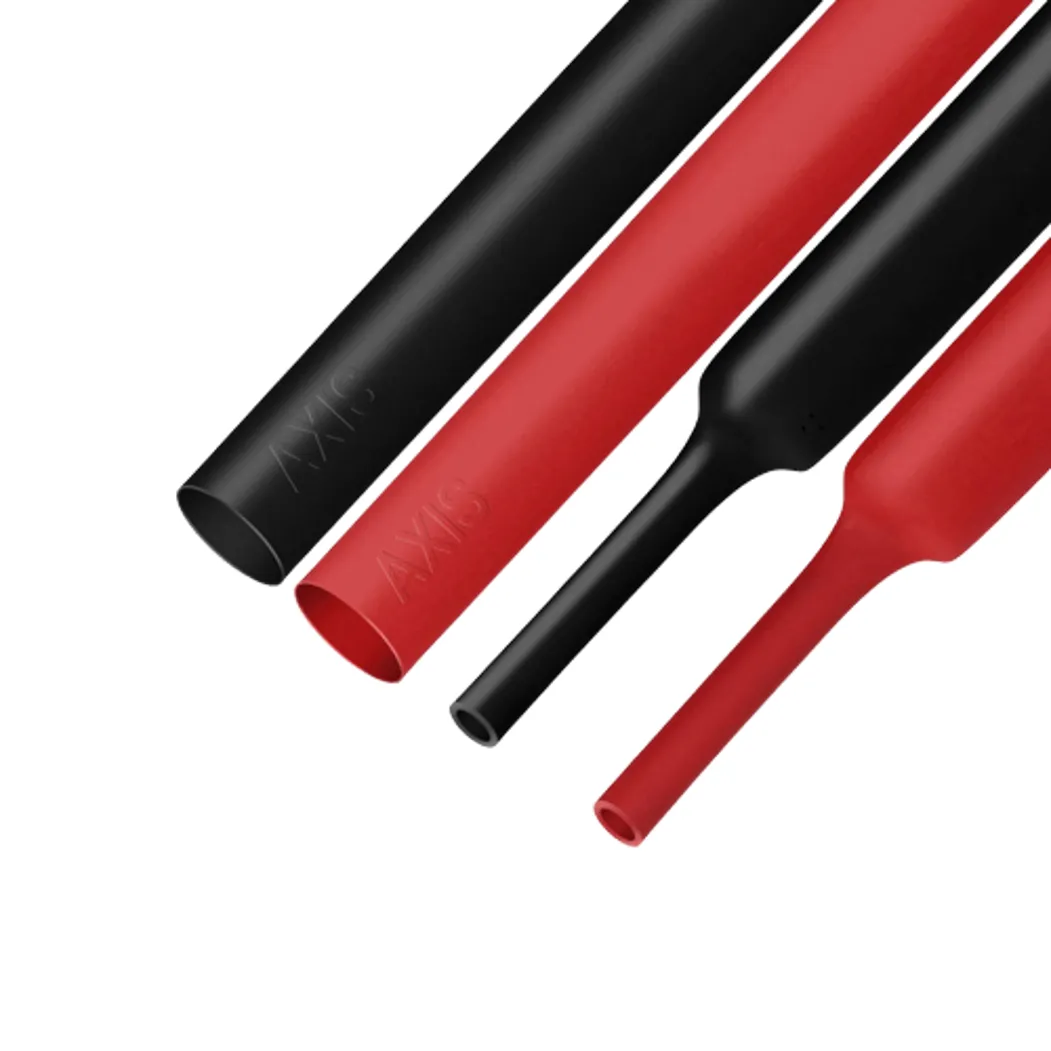
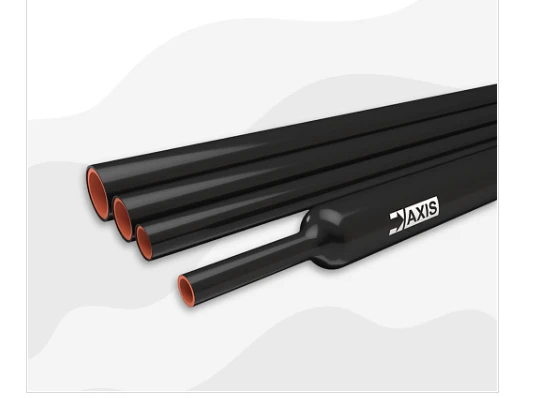
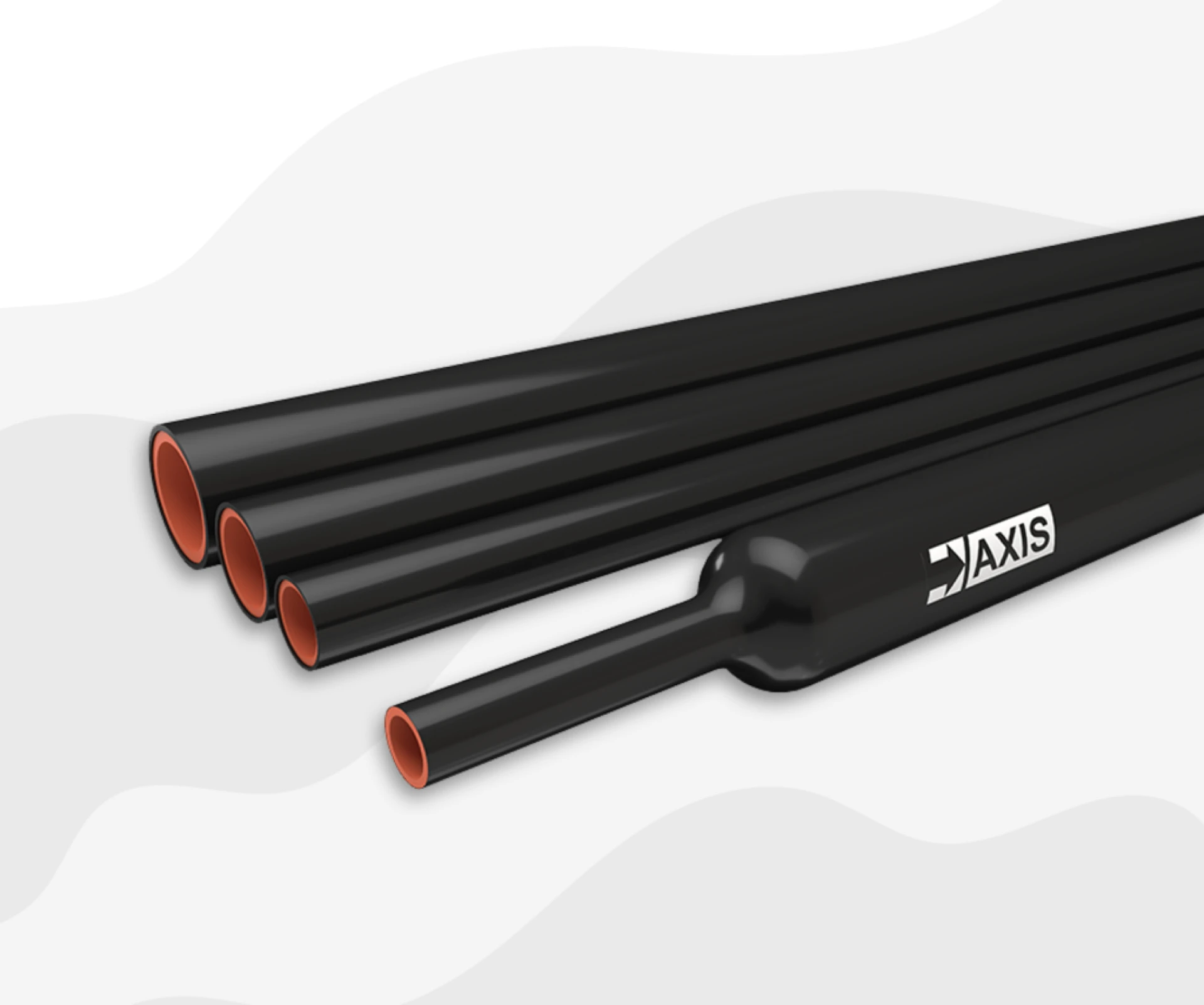
Heat shrink tubing is supplied in an expanded form and shrinks when heated during installation. As it contracts, it fits closely around the cable or component, creating an insulating or protective layer suited to the application.
| Application | Suitable heat shrink solution | Main purpose |
| Cable insulation | Heat shrink tube | Adds insulation and mechanical protection |
| Cable end | Heat shrink termination kit | Provides insulation, sealing and stress control |
| Cable-to-equipment connection | Termination kit | Protects the cable termination |
| Joining two cables | Straight through joint kit | Restores insulation, sealing and cable protection |
| Outdoor cable connection | Heat shrink tubing | Helps protect against moisture and environmental exposure |
How heat shrink tubing protects cable insulation
A heat shrink tube adds another barrier over the existing cable insulation. At exposed sections, that barrier helps reduce contact with dust, moisture and minor abrasion.
The benefit becomes more important at connection points, termination areas and joints, where the cable surface may have several interfaces. Correct coverage helps maintain insulation around these vulnerable sections.
Seals against moisture and contaminants
Moisture can be absorbed in small gaps between cable interfaces and then migrate to the insulation or other exposed areas. Another source of contamination can be dust, pollution and dirt, especially in outdoor installations.
For adhesive-lined products, heating melts the adhesive so it flows around the interface and forms a seal as the material cools. A standard non-adhesive tube does not provide this adhesive seal, so the product construction must match the sealing requirement.
How heat shrink tubing protects against mechanical damage
Cable surfaces can face abrasion during handling, movement and installation. A suitable heat shrink wall thickness adds another layer of protection against abrasion, handling damage and other mechanical exposure.
Vibration and repeated movement can create another type of stress. The right product can protect exposed sections and support strain relief where the cable needs controlled mechanical support.
Protects cable termination points
A cable end needs controlled insulation, sealing and stress control at the termination. Heat shrink termination kits bring these functions together through components selected for the cable and voltage class.
For cable termination, the termination kit must match factors such as cable dimensions, conductor arrangement, insulation type and installation environment. An outdoor termination may need greater resistance to moisture, UV exposure, dust and pollution than an indoor installation.
Supports reliable straight-through cable joints
A cable joint reconnects conductors inside the cable run, so you must restore the insulation and outer protection removed during joint preparation. A straight-through joint kit provides components for functions such as insulation restoration, sealing, shielding or stress control and mechanical protection, depending on the cable system and kit design.
This matters at the joint interface itself. Poorly matched components can leave gaps, reduce protection or expose the restored cable section to moisture and mechanical stress.
How to choose the right heat shrink product
Start with the system voltage and cable dimensions. Then check the installation environment, temperature exposure, UV conditions, moisture, pollution and mechanical stress.
Shrink ratio and wall thickness matter too. The selected product should have the correct recovered size and construction for the cable diameter and required protection.
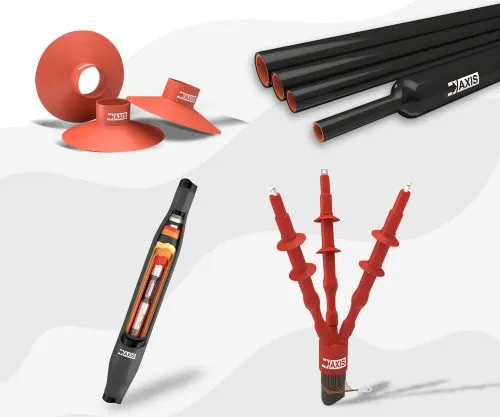
At Axis, we manufacture heat shrink tubing, heat shrink termination kits, and straight-through jointing solutions for LV and MV cable applications. Our heat-shrink products are tested to IEC 60502-4, and we offer cable accessories for applications up to 33 kV.
Need help selecting the right termination kit or straight-through joint kit? Talk to the Axis team with your cable type, voltage level and installation conditions, and we can help you identify the appropriate solution.
FAQs
What is the difference between heat shrink tubing and a heat shrink termination kit?
Heat shrink tubing is a protective material used around cables or components. A heat shrink termination kit is a complete set of components designed to terminate a cable at electrical equipment, with insulation, sealing and stress-control components selected for the application.
Does every heat shrink tube contain adhesive?
No. Adhesive-lined and non-adhesive tubes have different sealing functions.
What does a termination kit contain?
It contains the components needed to complete a cable termination for a specified cable and voltage class.
What does a straight-through joint kit protect?
It can restore insulation, sealing, stress control, shielding and mechanical protection, based on the kit design.
How should heat shrink products be selected?
Check voltage, cable dimensions, environment, temperature, mechanical stress, shrink ratio and wall thickness.
Protect the cable where it matters most.
The right heat shrink solution can help protect insulation, cable terminations and joints from the conditions that cause premature failure.
Explore Axis heat shrink solutions for cable protection, cable termination and straight-through jointing or speak with our team about the right product for your application.


















Sign in to leave a comment.