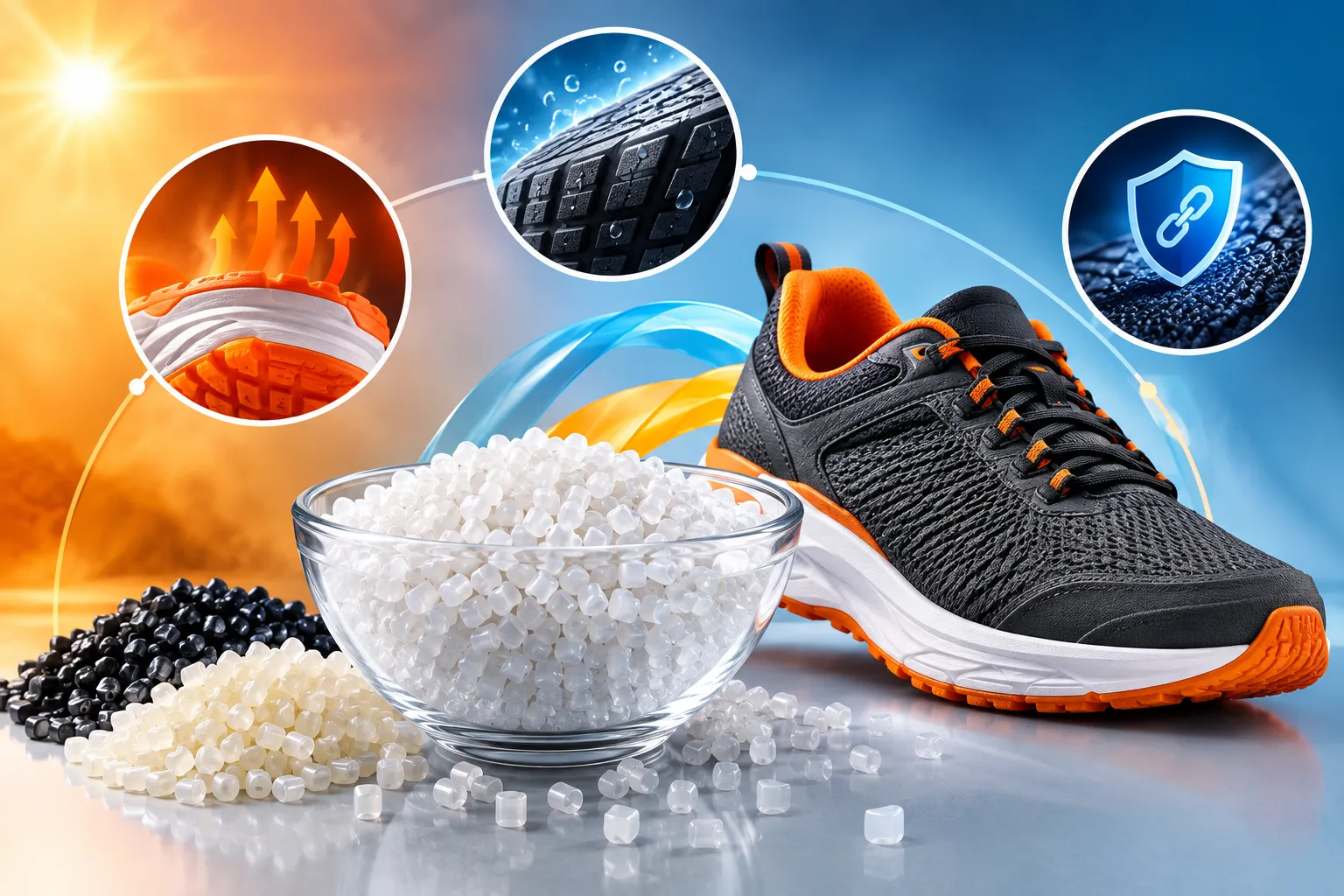

PVC is widely used in footwear manufacturing because it can be processed into different shapes, textures, and designs while offering flexibility and durability. However, PVC can face processing challenges when exposed to high temperatures during manufacturing. Excessive heat can cause discoloration, degradation, poor surface finish, and inconsistent product quality. For manufacturers, these problems can increase material wastage and affect production efficiency. This is where suitable heat stabilizers can become an important part of a PVC shoe formulation.Heat Stabilizers for Shoes are used to help protect PVC during processing and support better thermal stability. When the appropriate stabilizer is selected and used correctly, it can help manufacturers manage heat-related processing issues and achieve more consistent footwear production.
Why Does PVC Need Heat Stabilization?
PVC requires heat during different stages of footwear production, including mixing, compounding, molding, extrusion, and other processing operations. However, PVC is sensitive to excessive heat. If the material is not adequately stabilized, thermal degradation can begin during processing.
This degradation can result in several visible and production-related problems, including yellowing or discoloration, changes in material properties, surface defects, and inconsistent finished products. A suitable heat stabilizer helps improve the thermal stability of the PVC formulation, allowing the material to withstand processing conditions more effectively.
Common Problems in PVC Shoe Manufacturing
Shoe manufacturers can experience various problems when their PVC formulation does not provide adequate thermal stability.
1. Discoloration During Processing
Unexpected color changes are a common concern in PVC processing. Excessive heat exposure can affect the appearance of the material, which becomes particularly problematic when manufacturing colored or light-colored footwear.
A suitable stabilizer system can help reduce heat-related degradation and support better color retention during processing.
2. Poor Surface Finish
Footwear products often require a smooth and consistent surface. Processing instability can contribute to surface imperfections that affect the final appearance.
Maintaining suitable thermal stability can help create more consistent processing conditions and reduce problems associated with PVC degradation.
3. Inconsistent Product Quality
When PVC behaves differently from one production batch to another, manufacturers may face difficulties maintaining consistent shoe quality. This can lead to rejected products, additional adjustments, and increased production costs.
Using appropriate stabilizers as part of a properly designed formulation can help manufacturers maintain greater consistency.
4. Material Wastage
Processing defects can result in rejected soles, footwear components, or other PVC products. Repeated production issues increase material consumption and can reduce overall manufacturing efficiency.
Better control of PVC processing can help minimize avoidable wastage and improve the utilization of raw materials.
How Heat Stabilizers Help
Heat stabilizers are incorporated into PVC formulations to improve the material's resistance to thermal degradation during processing. Their role is particularly important when PVC is exposed to elevated temperatures.
A suitable stabilizer system can help:
- Improve thermal stability during processing
- Reduce heat-related discoloration
- Support consistent processing
- Maintain better product appearance
- Reduce processing-related defects
- Improve formulation stability
- Support more efficient PVC manufacturing
The actual performance depends on the formulation, processing conditions, stabilizer type, and dosage. Therefore, manufacturers should select stabilizers according to their specific application rather than using a one-size-fits-all approach.
Choosing the Right Stabilizer for PVC Footwear
Selecting the right stabilizer requires understanding how the PVC formulation will be processed. Factors such as processing temperature, production equipment, PVC grade, plasticizers, pigments, fillers, and the desired properties of the finished footwear can all influence stabilizer requirements.
For example, a manufacturer producing flexible PVC footwear may have different formulation requirements from a manufacturer producing rigid or semi-rigid PVC components.
Before selecting a product, manufacturers should discuss their application with the supplier and provide relevant information about their production process. This can make it easier to identify a suitable stabilizer solution.
Why Product Consistency Matters
A heat stabilizer is only useful when its performance remains consistent from batch to batch. Variations in an additive can create changes in processing behavior and may require manufacturers to adjust their formulations.
For this reason, footwear manufacturers should consider suppliers that maintain controlled manufacturing and quality-checking processes. Consistent product specifications can help manufacturers achieve more predictable results during production.
Quality should therefore be considered alongside price when purchasing industrial stabilizers. A lower-cost product that creates processing problems may ultimately increase production expenses through wastage and downtime.
Heat Stabilizers and Different PVC Shoe Applications
PVC is used in the footwear industry for various products and components, including soles, sandals, slippers, boots, and other footwear applications. Each application may have different requirements related to flexibility, appearance, durability, processing, and thermal stability.
Heat stabilizers can form part of the overall PVC formulation used to achieve these requirements. However, the stabilizer should be selected based on the complete formulation rather than considering it as an isolated ingredient.
Manufacturers can work with experienced stabilizer suppliers to evaluate their specific production requirements and identify an appropriate solution.
How to Solve Persistent Processing Problems
If a PVC shoe manufacturer is experiencing discoloration, surface defects, inconsistent output, or excessive wastage, simply increasing the stabilizer dosage may not always solve the problem.
The first step should be to identify the actual cause. Manufacturers can review processing temperatures, residence time, PVC quality, equipment conditions, plasticizer levels, fillers, pigments, and stabilizer performance.
If the issue is related to thermal stability, reviewing the existing stabilizer system with a knowledgeable manufacturer can help identify potential improvements. A systematic approach is more effective than making repeated formulation changes without understanding the underlying problem.
Why Choose Ala Polystabs?
Ala Polystabs manufactures and supplies industrial stabilizers and specialty additives for PVC and related applications. Our product range includes heat stabilizers, PVC One Pack Stabilizers, Calcium Stearate, Zinc Stearate, Lead Stearate, Tribasic Lead Sulphate, and other industrial additives.
We understand that footwear manufacturers require consistent products that work effectively with their specific processing requirements. Our approach focuses on understanding the application, maintaining product quality, and providing practical support to customers.
For manufacturers looking for Heat Stabilizers for Shoes, selecting a reliable product and discussing the application requirements with an experienced supplier can help address common PVC processing challenges.
Conclusion
PVC shoe manufacturing requires careful control of temperature, formulation, and processing conditions. Without adequate thermal stability, manufacturers may experience discoloration, surface defects, inconsistent quality, and unnecessary material wastage.
The right heat stabilizer can help improve PVC's resistance to thermal degradation and support more stable processing. However, selecting the appropriate product requires consideration of the complete formulation and manufacturing process.
By identifying the root cause of processing problems, choosing consistent-quality stabilizers, and working with an experienced manufacturer, PVC footwear manufacturers can build a more reliable and efficient production process.

























Sign in to leave a comment.