

India’s industrial landscape is undergoing a significant transformation as businesses increasingly look beyond individual factories and standalone facilities. Modern industrial development requires an interconnected infrastructure ecosystem where manufacturing, logistics, warehousing, transportation, utilities, and supporting services work together efficiently. Integrated infrastructure brings these components together through strategic planning and coordinated development, considering how each element contributes to the overall performance of an industrial project. This approach can improve project coordination, reduce infrastructure gaps, strengthen supply chains, and create facilities that are better prepared for future growth. As India continues to expand its manufacturing and logistics capabilities, integrated infrastructure is becoming an important part of modern industrial development.
What is integrated industrial infrastructure?
Integrated industrial infrastructure combines different physical systems and facilities required to support industrial operations to build a unified development framework. These may include:
- Industrial parks and manufacturing facilities
- Logistics parks and warehousing
- Internal and external road networks
- Rail and port connectivity
- Power and water infrastructure
- Drainage and waste management systems
- Communication and digital infrastructure
The goal is to ensure that each component complements the other, rather than operating independently. This coordinated approach helps create industrial developments that are better connected, more efficient, and capable of supporting long-term business growth.
Industrial parks and manufacturing infrastructure
Industrial parks bring multiple industrial facilities together within a planned development supported by common infrastructure. A well-planned industrial park can provide:
- Strategically designed industrial plots
- Internal road networks
- Common utility infrastructure
- Drainage and waste management
- Security and supporting facilities
- Connectivity to major transportation networks
This approach reduces the need for every individual industrial unit to develop completely independent infrastructure. Industrial parks can also support clustering, where businesses from related sectors operate within a common ecosystem. Such proximity can improve access to suppliers, service providers, logistics facilities, and supporting infrastructure.
Logistics parks and warehousing
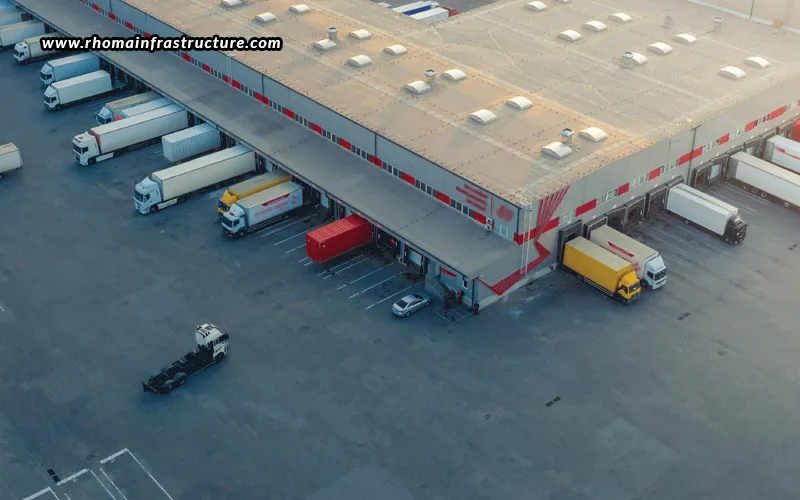
Logistics parks and warehousing are an important component of integrated industrial infrastructure, helping with the ability to store, handle, and transport goods efficiently. Modern logistics parks can combine warehousing, distribution, transportation, loading and unloading facilities, and supporting infrastructure within strategically located developments.
- Strategic location: Proximity to manufacturing clusters, highways, consumption centres, rail networks, and ports can improve distribution efficiency.
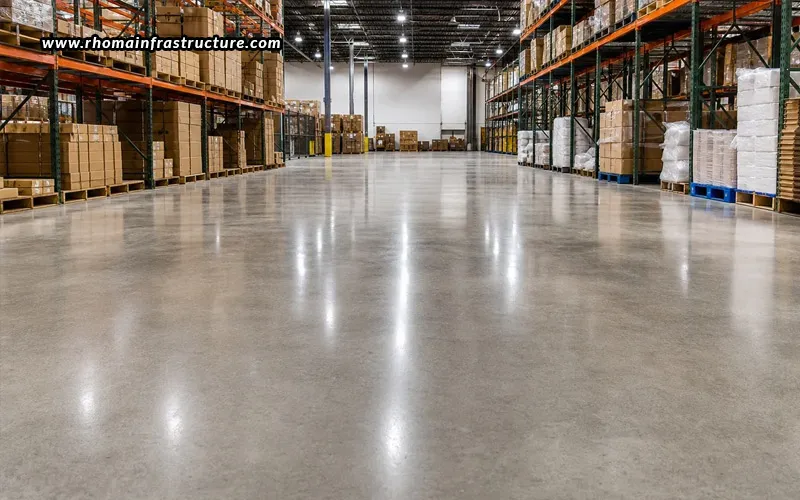
- Efficient warehousing: Modern warehouses require appropriate floor layouts, clear heights, loading areas, circulation spaces, and provisions for future operational requirements.
- Transportation integration: Efficient connections between warehouses, manufacturing facilities, and major transportation routes help streamline the movement of materials and finished goods.
- Scalability: Warehousing infrastructure should be capable of accommodating changing inventory volumes, new distribution requirements, and future business expansion.
When logistics and warehousing are planned alongside industrial development, businesses can create shorter and more efficient supply chains, while improving the overall movement of goods.
Road, rail, and port connectivity
Connectivity represents a fundamental pillar of comprehensive industrial development. Industrial operations rely on dependable transportation infrastructure to procure raw materials and deliver manufactured goods.
- Road connectivity
Road systems serve as the essential link connecting industrial operations, material suppliers, storage facilities, retail markets, and transport terminals. Facility-wide roads require careful design to accommodate commercial vehicles, cargo handling procedures, personnel circulation, and crisis response pathways.
- Rail connectivity
Rail systems enable efficient transportation of substantial volumes of raw materials and manufactured products across extended distances. For enterprises processing bulk commodities, strategic rail access can prove instrumental in optimizing supply chain operations.
- Port connectivity
Organizations engaged in cross-border commerce benefit significantly from streamlined port access that facilitates import and export activities. Industrial sites positioned conveniently near major port facilities gain competitive advantages through enhanced connection to worldwide trade networks.
A comprehensive strategy integrates these transportation alternatives, enabling industrial operations to be strategically located and constructed to align with their specific logistics demands.
Power supply, water systems, and utilities
Industrial development cannot function effectively without power, water, drainage, communication, and waste management systems, all of which must be planned as interconnected infrastructure rather than isolated services.
- Power: Manufacturing facilities often require reliable power for machinery, equipment, lighting, and operations. Planned electrical infrastructure helps maintain stable supply, reduce operational disruptions, and support continuous production.
- Water: Water may be required for manufacturing processes, cooling, cleaning, sanitation, and other operational activities. Integrated water infrastructure can include supply networks, storage, treatment, recycling, and wastewater management.
- Supporting utilities: Essential systems include stormwater drainage, sewage treatment, solid waste management, fire protection, and communication networks, supporting safety, environmental management, connectivity, and efficient industrial operations.
Coordinating utilities during planning minimizes infrastructure conflicts, improves resource efficiency, strengthens operational reliability, and creates a well-integrated industrial environment capable of supporting long-term growth.
The role of integrated project development
Developing integrated infrastructure requires coordination across multiple disciplines, including land planning, engineering, construction, utilities, logistics, and infrastructure development. This becomes particularly important for complex industrial projects, where decisions in one area can directly affect others. An integrated approach helps align these components from the planning stage, reducing coordination gaps and supporting better control over project quality, timelines, and costs. As an experienced industrial project development company, Rhoma Infrastructure brings these capabilities together through an integrated project development approach, covering planning, engineering, infrastructure development, construction, and execution. This enables businesses to manage complex industrial developments through a coordinated framework with greater accountability and consistency across project stages. This approach also allows project requirements to be addressed systematically, helping maintain alignment between infrastructure, operational needs, and development objectives as the project progresses from concept to completion.
Integrated infrastructure is reshaping industrial development in India by moving the focus from individual facilities towards connected industrial ecosystems. Industrial parks, manufacturing facilities, logistics parks, warehousing, transportation networks, utilities, and supporting infrastructure can deliver greater value when planned as interconnected components of a single development strategy. As India’s industrial requirements continue to evolve, integrated infrastructure will remain an important consideration for businesses developing new facilities or expanding existing operations. The ability to plan and execute interconnected infrastructure efficiently can help create industrial environments that are productive, scalable, sustainable, and prepared for long-term growth. It also enables businesses to respond more effectively to changing operational requirements, market conditions, and future expansion requirements.

























Sign in to leave a comment.