

The Shift from One-Size-Fits-All to Anatomical Customization
Facial aging is a complex, three-dimensional process unique to every individual. Factors such as genetic predisposition, bone resorption, soft tissue descent, subcutaneous fat atrophy, and skin elasticity vary significantly from person to person. Because no two faces age in identical patterns, modern aesthetic medicine has moved far beyond standardized, template-driven surgical approaches. Today, achieving balanced, elegant, and authentic rejuvenation requires a meticulously structured, personalized surgical plan. Crafting an individualized strategy ensures that structural lift addresses specific anatomical changes without creating an over-pulled, artificial appearance.
When patients explore options for Facelift surgery in Delhi, understanding the clinical process behind customized planning provides clarity and peace of mind. A personalized approach begins long before entering the operating theater. It combines clinical diagnostic rigor, high-resolution tissue analysis, vector mapping, and individualized anatomical sculpting. At Med Esthetiks, every surgical plan is constructed around the patient's specific tissue characteristics, lifestyle expectations, and long-term aesthetic goals, establishing a foundation built on surgical precision, patient safety, and predictable healing.
Step 1: Clinical Candidacy Evaluation and Health Screening
The foundational step in creating a personalized facial rejuvenation strategy involves a thorough medical and physiological assessment. Patient safety is the absolute prerequisite for any elective cosmetic intervention. During the initial consultation, a thorough review of medical history, systemic conditions, blood pressure stability, coagulation profiles, and lifestyle factors like smoking or sun exposure is performed. Evaluating systemic health ensures that the body can tolerate surgical trauma, anesthesia, and the subsequent tissue healing phases without elevated risks of hematoma, delayed wound healing, or tissue compromise.
Beyond physical health, evaluating psychological readiness and aesthetic goals is equally critical. A dedicated Plastic surgery doctor in Delhi examines whether a patient’s expectations align with what surgical intervention can anatomically achieve. By discussing individual concerns—such as deep nasolabial folds, jowling, jawline blur, or midface sagging—the surgeon determines if a patient is an ideal candidate for surgical elevation, non-surgical maintenance, or a phased combination treatment plan. This initial screening guarantees that every customized plan rests on sound medical judgment and transparent communication.
Step 2: Multi-Layered Facial Assessment and Structural Mapping
Once clinical candidacy is established, the surgeon conducts a detailed physical and anatomical examination of the facial architecture. Facial aging does not occur solely on the skin's surface; it involves changes across four distinct anatomical layers: the skin, subcutaneous fat compartments, the Superficial Musculoaponeurotic System (SMAS), and the underlying craniofacial skeleton. During the visual and tactile assessment, the specialist measures skin elasticity, thickness, and degree of photo-damage while evaluating the volume distribution in the cheek pads, temples, and jawline.
Mapping these multi-layered changes allows the practitioner to pinpoint where structural descent is most pronounced. For example, severe jawline blur accompanied by heavy cervical laxity requires a different structural plan than isolated midface volume loss. When seeking guidance from a experienced Facelift surgeon in Delhi, this rigorous diagnostic phase ensures that deep tissue laxity is accurately identified. By distinguishing between skin excess and deep structural descent, the surgeon crafts a plan that targets the true root cause of facial aging rather than simply pulling surface skin.
Step 3: Selecting Tailored Facelift Techniques (SMAS vs. Deep Plane)
With anatomical mapping complete, the surgeon selects the specific surgical technique that best aligns with the patient's degree of structural laxity. There is no single "best" surgical method for every individual; instead, technique selection must be customized to the patient's unique tissue quality and aesthetic objectives. The primary modern techniques include SMAS plication (folding deep tissue), SMASectomy (resecting excess deep tissue), extended SMAS elevation, and deep plane dissection, which releases anchoring facial ligaments to elevate deep muscle and fat pads as a single unit.
For patients with moderate laxity and good skin tone, a tailored SMAS manipulation may deliver optimal, natural-looking elevation with minimal recovery. Conversely, individuals with deep nasolabial folds, significant midface sag, or prominent jowls often benefit from deep plane release. Patients researching options with a skilled Cosmetic plastic surgeon in Delhi gain confidence knowing that technical choices are guided by their anatomical blueprint. Selecting the precise depth and extent of tissue dissection ensures that structural tension rests on deep fascial layers, allowing overlying skin to lay smoothly without tension.
Step 4: Mapping Vector Directions for Natural Expression
A critical aspect of personalized facial planning is defining the precise direction, or vector, along which deep tissues will be elevated. Historical surgical approaches often pulled tissues horizontally toward the ears, resulting in the wind-tunnel, stretched appearance associated with older techniques. Modern facial plastic surgery relies on vertical and oblique elevation vectors that directly reverse the effects of gravity, restoring youthful geometric proportions.
During pre-operative planning, the surgeon evaluates how the patient's midface, jawline, and neck move during natural facial expressions. By manually manipulating soft tissues during the clinical examination, the practitioner determines the exact angle that restores youthfulness without distorting the mouth corners, eyes, or tragus. For prospective patients seeking the Best plastic surgeon in Delhi, vector customization is a vital step. Precise vector alignment ensures that post-surgical outcomes appear soft, dynamic, and unoperated, preserving authentic facial expressions and personal identity.
Step 5: Integrating Complementary Rejuvenation Procedures
A truly customized facelift plan rarely addresses the lower face and jawline in isolation. Comprehensive facial harmony often requires combining deep tissue elevation with targeted adjunctive procedures to address surrounding aging changes. For instance, severe skin laxity in the lower jaw is frequently accompanied by neck band prominence, upper eyelid hooding, or structural volume loss across the temples and cheeks.
During treatment planning, the surgeon discusses complementary modalities such as neck lift (platysmaplasty), upper or lower blepharoplasty, autologous fat grafting for volume restoration, or chin augmentation to enhance profile definition. When patients consult a practitioner recognized as a Top plastic surgeon in Delhi, they receive an integrated blueprint designed for comprehensive facial balance. Harmonizing deep tissue lifting with volume restoration and peri-orbital rejuvenation prevents structural mismatches, ensuring that every facial feature reflects balanced, natural-looking vitality.
Step 6: Anesthesia, Facility Safety, and Surgical Precision
Personalized planning extends far beyond aesthetic considerations to encompass every safety protocol within the operating environment. Depending on the planned procedure's extent, surgical complexity, and patient preference, the plan specifies the appropriate anesthesia method—ranging from general anesthesia to intravenous sedation with local infiltration. Establishing a safe anesthetic plan requires pre-operative laboratory panels, cardiac evaluations, and consultation with a board-certified anesthesiologist.
The choice of surgical facility is an integral component of personalized care. Operating within an accredited surgical center equipped with modern monitoring infrastructure, sterile air flow systems, and emergency equipment minimizes infection risks and intraoperative complications. Selecting a state-of-the-art Plastic surgery clinic in Delhi guarantees that patient safety remains the highest clinical priority throughout every phase of the procedure, allowing the surgical team to perform delicate anatomical dissection under optimal, controlled conditions.
Step 7: Customized Incision Placement and Scar Minimization
Incision design is another critical element tailored to each individual's anatomical contours, hairline patterns, and ear geometry. To ensure that surgical access points remain discreet and virtually invisible after healing, incisions must be meticulously planned within natural anatomical shadows, such as along the temporal hairline, around the ear cartilage (tragus), and behind the earlobe into the post-auricular crease.
For male patients, incision paths are adapted to preserve natural beard-growing skin and sideburn placement, whereas for female patients, hairline preservation around the temples is paramount. When consulting an expert at a Best cosmetic clinic in Delhi, patients learn how tension-free skin closure and specialized micro-suturing prevent scar widening and distortion. Customizing incision geometry to individual facial landforms ensures that once healing matures, scar lines fade into faint, natural skin creases.
Step 8: Structured Aftercare, Recovery Timelines, and Healing Protocols
A comprehensive surgical plan does not end when the procedure concludes; it includes a structured, personalized aftercare and recovery schedule tailored to the patient’s healing rate and lifestyle demands. Recovery protocols are customized based on the extent of tissue dissection, whether complementary procedures were performed, and individual tissue swelling tendencies.
Patients receive detailed instructions covering post-operative head elevation, specialized compression garment use, wound care management, medication schedules, and dietary guidelines. Scheduled follow-up visits allow the surgeon to monitor tissue healing, manage early swelling, remove sutures at optimal intervals, and provide guidance on returning to work and exercise. Understanding the full Facelift surgery procedure in Delhi recovery process reduces post-surgical anxiety, empowering patients to participate actively in their healing journey for safe and optimal outcomes.
Navigating Costs and Financial Transparency in Customized Care
Because every facelift plan is customized to individual anatomical needs, total surgical investment varies based on procedural complexity, surgical time, facility utilization, and required complementary techniques. A straightforward mini-facelift focusing on early jawline laxity naturally requires different resources than a complex deep plane facelift combined with neck rejuvenation and fat grafting.
Achieving complete financial clarity is essential before embarking on care. A transparent medical quote breaks down expenses into surgeon fees, anesthesiologist charges, accredited operating theater usage, pre-operative lab work, post-surgical compression garments, and routine follow-up care. Evaluating Facelift surgery cost in Delhi through an itemized framework helps patients understand the value of experienced surgical skill, safety standards, and personalized care. Similarly, evaluating total Plastic surgery cost in Delhi prevents unexpected expenses, allowing patients to make informed, confident healthcare choices.
The Med Esthetiks Standard: Ethical Planning with Dr. Lokesh Handa
At Med Esthetiks, located in the accessible setting of Greater Kailash-1, South Delhi, personalized care is built on ethical evaluation, patient education, and clinical precision. Serving patients from New Delhi, the broader Delhi NCR region, and international destinations, the clinic provides a welcoming environment where aesthetic goals are translated into realistic, medically sound surgical plans.
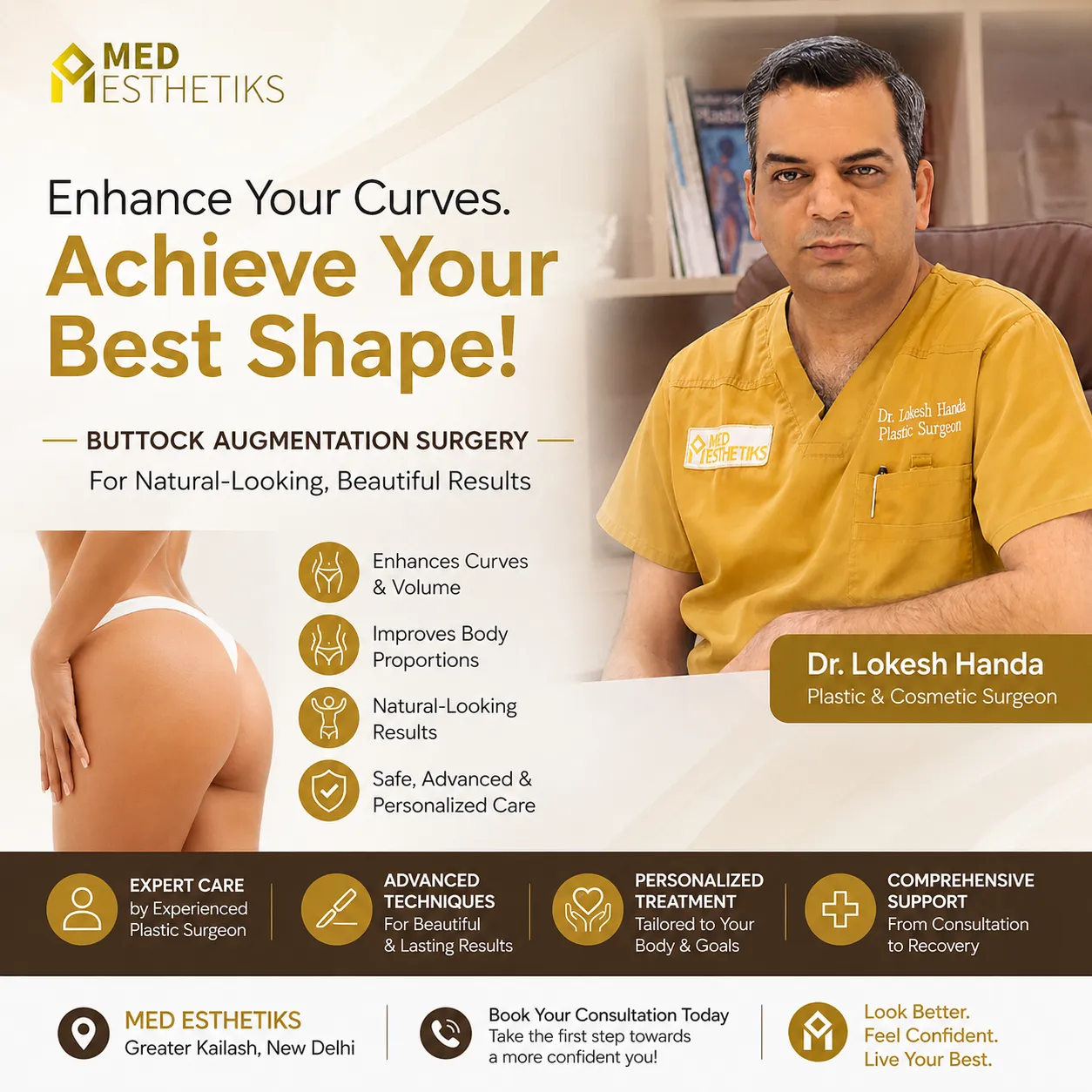
Surgical leadership at Med Esthetiks is provided by Dr. Lokesh Handa (M.S., M.Ch., Senior Consultant Plastic, Aesthetic & Hair Transplant Surgeon), who brings over 18 years of specialized clinical experience to facial aesthetic surgery. Dr. Handa believes that successful facial rejuvenation depends on careful diagnostic listening and individualized anatomical planning. Rather than utilizing pre-set templates, he personally evaluates every candidate, designing custom vector maps, selecting appropriate deep SMAS techniques, and supervising every stage of post-operative recovery. When seeking a consultation with a recognized Best cosmetic surgeon in Delhi, patients at Med Esthetiks receive dedicated, individualized attention focused on safety, integrity, and natural-looking results.
Frequently Asked Questions (FAQs)
How does bone density and skin quality influence a personalized facelift plan?
Bone density and skin elasticity dictate how soft tissues are supported and elevated during surgery. High skin elasticity and strong facial bone structure provide solid anchoring points for deep SMAS elevation, often yielding longer-lasting outcomes. Conversely, patients with diminished jawline bone support or thinner skin require a modified plan, such as combining deep plane elevation with structural fat grafting to restore lost facial volume. Assessing these physical characteristics allows the surgeon to tailor technical approaches, vector angles, and adjunctive treatments, ensuring that structural lifting restores balance without placing excessive tension on delicate skin layers.
How is the elevation vector customized to avoid a pulled or unnatural look?
Customizing the elevation vector involves evaluating the patient's individual facial aging patterns during the pre-operative physical examination. Instead of pulling tissue horizontally toward the ears—which creates a wind-tunnel effect—the surgeon maps vertical and oblique vectors that directly reverse gravitational descent. By elevating the deep muscle and SMAS layers along these natural diagonal lines, facial features return to their original youthful positions. The overlying skin is then draped smoothly under zero tension, preserving natural facial dynamics, soft expressions, and authentic identity while eliminating signs of artificial surgical tightness.
Can a personalized facelift plan incorporate non-surgical treatments or other procedures?
Yes, a personalized facelift plan frequently combines deep surgical elevation with complementary surgical or non-surgical modalities to achieve comprehensive facial balance. Surgical additions often include neck platysmaplasty, eyelid surgery (blepharoplasty), or fat grafting. Non-surgical modalities, such as laser resurfacing, chemical peels, or targeted skin tightening, can be planned for post-recovery phases to refine skin texture, tone, and pigmentation. Integrating these modalities into a phased, individualized treatment plan ensures that deep structural lifting is complemented by smooth, healthy skin quality, producing harmonious and natural-looking aesthetic results across all facial zones.
What role does deep tissue SMAS manipulation play in custom facial planning?
The Superficial Musculoaponeurotic System (SMAS) is the strong fibrous muscle layer beneath the skin that supports lower facial structures. Manipulating the SMAS—through plication, SMASectomy, or deep plane release—is the cornerstone of long-lasting, natural facial rejuvenation. In a customized facelift plan, the surgeon tailors SMAS manipulation based on tissue thickness and degree of sagging. Repositioning the SMAS bears all structural tension, allowing excess skin to be trimmed without stretching. This technique prevents wide scar formation, protects facial expression, and ensures that the rejuvenated facial contours remain stable, graceful, and natural for many years.
How are incision locations customized for different hair patterns and ear structures?
Incision geometry is individually mapped during pre-operative evaluation to match the patient's hair density, hairline position, sideburn anatomy, and ear shape. For female patients, incisions follow the temporal hairline and curve behind the tragus to remain invisible within natural cartilage shadows. For male patients, incisions are placed to preserve natural sideburn orientation and beard-growing skin. In individuals with high hairlines or hair thinning, retro-tragal or hairline-sparing adaptations are utilized. Customizing incision placement ensures that once micro-sutures heal, scar lines blend discreetly into natural anatomical creases without altering hairline boundaries.
What factors determine the overall cost of a personalized facelift plan in Delhi?
Total investment for a personalized facelift depends on procedural complexity, surgical duration, selected surgical techniques, and facility standards. A localized mini-facelift involves different resource requirements than an extended deep plane facelift combined with neck sculpting or fat transfer. Other financial components include the primary surgeon's expertise, board-certified anesthesiologist fees, accredited operating room usage, pre-operative diagnostic tests, specialized post-surgical compression garments, and post-operative care visits. A transparent consultation provides an itemized breakdown, allowing patients to understand how personalized care, advanced safety standards, and clinical experience shape their total financial investment.
How long is the recovery timeline for a customized deep plane or SMAS facelift?
Recovery timelines vary based on surgical complexity, individual healing capacity, and strict adherence to post-operative guidelines. Generally, initial bruising and swelling peak within the first 48 to 72 hours and gradually diminish over 10 to 14 days. Most patients return to light social activities and desk work within two weeks. Suture removal usually occurs between days 7 and 10. Heavy physical exercise and strenuous activities are restricted for four to six weeks. Complete deep tissue maturation and final outcome consolidation continue over three to six months as tissue swelling fully resolves.
What safety protocols are integrated into a personalized surgical care strategy?
Safety integration begins with comprehensive pre-operative medical screening, blood testing, and cardiac evaluations to verify physiological readiness. Surgery is performed in fully accredited facilities equipped with advanced monitoring, sterile airflow systems, and emergency capabilities. A board-certified anesthesiologist maintains continuous hemodynamic control to manage blood pressure and minimize hematoma risk. Intraoperative sterile techniques, precision tissue handling, and tension-free closures protect tissue viability. Post-operatively, personalized aftercare includes scheduled check-ups, clear wound management instructions, and direct access to the clinical team to ensure rapid, uncompromised healing at every stage.
Achieving Natural Harmony Through Precision Planning
Creating a personalized facelift plan transforms facial rejuvenation from a standardized procedure into an individualized medical art. By focusing on multi-layered anatomical evaluations, vertical vector mapping, tailored SMAS techniques, accredited facility safety, and structured aftercare, customized planning ensures that every patient achieves natural-looking, harmonious, and enduring results.
Schedule Your Individualized Facelift Assessment at Med Esthetiks
Take the first step toward personalized facial restoration by booking an in-person consultation with Dr. Lokesh Handa at Med Esthetiks in Greater Kailash-1, New Delhi. Experience an ethical, thorough anatomical assessment tailored to your unique features, safety requirements, and long-term aesthetic goals.























Sign in to leave a comment.