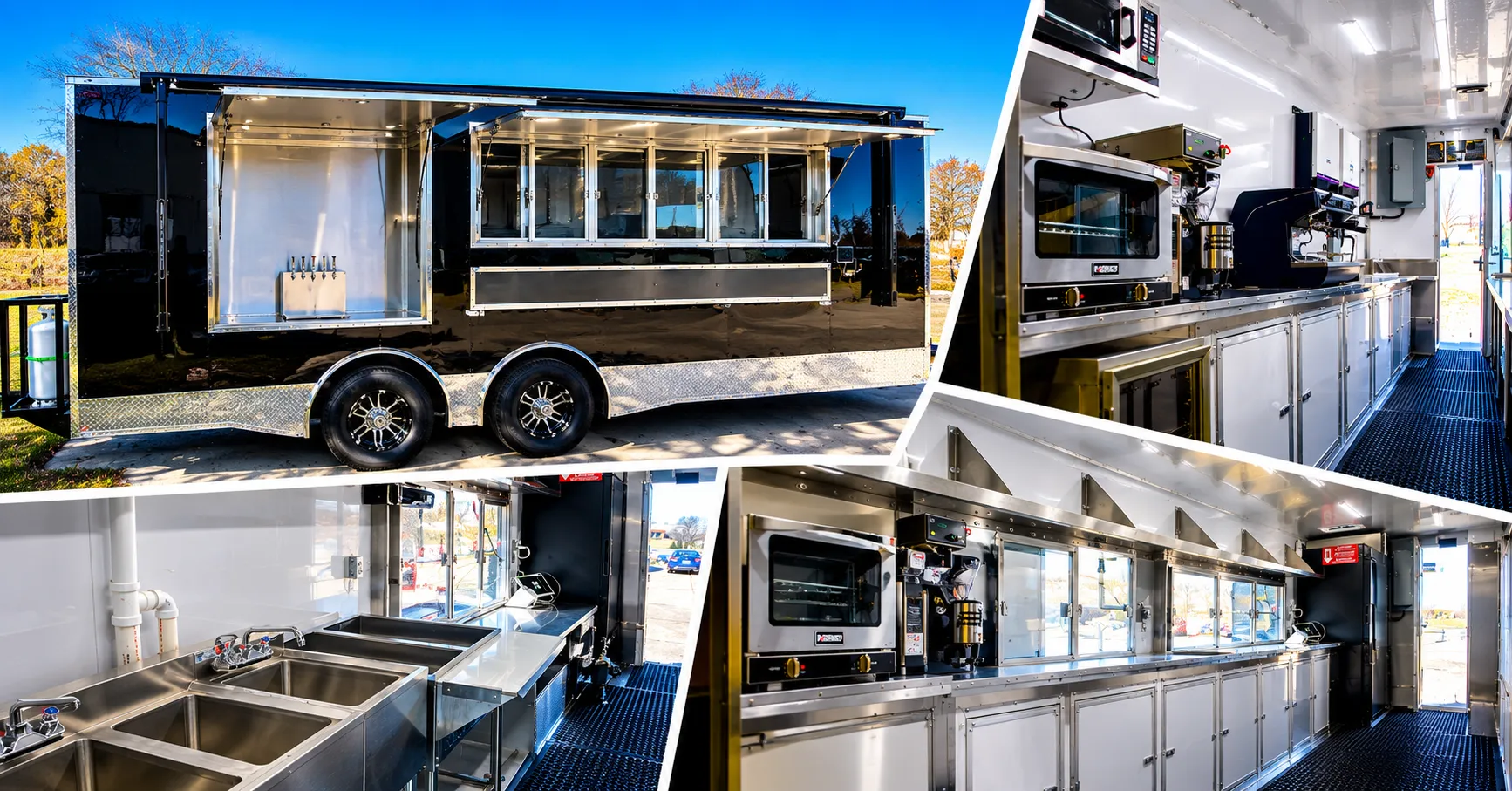

Anyone who has worked a lunch rush inside a cramped trailer knows exactly how much layout matters. One wrong placement, a fryer too far from the counter, a fridge blocking the walkway, and suddenly your whole team is bumping into each other instead of serving customers. This is exactly why food truck trailer customization has become such a hot topic among owners, and why so many people are turning to a custom food truck trailer built around their actual workflow instead of a generic setup.
Here is a quick look at what we will cover in this article:
- Why layout affects speed during busy service hours.
- Common layout mistakes that slow down a kitchen team.
- How customization solves problems a standard trailer cannot.
What to think about before finalizing your own layout.
Why Layout Is Such a Big Deal
Let's talk about why layout is such a big deal in the first place. A trailer kitchen is small by nature, so every single foot of space needs a job to do. When your prep station, cooking equipment, and serving window are placed with intention, your team moves in a natural rhythm. Orders come in, food gets prepped, it hits the grill or fryer, then it moves straight to the window. No backtracking, no crossing paths, no wasted steps. That rhythm is the difference between serving fifty people an hour or barely getting through twenty.
The Cost of a Poorly Planned Layout
Now think about the opposite scenario. A poorly planned trailer forces your staff to walk around each other constantly. Maybe the sink is on one end, and the prep table is on the other, so every handwash turns into a mini obstacle course. Maybe the storage is too far from where ingredients actually get used, so someone is always running back and forth. These small inefficiencies add up fast, especially during peak hours when speed is everything.
Why Customization Makes the Difference
This is where customization really earns its value. Every menu is different, and every owner works differently too, so a one-size-fits-all layout rarely performs well for everyone. Some businesses need more prep space because they cook everything fresh to order. Others need more storage because they batch cook ahead of time. A trailer that is customized around your specific menu and workflow lets you build a kitchen that actually supports how you work, not one you have to awkwardly adjust to.
Layout Affects Safety Too
Good layout planning also affects safety and comfort. Enough room to move around hot equipment, clear pathways, and sensible placement of sharp tools all reduce accidents. When your team is not squeezing past each other constantly, they are less likely to get burned, bumped, or frustrated on a hot summer shift.
Mapping Out Your Workflow First
Before finalizing any layout, it helps to walk through your actual daily process step by step. Where do ingredients enter the trailer, where do they get prepped, cooked, plated, and served? Mapping that flow out on paper often reveals problems before they ever become real headaches on the road.
Final Thoughts
A smart layout is not just about looks; it is about how well your business runs every single shift. That is exactly what Food Truck Brit focuses on. As a custom food truck builder serving Kentucky, Ohio, and Indiana, Food Truck Brit specializes in food truck trailer customization, helping owners design a custom food truck trailer built around real workflow and everyday efficiency. If a smoother, faster kitchen sounds like something your business needs, it might be time to start planning your layout with them.























Sign in to leave a comment.