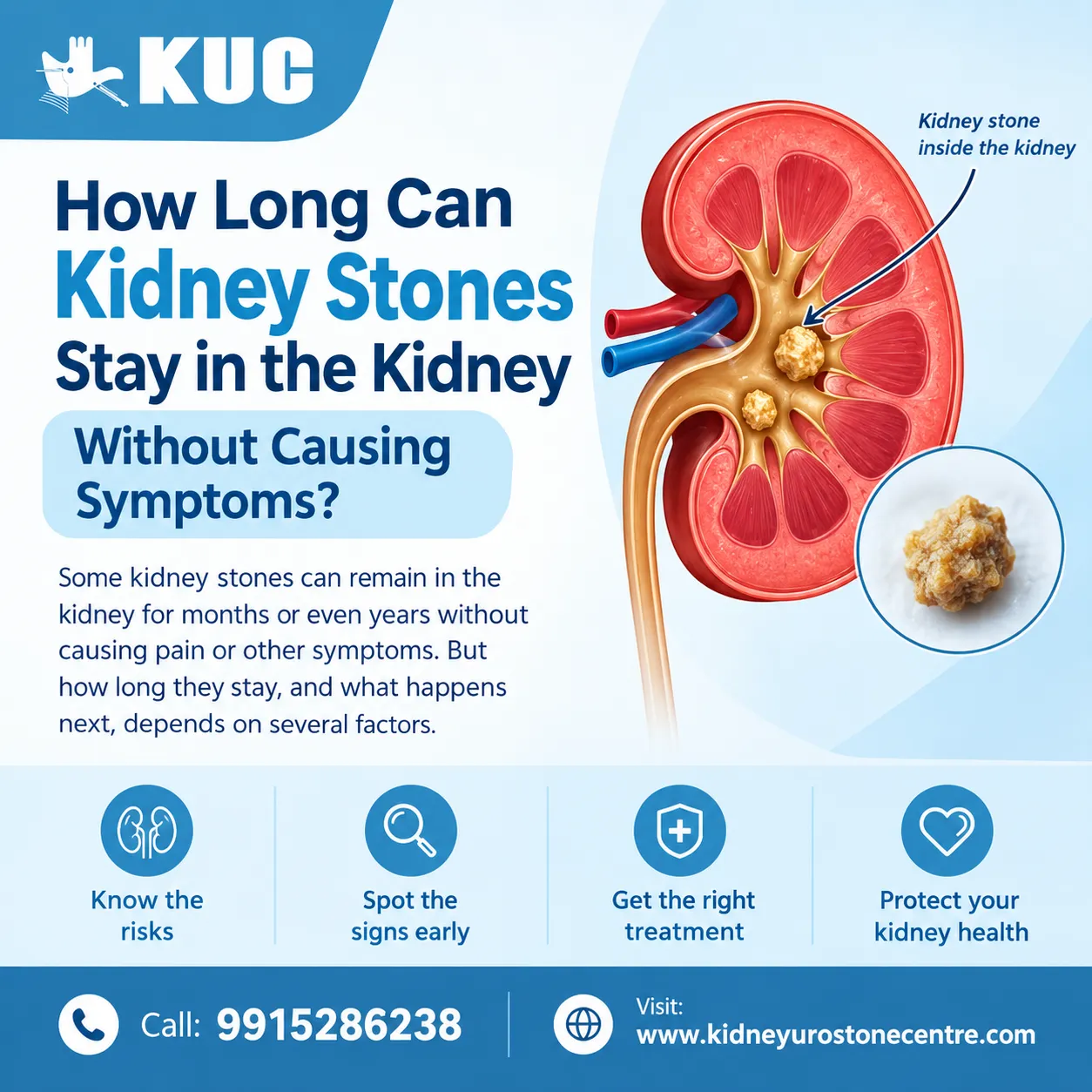

Not every kidney stone causes pain immediately. Some Kidney stones can remain inside the kidney without producing noticeable symptoms for months or even years. This is why a person may discover a stone unexpectedly during an ultrasound or other imaging test performed for an unrelated reason.

Can Kidney Stones Stay in the Kidney Without Symptoms?
Yes. Small or non-obstructing kidney stones may remain in the kidney without causing pain or affecting urine flow. Some stones may remain stable, while others can gradually increase in size or move into the ureter.
How long a stone stays without symptoms varies from person to person. Its size, location, growth, and the individual's risk factors can all influence what happens over time.
Why Don't Some Kidney Stones Cause Pain?
Pain often occurs when a stone moves from the kidney into the ureter and interferes with urine flow. A stone that remains in a part of the kidney without causing obstruction may produce no obvious symptoms.
However, being pain-free does not necessarily mean the stone should be ignored. Regular medical assessment can help determine whether monitoring is appropriate.
Can a Silent Kidney Stone Become a Problem?
A previously silent stone can become symptomatic if it grows or moves into the ureter. Possible symptoms include:
- Sharp pain in the side, back, or abdomen
- Pain that may move toward the groin
- Blood in the urine
- Burning while urinating
- Nausea or vomiting
- Changes in urinary flow
In some situations, a stone may cause obstruction or contribute to urinary complications. Fever along with urinary symptoms or severe pain requires prompt medical attention because infection with obstruction can be serious.
How Are Silent Kidney Stones Monitored?
If an imaging test identifies a kidney stone without symptoms, a urologist may consider factors such as its size, location, growth, and the patient's overall health.
Depending on the situation, watchful waiting with periodic follow-up may be recommended. Other patients may benefit from treatment if the stone grows, causes symptoms, becomes obstructive, or presents another clinical concern.
People who experience recurrent Kidney stones may also require additional evaluation to identify factors contributing to stone formation.
Can You Prevent Kidney Stones From Growing?
Lifestyle measures can help reduce the risk of future stone formation. Staying adequately hydrated, eating a balanced diet, limiting excessive salt, maintaining a healthy weight, and following personalized dietary advice can be helpful.
For people with recurrent stones, doctors may recommend blood tests, urine analysis, stone composition testing, or a 24-hour urine evaluation to identify specific risk factors.
Frequently Asked Questions:
1. How long can a kidney stone stay without symptoms?
There is no fixed time. Some stones can remain in the kidney for months or years without causing symptoms, while others may grow or move sooner.
2. Can a kidney stone disappear on its own?
A stone that remains inside the kidney does not necessarily disappear on its own. Very small stones may pass through the urinary tract, but whether this happens depends on the stone and its location.
3. Should a painless kidney stone be treated?
Not always. Some asymptomatic stones can be monitored, but the decision depends on factors such as size, location, growth, and potential complications. A urologist can advise whether observation or treatment is appropriate.
4. When should I seek medical help?
Seek prompt medical attention for severe pain, fever, chills, repeated vomiting, difficulty urinating, or blood in the urine, particularly when these symptoms occur together.
Kidney stones can sometimes remain silent for a long time, but their future behavior cannot always be predicted. Regular evaluation helps monitor changes and identify when treatment may be necessary. If a kidney stone has been discovered, discussing its size, location, and follow-up plan with a urologist is an important step toward protecting urinary health.






















Sign in to leave a comment.