

Most temporary spare tyres are designed to cover roughly 80 km at no more than 80 km/h. That is the short answer for the compact “donut” spare found in many modern cars.
The longer answer depends on what is actually in your boot. A full-size spare behaves very differently from a space-saver, and a car on run-flat tyres follows its own rules. Below, we cover the limits for each type, why they exist, how to drive carefully on a spare, and what to do once you are somewhere safe.
Quick Answer: Spare Tyre Distance and Speed Limits
These figures are typical guidelines, not universal rules. Your owner’s manual and the warning label on the spare always take priority, because manufacturers set their own limits.
| Spare type | Typical maximum distance | Typical maximum speed |
| Temporary (donut or space-saver) | 80 to 100 km | 80 km/h |
| Full-size matching spare | No fixed limit | Normal driving speed |
| Full-size non-matching spare | Short term only | Check your manual |
| Run-flat tyre after a puncture | Around 80 km | 80 km/h |
What Is a Spare Tyre? Types Explained
Temporary (donut or space-saver) spare
Narrower and lighter than your normal tyres, this type saves boot space and weight. It is meant for short emergency use only, and it is the spare most drivers have in mind when they ask how far they can go.
Full-size spare
This matches your road tyres in diameter and width. If it is the same size and model, you can usually drive on it like any other tyre, although its age matters (more on that below).
Full-size but non-matching spare
Sometimes the spare is the correct size but a different brand, tread pattern or wheel type. Small differences in rolling diameter can upset the transmission and stability control, so treat it as a short-term fix and check the manual.
Run-flat tyres
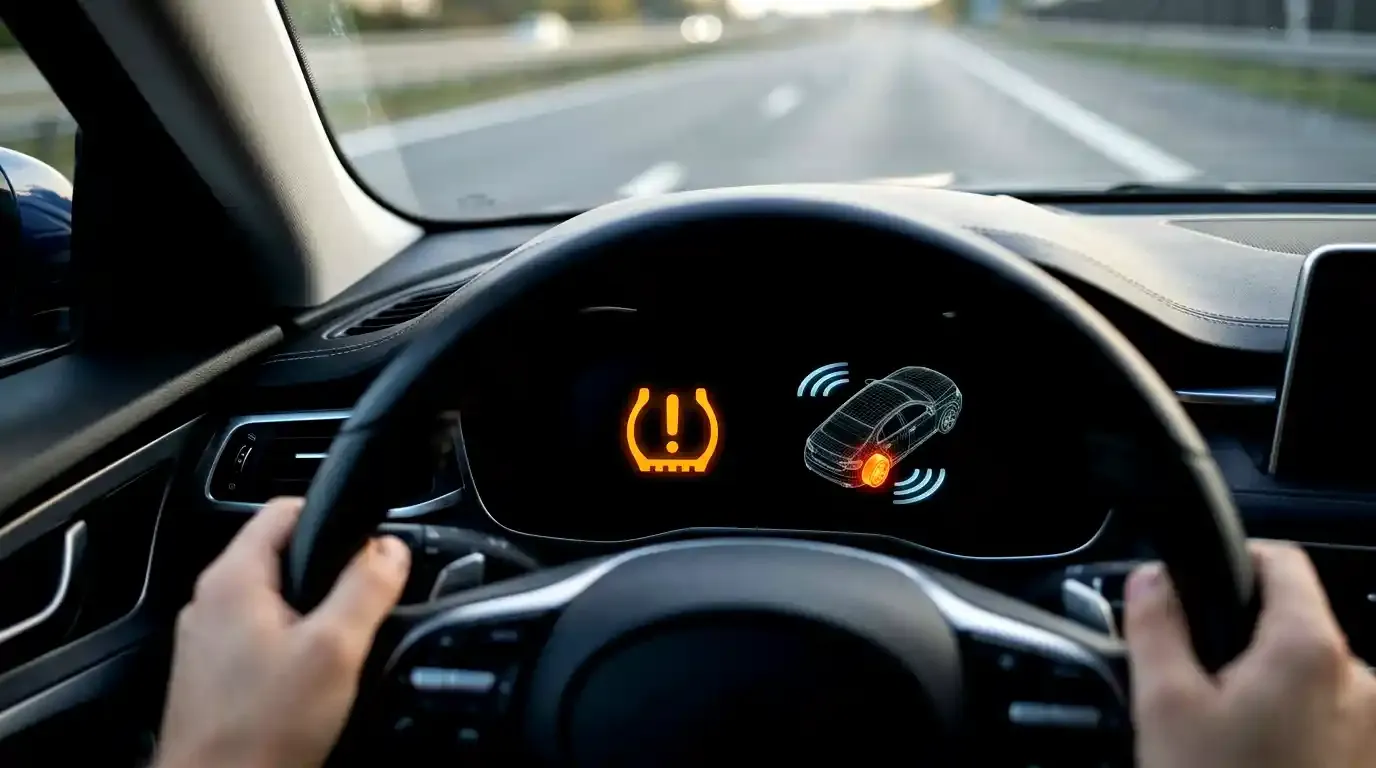
These are not spares, but drivers tend to search for them in the same breath. Their reinforced sidewalls let you keep driving after a puncture, commonly up to about 80 km at 80 km/h, though your tyre maker’s own figures apply. A working tyre pressure monitoring system (TPMS) is what tells you a run-flat has lost pressure, since you may not feel it from the driver’s seat.
Repair kits and sealant
Many newer cars skip the spare and carry a compressor and sealant kit instead. These suit small punctures in the tread. Sidewall damage and larger cuts usually mean a tow. It is worth checking what your boot actually holds before you need it.
How Long Can You Drive on a donut Spare?
Distance
Most donut spares are rated for around 80 to 100 km. That figure is a margin set by the manufacturer, because the tyre has shallow tread and lighter construction. It is not a point where the tyre suddenly fails, but it is not a target either. Aim to be at a tyre shop well before you reach it.
Speed
The limit is usually 80 km/h, printed on the sidewall or on a sticker on the wheel. Some spares carry a lower figure, so read yours. Expressways here often allow 80 to 90 km/h, which means you will be travelling slower than the traffic around you.
Using a donut on the expressway
It is possible in an emergency, but far from ideal. Stay in the left lane, leave a generous gap and let faster vehicles pass. If you can reach a safe stopping point, calling roadside assistance for the final stretch is often the better call.
Days or weeks
No. A donut wears quickly and was never designed for repeated use. Get your normal tyre repaired or replaced as soon as you can.
How Long Can You Drive on a Full-Size Spare Tyre?
A matching, in-date full-size spare has no fixed distance limit. You can drive on it as normal, although it is sensible to sort out the damaged tyre soon so that wear stays even across the car. A non-matching spare is a short-term solution, and your manual will say how short.
Age is the real catch. Rubber degrades even when a spare never touches the road. Many manufacturers suggest a professional inspection after about five years and replacement by around ten, and some carmakers set shorter limits for spares. Look for the four-digit date code on the sidewall: 2623 means the 26th week of 2023. Heat and humidity can speed up ageing, which is worth bearing in mind in Singapore’s climate.
Why Spare Tyres Have Limits
Smaller size and narrow tread
A donut has a smaller contact patch, so less rubber meets the road. Grip drops, particularly on wet tarmac, and a sudden downpour is exactly when you will notice it.
Braking and handling
Expect longer stopping distances and slower steering response. Hard braking or sharp cornering can unsettle the car, so smooth, early inputs matter more than usual.
Heat build-up
The lighter construction and higher inflation pressure mean a donut can build up heat with sustained speed or a heavy load. That raises the risk of a blowout.
Drivetrain strain
A smaller spare turns at a different rate from the other three wheels. The differential compensates for this, and over a long distance the extra work can cause wear. It matters most on AWD and 4WD cars, where all four wheels are expected to turn at similar speeds. Some manufacturers give specific instructions for these vehicles, so read the manual before you set off.
Tips to Drive Safely on a Spare Tyre
- Stay well under the limit. Keep to 80 km/h at most, or lower if the label says so, and brake early and gently.
- Check the pressure. donut spares commonly need around 60 psi (about 4.2 bar), far higher than a normal tyre, but your manual or the wheel sticker gives the exact figure. Spares lose pressure unnoticed in the boot, so build this check into your regular tyre maintenance.
- Think about where it goes. If the spare has to go on a front wheel, some manuals suggest moving a good rear tyre to the front and fitting the spare at the back, since this affects steering and braking less. Only do this if your manual allows it.
- Travel light. Take unnecessary weight out of the car and avoid towing.
- Go straight to a tyre shop. Skip the detours and the errands.
Can You Drive Long Distances on a Spare Tyre?
Planning a road trip on a donut is a bad idea. If you are far from the nearest workshop, a tow is the safer choice, especially in heavy rain, at night or with a full load. Insurance and roadside assistance terms vary, so check whether yours covers towing before you need it.
Spare Tyre vs Run-Flat vs Repair Kit
| Option | Best for | Main limitation |
| Temporary spare | A quick swap after a flat | Short distance and speed limits |
| Run-flat tyre | Driving on to a safe place | Follow the maker’s advice on repair |
| Repair kit | Small tread punctures | No use for sidewall damage |
Signs Your Spare Tyre Needs Replacing
Check your spare every six months, or at each service. Replace it if you notice cracks in the sidewall, dry rot, bulges, uneven wear, an old date code, or if it simply will not hold pressure.
What to Do After Using a Spare Tyre
Get the flat tyre repaired or replaced as soon as possible. If you covered a fair distance on the spare, ask the workshop to check your wheel alignment and the pressure in the other tyres. Once your normal wheel is back on, return the spare to the boot at the correct pressure, along with the jack and tools. If you used a sealant kit, tell the tyre shop, as it can affect how the tyre is repaired.
Conclusion
A spare tyre is there to get you to safety, not to carry on as normal. For a donut,think around 80 km at no more than 80 km/h, and always check your own manual and wheel label. Keep your spare in date and properly inflated, and head to a tyre shop as soon as you can.
FAQs
Can I drive 100 km on a spare tyre?
On a donut , that sits at the top of the usual 80 to 100 km range, so avoid it if you can. A matching full-size spare is a different matter.
How fast can I drive on a donut spare?
Usually no more than 80 km/h. The exact figure is on the sidewall or wheel sticker.
Can I drive on the expressway with a spare tyre?
You can in an emergency, but it is not ideal. Stay in the left lane, keep your speed down and head for the nearest safe exit.
How long can a spare tyre stay on a car?
A donut only until you reach a tyre shop. A matching full-size spare can stay on like any other tyre, provided it is in good condition.





























Sign in to leave a comment.