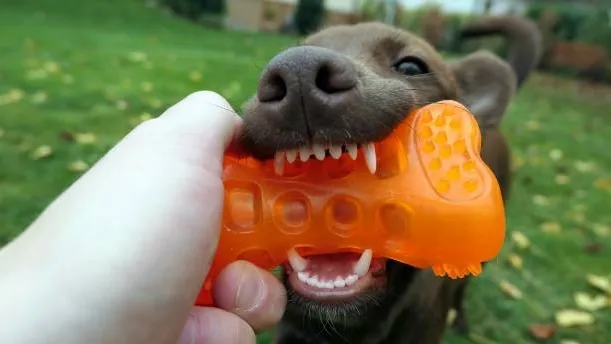

Heavy chewers can destroy a new toy much faster than many owners expect, making durability an important factor when choosing the right option. Some dog toys hold up to repeated biting and rough play, while others begin to show damage after only a short time. Squeaky toys and nylon toys are both popular choices, but they do not always perform the same way under constant chewing. The real difference often becomes clear after regular use.
Understanding how long each type can last can help dog owners make smarter buying decisions and choose toys that better match their dog’s chewing habits and play style.
Key Takeaways
- Squeaky toys usually wear faster than nylon chew toys.
- Strong chewing habits can shorten any toy’s lifespan.
- Size and construction strongly affect durability.
- Regular inspections help identify unsafe wear early.
- Damaged toys should be replaced before pieces detach.
How Long Do Squeaky Dog Toys Last for Heavy Chewers?
- Soft Squeaky Toys May Last Only a Short Time
Soft squeaky dog toys are usually made with fabric, stuffing, stitching, and an internal squeaker. For a heavy chewer, these materials can break down quickly. Some dogs may puncture or tear a soft toy within minutes, while others may use it for several days before damage appears.
The lifespan often depends on:
- Fabric thickness
- Seam strength
- Squeaker placement
- Chewing intensity
- Toy size
- Whether the dog focuses on one area
Dogs that actively try to reach the squeaker tend to destroy these toys more quickly because they repeatedly bite and pull at the same spot.
- Rubber Squeaky Toys Usually Last Longer
Rubber squeaky dog toys are often more durable than plush versions because they do not rely on fabric seams or stuffing.
A thicker rubber toy may last days or weeks, depending on the dog's jaw strength and chewing habits. However, even durable rubber can eventually crack, split, or develop pieces that begin to detach.
Owners should replace the toy when they notice:
- Large punctures
- Deep cracks
- Loose pieces
- An exposed squeaker
- Significant material loss
The condition of the toy matters more than how long it has been used.
Toy Construction Affects Durability
Not all squeaky toys are built for prolonged chewing. Some are mainly intended for fetching or supervised play. Heavy chewers generally need dog toys with:
- Reinforced seams
- Thick outer material
- Protected squeakers
- Fewer detachable parts
- Appropriate sizing for their mouth
A toy designed for gentle play may fail quickly even if it appears sturdy when new. The same principle applies when choosing puppy supplies, since durability and size should match the animal's age and chewing habits.
How Long Do Nylon Dog Toys Last for Heavy Chewers?
Nylon chew toys are usually more suitable for repeated chewing because the material is dense and tear-resistant.
For a heavy chewer, a well-sized nylon toy may remain usable for several weeks or even months. Lifespan varies based on how often the dog chews and whether it repeatedly targets the same section.
Factors That Affect the Lifespan of a Nylon Dog Toy
Several factors determine how quickly a nylon toy wears down:
- Nylon density: Denser nylon generally handles repeated chewing better.
- Toy thickness: Thick, solid areas tend to last longer than thin or narrow sections.
- Dog size and jaw strength: Larger dogs and powerful chewers can wear down toys more quickly.
- Chewing frequency: Daily, extended chewing usually shortens the toy's lifespan.
- Chewing style: Dogs that repeatedly target the same spot may create deep wear faster.
- Toy size: A properly sized toy distributes chewing pressure better and may be harder to damage quickly.
When Has a Nylon Toy Reached the End of Its Lifespan?
Scratches, tooth marks, and some surface roughness are expected with regular chewing. What matters more is whether the toy is still in a suitable condition for continued use.
Consider replacing it if large pieces are breaking away, deep cracks develop, edges become sharp, or the toy has become significantly smaller. Checking it regularly is more reliable than replacing it according to a fixed number of weeks or months.
Conclusion
Heavy chewers can wear through toys quickly, so regular inspection matters just as much as choosing durable materials. Squeaky toys may fail sooner due to fabric, seams, stuffing, or exposed squeakers, whereas nylon options often withstand repeated chewing for longer. Still, no toy should be considered permanent or completely indestructible. Owners should watch for cracks, loose pieces, sharp edges, reduced size, and other signs of damage.
Choosing appropriately sized dog toys, matching materials to chewing strength, and promptly replacing worn items can support safer play and help pet owners get better value from their toys over time.
FAQs
How should dog toys be cleaned without damaging them?
Follow the manufacturer’s cleaning instructions because materials respond differently to water and detergents. Regular cleaning can remove saliva, dirt, and residue that collect during repeated play.
Should puppies use the same chew toys as adult dogs?
Not always. When choosing puppy supplies, consider softer materials, smaller mouths, developing teeth, and the puppy’s current chewing behavior.
How should bird accessories be checked for damage?
Inspect bird accessories regularly for loose parts, frayed materials, sharp surfaces, or damaged fasteners. Remove anything that could create an entanglement or injury risk.
When should cat scratching posts be replaced?
Cat scratching posts should be replaced when they become unstable, severely shredded, or develop exposed fasteners. A stable scratching surface gives cats a safer place for normal scratching behavior.
Are cat laser toys suitable for independent play?
Cat laser toys generally work best during supervised interactive sessions rather than unattended play. Owners should avoid directing the light toward the cat’s eyes and follow product instructions.























Sign in to leave a comment.