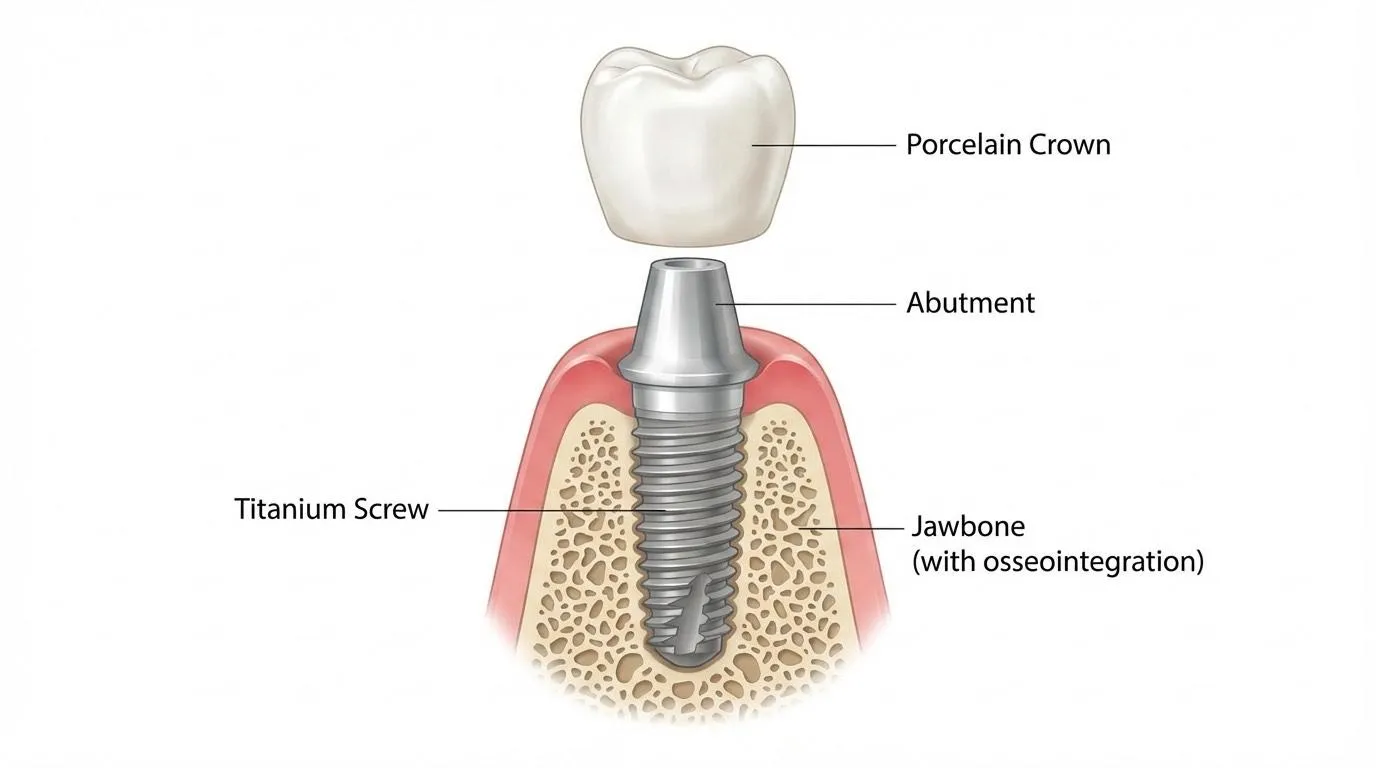

Replacing a missing tooth with a dental implant is usually a multi-stage process rather than a procedure completed in one appointment. The overall timeline depends on factors such as jawbone health, gum condition, healing time and whether any preparatory treatment is required.
The first step is typically a dental consultation. During this appointment, the dentist assesses the area where the tooth is missing and may use X-rays or 3D imaging to evaluate the jawbone and surrounding structures. This helps determine whether there is enough bone to support an implant and allows the treatment to be planned carefully.
Once the area is ready, the dental implant is placed into the jawbone. The implant acts as an artificial tooth root. After placement, the bone needs time to heal and integrate with the implant. This process, known as osseointegration, is an important part of achieving a stable foundation for the replacement tooth.
After the implant has healed sufficiently, an abutment is connected to the implant. A custom dental crown is then created to fit the space and match the appearance of the surrounding teeth.
The complete treatment timeline can vary considerably from person to person. Some patients may require additional procedures, such as bone grafting, which can add to the overall healing period.
For a more detailed explanation of the stages involved, you can read this guide to single tooth dental implant treatment in Auckland.
Understanding the different stages before starting treatment can help patients know what to expect and why adequate healing time is an important part of the dental implant process.
























Sign in to leave a comment.