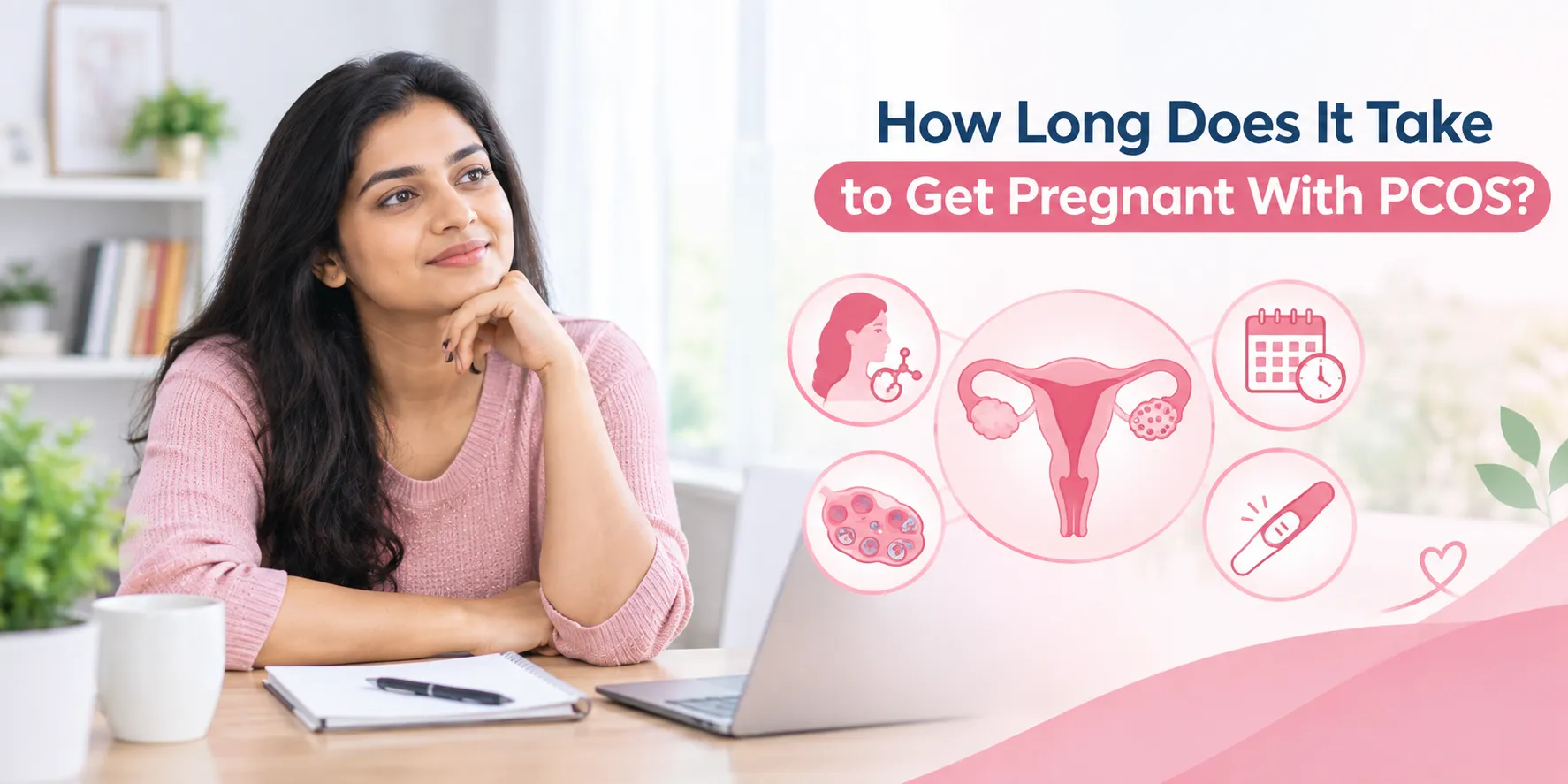

Polycystic Ovary Syndrome, commonly known as PCOS, is a hormonal condition that affects many women during their reproductive years. One of the common concerns among women with PCOS is difficulty getting pregnant. If you have been diagnosed with PCOS and are planning a family, you may wonder, “How long does it take to get pregnant with PCOS?”
The answer is different for every woman. Some women with PCOS conceive naturally within a few months, while others may need medical support to regulate ovulation. PCOS does not mean that pregnancy is impossible. With appropriate evaluation and treatment, many women with PCOS can achieve pregnancy, either naturally or with fertility assistance.
How Long Does It Take to Get Pregnant With PCOS?
There is no fixed timeline for pregnancy in women with PCOS. Some may conceive within a few months of trying, while others may take longer because of irregular ovulation or other fertility factors.
In women with PCOS, the main challenge is often that the ovaries do not release an egg regularly. When ovulation happens less frequently, there may be fewer opportunities for conception during a given period.
However, the time required to conceive depends on several factors, including:
- Age and overall reproductive health
- Frequency of ovulation
- Duration of trying to conceive
- Sperm health of the male partner
- Fallopian tube health
- Other underlying medical conditions
Therefore, having PCOS alone cannot predict exactly how long pregnancy will take.
Why Does PCOS Affect Fertility?
PCOS can influence the hormones responsible for ovulation. Some women with PCOS have irregular periods because their ovaries do not release eggs consistently.
Ovulation is important because pregnancy generally requires an egg to be released and fertilised by sperm. When ovulation is irregular, identifying the fertile period may become more difficult.
Some women with PCOS ovulate occasionally, while others may experience prolonged gaps between ovulations. The severity and symptoms of PCOS also vary from person to person.
It is important to understand that PCOS and infertility are not the same thing. PCOS may make conception more difficult for some women, but many women with the condition can become pregnant.
Factors That Influence Pregnancy With PCOS
1. Regularity of Ovulation
Ovulation is one of the key factors affecting the time required to conceive. Women who ovulate regularly may have more predictable opportunities for pregnancy.
If ovulation is irregular, a fertility specialist may recommend an evaluation to understand the cause and discuss treatment options.
2. Age
Age is an important consideration in fertility planning. Female fertility generally declines with age, and egg quality may also change.
Women with PCOS should consider their age alongside their menstrual history and overall reproductive health when planning pregnancy.
3. Weight and Metabolic Health
PCOS can be associated with insulin resistance and other metabolic concerns. Lifestyle changes and appropriate medical management may help improve overall health and support reproductive care in suitable patients.
Weight should be discussed sensitively and individually. Not every woman with PCOS has the same metabolic profile, and treatment should not rely on weight alone.
4. Other Fertility Factors
PCOS may not be the only factor affecting conception. Conditions involving the fallopian tubes, sperm health, endometriosis, or other reproductive concerns can also influence fertility.
A complete assessment of both partners can help identify factors that may need attention.
How Is PCOS Related Infertility Diagnosed?
If you have PCOS and are having difficulty conceiving, a fertility specialist may review your menstrual history, ovulation patterns, medical history, and previous attempts to become pregnant.
Depending on your circumstances, the evaluation may include hormone testing, ultrasound assessment, and other fertility investigations. A semen analysis may also be recommended for the male partner.
Not every patient needs every test. The doctor will decide which investigations are relevant based on your symptoms and medical history.
The purpose of the assessment is to understand whether irregular ovulation is the main concern or whether additional fertility factors may be present.
Fertility Treatment Options for PCOS
The appropriate treatment depends on the cause of infertility and the couple's individual needs.
Ovulation Induction
For women with PCOS who have infertility due to anovulation and no other identified infertility factors, letrozole is recommended as the first line pharmacological treatment for ovulation induction in the 2023 international evidence based PCOS guideline. Treatment should be prescribed and monitored by a qualified healthcare professional.
Ovulation induction aims to help the ovaries release an egg. The doctor may monitor the treatment response and determine whether additional fertility support is needed.
IUI Treatment
IUI treatment, or intrauterine insemination, may be considered in selected cases when appropriate. During IUI, prepared sperm is placed inside the uterus around the time of ovulation.
The suitability of IUI depends on factors such as ovulation, sperm health, fallopian tube condition, and the patient's fertility history.
IVF Treatment
IVF treatment may be considered when other approaches are not suitable or have not been successful, or when additional infertility factors are present.
During IVF, eggs are collected and fertilised in a laboratory before an embryo is transferred into the uterus. A fertility specialist can determine whether IVF is appropriate based on the patient's circumstances.
Lifestyle and Preconception Care
Women with PCOS who are planning pregnancy may benefit from focusing on overall health and preconception care.
Helpful steps can include:
- Maintaining regular physical activity
- Eating a balanced and nutritious diet
- Managing existing medical conditions
- Getting adequate sleep
- Discussing prenatal vitamins with a healthcare professional
- Avoiding smoking and limiting alcohol
Lifestyle management is an important part of PCOS care, but it should not be presented as a guaranteed way to achieve pregnancy. Individual medical guidance remains important.
When Should You Consult a Fertility Specialist?
Women with PCOS do not always need to wait a full year before seeking medical advice. If periods are very irregular, ovulation is infrequent, or there are other known fertility concerns, an earlier consultation may be helpful.
Generally, women below 35 are advised to seek an infertility evaluation after 12 months of trying to conceive, while women aged 35 and above may benefit from evaluation after six months. Earlier assessment may be appropriate when there are known reproductive health concerns.
A fertility specialist in Rajahmundry can help evaluate the possible causes of difficulty conceiving and discuss treatment options according to individual needs.
For couples seeking fertility care, Dr. Sowmya Varudu at Ferty9 Fertility Center is associated with fertility treatment services including IVF, IUI, ICSI, and reproductive care.
Frequently Asked Questions
1. Can I get pregnant naturally with PCOS?
Yes. Many women with PCOS can conceive naturally, while others may need medical support. The possibility depends on ovulation and other fertility factors.
2. How many months does it take to conceive with PCOS?
There is no fixed number of months. Some women conceive quickly, while others may require more time or fertility treatment.
3. Does irregular menstruation mean I cannot get pregnant?
No. Irregular periods may indicate irregular ovulation, but they do not automatically mean pregnancy is impossible.
4. Is IVF necessary for every woman with PCOS?
No. Treatment depends on the underlying cause of infertility. Some women may benefit from ovulation induction, while others may need IUI or IVF.
5. When should I visit a fertility specialist for PCOS?
Consider seeking advice earlier if you have highly irregular periods, known fertility concerns, or difficulty conceiving. A specialist can recommend an appropriate evaluation.
6. Can PCOS be treated before planning pregnancy?
PCOS can be managed through individualised medical care, lifestyle support, and fertility treatment when required. Your doctor can help you plan care according to your reproductive goals.
Conclusion
How long does it take to get pregnant with PCOS? The answer depends on your ovulation, age, reproductive health, and other fertility factors. PCOS may affect the regularity of ovulation, but it does not mean that becoming a parent is out of reach.
If you are trying to conceive with PCOS, a consultation with a qualified fertility specialist can help you understand your fertility health and explore suitable treatment options. Early evaluation and personalised care can support informed decisions throughout your fertility journey.



















Sign in to leave a comment.