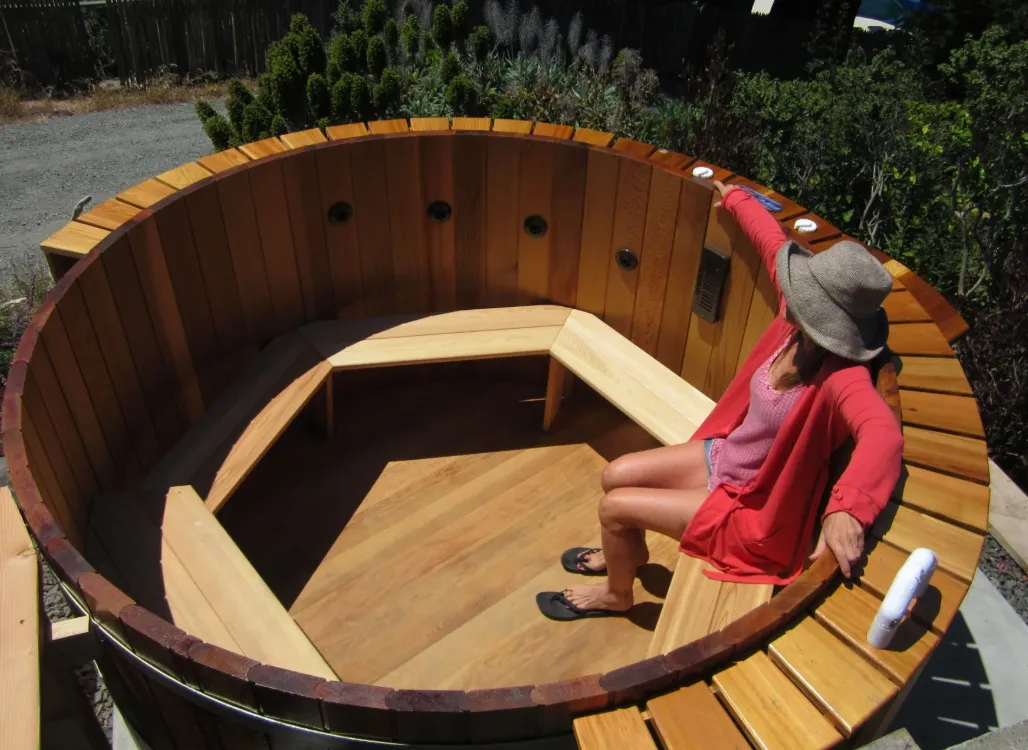

If you’re thinking about buying a wood-fired hot tub, there’s one question that comes up almost immediately: how long am I actually going to wait before I can get in?
The short answer is usually about 2 to 4 hours.
But that range can move quite a bit. A smaller tub on a warm summer afternoon may heat noticeably faster than a large tub filled with cold water on a freezing evening. The stove, amount and type of firewood, outdoor temperature, water volume, and insulation all matter.
And there’s one thing people sometimes miss: with a wood-fired setup, heating the water is part of the experience. You’re building a fire, checking the temperature, adding wood, and watching the water gradually come up to soaking temperature. It’s different from turning a dial and walking away.
So, How Long Does a Wood-Fired Hot Tub Take to Heat?
For most setups, plan on roughly 2–4 hours from a cold fill to a comfortable soaking temperature.
A common target is around 100–104°F, depending on personal preference and safe-use guidance.
The lower end of that range is realistic when conditions are working in your favor:
- The tub isn't unusually large
- The starting water isn't extremely cold
- You have dry, well-seasoned firewood
- The heater is properly sized
- The tub is reasonably insulated
- There isn't a strong, freezing wind pulling heat away
On the other hand, starting with very cold water in a large tub during winter can push the heating time toward the longer end.
So don't treat “2 hours” as a promise. Think of it as a realistic starting point.
What Actually Determines Heating Time?
This is where things get interesting.
Two wooden hot tubs can look similar but heat very differently. The heater and the conditions around the tub can change the whole equation.
1. Water Temperature
This is probably the biggest factor.
If your hose water comes out at 50°F and you want to reach 102°F, the heater has to raise the water temperature by 52 degrees.
Now imagine starting with water that's already 65°F. You're asking the fire to do considerably less work.
That's why the same tub can heat at different speeds depending on the season.
A summer fill may feel surprisingly quick. A winter fill? Give yourself more time.
2. Tub Size and Water Volume
More water means more heat is required.
This sounds obvious, but it's easy to overlook when shopping for a tub. A larger tub gives you more room for people, but you're also heating a much larger amount of water every time you fill it.
That's one reason heater sizing matters.
A heater that's appropriate for a smaller tub may feel painfully slow on a larger one. You don't want to judge the whole idea of wood-fired heating based on an undersized stove.
3. The Type of Firewood
Dry wood makes a real difference.
Wet or poorly seasoned wood doesn't burn as efficiently. Instead of getting a strong, hot fire, you're fighting moisture and producing more smoke.
Good, dry firewood gives you a hotter and more consistent burn.
And there's a practical lesson here: don't wait until you're ready for your Saturday night soak to discover that the only wood you have is damp.
Keep a supply of dry wood ready.
4. Outdoor Temperature and Wind
A hot tub sitting outside is constantly exchanging heat with the surrounding air.
If it's 75°F outside, that's one situation.
If it's 25°F with a strong wind blowing across the tub, that's another.
Cold weather doesn't make a wood-fired tub unusable, but it does make heat management more important. Wind can pull heat away surprisingly quickly, particularly when the tub is uncovered.
This is also where a good insulated cover earns its keep.
Does a Cover Really Make a Difference?
Yes.
And honestly, this is one of those simple things that can get overlooked.
You're putting a lot of energy into heating hundreds of gallons of water. Leaving that water completely exposed while you're trying to heat it gives the heat an easy escape route.
A properly fitted insulated cover helps reduce heat loss during the heating process and, just as importantly, helps hold the temperature once you've reached it.
If you're planning to use your tub regularly, I'd consider the cover part of the heating system—not just an accessory.
What About the Wood-Fired Heater?
The heater itself matters enormously.
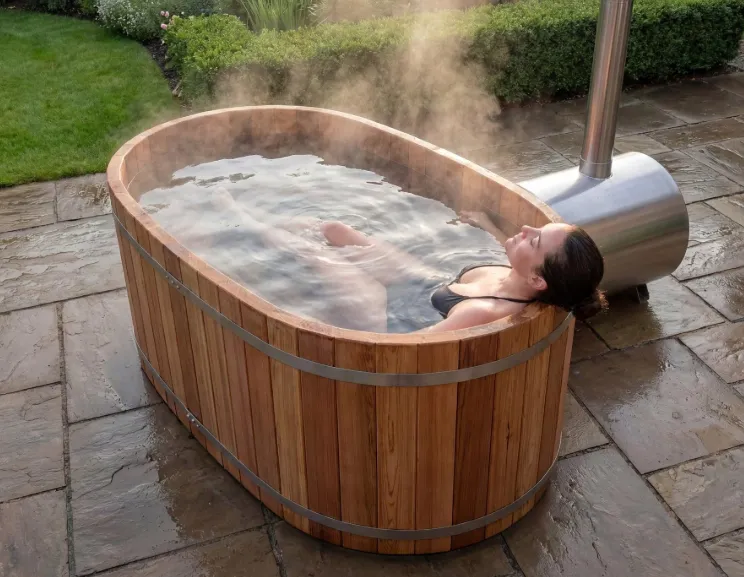
Wood-fired systems generally rely on natural convection, often called thermosiphon circulation, rather than an electric circulation pump. The fire heats the water, the warmer water rises, and cooler water moves toward the heater to be warmed.
It's a simple principle, but it works.
The design of the heater, its output, the plumbing arrangement, and the tub's water volume all affect how quickly heat moves through the system.
There's another detail worth knowing: the water may not be the same temperature everywhere during heating.
The upper water can become hotter while cooler water remains lower in the tub.
So don't stick a thermometer near the surface, see a high number, and assume the entire tub is ready.
Mix the water and check the temperature properly before getting in.
That small step can prevent a very uncomfortable surprise.
How Much Wood Will You Need?
There's no single number that works for every tub.
The amount depends on the size of the tub, starting water temperature, heater efficiency, type of wood, weather, and how much heat you're losing along the way.
What I've found more useful is to think in terms of a repeatable routine.
Use the same type of dry firewood for several heating cycles. Pay attention to how much you burn and how long it takes to reach your preferred temperature.
After a few sessions, you'll develop a feel for your particular setup.
That's actually one of the nice things about a wood-fired tub. It becomes predictable once you've learned your own system.
How Can You Heat a Wood-Fired Hot Tub Faster?
You don't need to get clever with it. A few basics make the biggest difference.
Start with dry firewood. Don't compromise here.
Use a properly sized heater. A large tub paired with an undersized stove will test your patience.
Start with the warmest reasonable water. In warmer weather, this happens naturally. If you have a practical way to reduce the temperature gap, it helps.
Keep the cover on while heating when appropriate. You're trying to keep the heat in.
Protect the tub from unnecessary wind exposure. A sheltered location can make a noticeable difference.
And keep the fire going steadily rather than constantly letting it die down and rebuilding it. Consistency is usually better than repeatedly starting from scratch.
Is 2–4 Hours Too Long?
That depends on what you expect from a hot tub.
If you want to decide at 8:00 p.m. that you'd like to soak at 8:15, a wood-fired system probably isn't the setup you're looking for.
But if you're planning ahead, the timing becomes much less of an issue.
Light the fire a few hours before you want to soak. Get your water heating. Check the temperature as you go. By the time you're ready to use the tub, the work is mostly done.
That's really the trade-off.
Wood-fired heating takes more involvement, but it doesn't depend on a traditional electric heating system.
For cabins, rural properties, off-grid setups, or anyone who simply enjoys the ritual of tending a fire, that can be a very appealing arrangement.
The Bottom Line
So, how long does it take to heat a wood-fired hot tub?
For most setups, 2–4 hours is a reasonable expectation, but don't lock yourself into that number. Your actual time will depend on water volume, starting temperature, firewood, heater size, insulation, and weather.
The first few heating cycles are the learning period.
After that, you'll know your tub.
You'll know how much wood to start with, when to add more, how quickly the temperature climbs, and when the water is genuinely ready—not just hot on the surface.
And that's the part that makes wooden hot tubs different from a typical plug-in spa. There's a little more involvement. But for many owners, that's not a drawback. It's exactly why they chose a wood-fired setup in the first place.























Sign in to leave a comment.