
It sounds like a simple question: how many active MC numbers exist in the United States right now? Ask five websites and you may get five different answers, some rounded, some years old and some describing a different group entirely.
The confusion comes from several distinct counts getting mixed together. There is the number of companies registered with a USDOT number, the number of docket numbers, the number of individual operating authorities, and the number currently in active status. Each answers a different question.
When you run an MC Number Lookup on a single carrier, you are reading one docket record out of a very large federal database. A DOT Number Lookup on the same company often shows a different set of details, and tools such as Carrier90 present both records in a readable format.
Those individual records matter because national totals are built from them. Whether you are sizing the market, comparing the Largest Fleets with thousands of tiny operators, or reading a CSA Score in context, you need to know which population you are talking about.
Counting also touches fraud. Chameleon Carriers and short-lived authorities distort totals, which is one reason a raw headline number is less meaningful than it appears.
This article separates the different counts, shares the official 2026 figures that can be verified, and explains why no single "active MC numbers" figure is as clean as it sounds. It also shows how to check the data yourself.
The Short Answer, and Why It Is Not a Single Number
FMCSA does not publish one plain headline stating how many active MC numbers exist. Its public statistics describe registered carriers, drivers and vehicles in one place, and they describe operating authority in a separate overview that relies on a different snapshot.
That separation is not an oversight. The two datasets measure different things, and the agency's own note explains that the operating authority overview is based on a licensing snapshot taken on May 15, 2026, while the census-style figures follow a regular schedule.
So the honest answer has layers. There is a verified count of active carriers with USDOT numbers, there is a smaller and differently defined group that holds operating authority, and there is a still smaller group that is currently in active authority status.
Anyone quoting a single rounded figure for "active MC numbers" is usually blending these layers. Sometimes the source is a mid-2025 article, sometimes it is a census total, and sometimes it is a private database with its own definitions.
The sections below explain each layer so you can use whichever number fits your purpose. If you need an exact figure for your own report, the last part of this article shows how to pull it directly.
The Verified 2026 Numbers
FMCSA's Registration Statistics page is the best public starting point. Its data, from a snapshot dated August 28, 2026, lists 2,122,441 active motor carriers, along with roughly 9.5 million drivers and about 8.5 million vehicles reported by those carriers.
These figures count active motor carrier companies with USDOT numbers, whether they operate interstate or intrastate. That is a broad population that includes for-hire fleets, private fleets and many small businesses that will never need an MC number.
The total is close to a mid-2025 figure reported by a third-party summary of FMCSA data, which put the count near 2.09 million. That comparison suggests the carrier universe has been relatively steady rather than swinging sharply.
The same third-party summary estimated that about 71 percent of regulated carriers are dedicated for-hire companies and around 27 percent are private fleets, with some holding both classifications. Treat those shares as approximations, since they come from a secondary source and a different date.
It is worth noticing what these numbers do not say. A carrier with a USDOT number is not automatically a carrier with an MC number, so 2.12 million is not the count of active MC numbers.
What the census total gives you is a ceiling and a sense of scale. Everything that follows about MC numbers is a subset of this larger population.
Why USDOT Counts and MC Counts Differ
A USDOT number identifies a regulated entity and is used to track safety information. An MC number is a docket number connected to operating authority, which is a separate permission to conduct certain for-hire transportation.
FMCSA explains that entities with active USDOT numbers need operating authority only in specific situations. Those include for-hire carriers moving passengers or federally regulated property across state lines, along with brokers, freight forwarders and some specialized carriers.
Plenty of businesses never meet those conditions. A construction company hauling its own equipment, a food distributor running a private fleet and a plumber with a service van can all hold a USDOT number without ever applying for authority.
Intrastate for-hire carriers add another layer. They may be regulated by their state rather than by federal operating authority, so they show up in the census but not in the docket count.
There are also exemptions for certain commodities and for carriers that operate only within federally designated commercial zones. These carriers appear in registration data while sitting outside the typical MC universe.
The result is that the MC population is a fraction of the USDOT population. Estimating the exact fraction requires the authority data itself, not a shortcut based on shares of the census total.
What an MC Number Actually Represents
The MC number is often described as a license, and that is a reasonable shorthand. More precisely, it is the docket number under which FMCSA tracks a company's operating authority filings.
Docket prefixes tell you the type of entity. MC numbers are issued to U.S.-based motor carriers and brokers, FF numbers go to freight forwarders, and MX numbers are for Mexico-based carriers approved to operate in the United States.
Within a docket, there can be several authority types. A company may hold common authority, contract authority and broker authority at the same time, and FMCSA notes that multiple existing authorities can share one docket number.
That detail changes how counting works. If you count authorities, a company holding two of them appears twice, and if you count docket numbers, the same company appears once.
Neither method is wrong. They answer different questions, so a report should state which unit it is counting.
This is also why one website can say there are more "active authorities" than another says there are "active MC numbers" without either being mistaken. The definitions differ, and the reader is left to notice.
How Status Decides What Counts as Active
Even within the docket population, "active" is not a given. FMCSA's licensing records show statuses such as active, pending, inactive, suspended, revocation pending and revoked, each reflecting where a company stands on registration, insurance and process agent requirements.
Only an active status means a carrier can legally operate under that authority. Everything else requires some action before the company can begin or resume hauling.
Pending status deserves a note. A new applicant is not yet authorized while the application moves through review and a protest period, and insurance and process agent filings must be on file before authority becomes active.
Inactive and revoked records tend to remain in the database. That is why a count of all docket numbers ever issued is far larger than the count of currently active ones.
If you use a lookup tool, the status field is where you see this in practice. A search that returns a docket number with an inactive or revoked status is describing a record that should not be included in any count of active MC numbers.
Insurance lapses are among the most common reasons a status changes. A carrier can move from active to a revocation process in a matter of weeks if required filings are cancelled and not replaced.
Brokers and Freight Forwarders in the Count
Not every MC number belongs to a truck operator. Brokers arrange transportation for shippers and also hold MC numbers, and freight forwarders hold FF numbers.
A third-party summary of FMCSA data reported 28,351 active property brokers in 2023, plus about a thousand household goods brokers. Those figures are dated, so treat them as a rough sense of scale rather than a current count.
Brokers do not own trucks, so they never appear in fleet-size statistics. They do appear in the authority population, which means a national MC total includes both movers of freight and arrangers of it.
Household goods movers form yet another group. The same source reported thousands of active household goods carriers in 2023, and these operate under distinct rules and insurance requirements.
When you read a claim about the number of "trucking companies with MC numbers," ask whether brokers were included. A count that mixes carriers and brokers overstates the number of companies actually hauling freight.
How 2026 Registration Changes Affect the Count
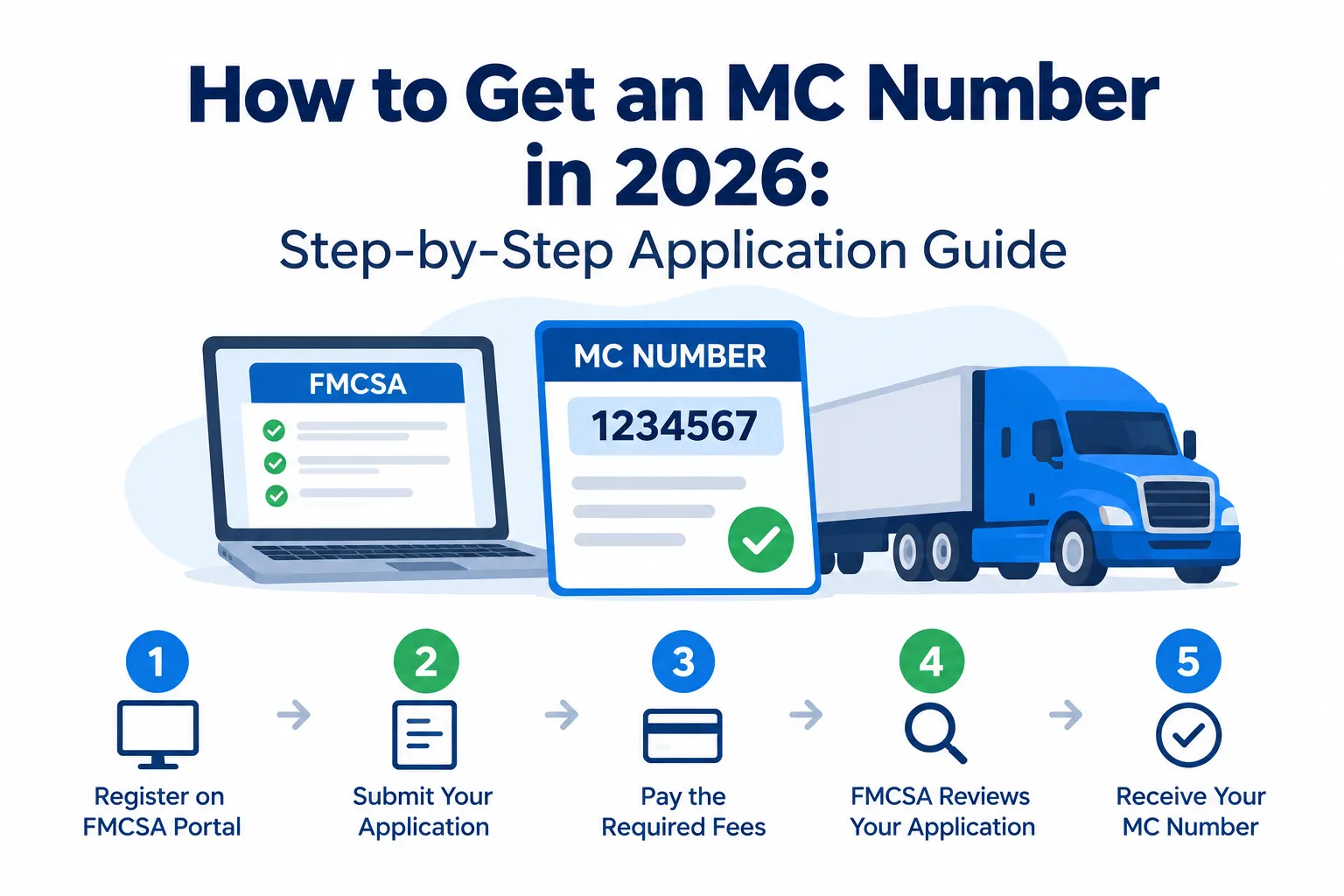
FMCSA launched its new Motus registration system for all registrants on May 14, 2026, and the older URS, the L&I public filing system and the Portal's registration options were retired that evening. The agency described it as replacing a long-standing patchwork of separate systems.
For counting, this creates a timing problem. The operating authority overview in FMCSA's statistics uses a snapshot from May 15, 2026, right around the transition, while other registration data has a later snapshot.
Existing USDOT and docket numbers were not changed by the transition, and MC, MX and FF prefixes remain in use. Motus randomizes numbers issued after launch, so newly registered carriers may have identifiers that look different from older ones.
Some commentary also warns that older lookup paths may struggle to find carriers with the new number formats. If a tool cannot find a recent registrant, that says something about the tool, not necessarily about the carrier.
You may have read that MC numbers were eliminated in October 2025. FMCSA has described the idea of ending MC number assignments as a proposal still under consideration, with public comment required through a rulemaking notice before any change takes effect.
That distinction matters for any 2026 count. As of the sources reviewed here, MC numbers continue to exist, so a count of active ones remains meaningful.
Why the Number Keeps Moving
The population of MC holders is never static. New authorities are granted, others go inactive, and some are revoked, which means any count is really a snapshot of a moving target.
The surge in new carrier start-ups after 2020 has cooled, according to one third-party summary, with net registrations recently flat or shrinking even while new authorities are still being issued. That pattern fits a market where many small operators enter and exit within a few years.
Enforcement adds to the churn. One independent analysis of FMCSA datasets estimates that roughly two thousand carriers are placed out of service each month, with a large share tied to new entrants that never completed a safety audit or could not be contacted.
Insurance also drives movement. A wave of cancellations can push many carriers out of active status at once, then back in as filings are restored.
For anyone tracking the number over time, the takeaway is to compare like with like. A monthly snapshot from the same source using the same definition is far more useful than combining figures from different websites.
It also explains why a figure quoted in a blog post from last year is a poor guide today. Even a correct number can be stale within a quarter.
Where Carriers Are Concentrated
Carrier counts are not spread evenly. States with major freight volumes, such as Texas, California, Florida and Illinois, tend to have the largest numbers of registered carriers.
Regional shifts also show up in the data. A summary of 2024 trends noted that several large Southern states lost more than five percent of their carriers in the first half of that year, while only a handful of smaller states saw increases.
These patterns affect how you interpret a national total. A drop in the count may reflect a few states with high exit rates rather than a broad decline.
Registration location is not the same as operating location. A carrier with a Texas address may run freight across dozens of states, so state totals describe where companies are based, not where trucks travel.
For market analysis, pair the national figure with state-level data from FMCSA's custom reports. That combination shows both the size and the shape of the industry.
How to Check the Data Yourself
The most reliable approach is to go to the source. FMCSA's A&I Online Registration Statistics page provides data highlights and a Custom Reports tool for building your own queries by state, classification and authority type.
For deeper analysis, FMCSA's open data program publishes a Company Census File. It contains active, pending and inactive entities, and it discloses operating authority numbers and their status for active entities.
Working with the census file lets you define exactly what you are counting. You can filter to active status, separate carriers from brokers, and decide whether to count dockets or individual authorities.
Document your definition and the snapshot date. A number without a stated unit and date cannot be compared with anything else and is easy to misquote later.
If you only need a sanity check for a single company, use a lookup. A quick MC number lookup or usdot number lookup will show whether a specific docket is active without requiring you to process a national dataset.
Carrier90 and similar tools can help with that individual view, but treat them as a convenient reading of public records. For anything that will appear in a report, confirm the figure against FMCSA.
Reading Numbers From Other Websites Carefully
Many articles quote counts without naming a source or date. If a page gives a round figure with no snapshot date, treat it as a rough estimate at best.
Look for the unit being counted. "Carriers," "trucking companies," "authorities" and "MC numbers" are not interchangeable, and a page that switches among them is probably blending datasets.
Watch for confident claims that conflict with official statements. Several websites have asserted that MC numbers were eliminated in October 2025, while FMCSA describes that change as a proposal still under consideration.
Be cautious with sites that sell leads or software. Their figures may be accurate, but they are often presented to support a product, so verify anything important independently.
A helpful test is to see whether you can reproduce the number. If a page cites FMCSA data and a snapshot date, you can check it, and if it does not, you are relying on trust.
What the Numbers Mean for Carrier Vetting
Knowing the size of the population helps put individual checks in perspective. With millions of registered entities and a constantly changing group of active authorities, no one can rely on memory or a stale list.
A dot number lookup by name is useful when you only have a company name, but names are not unique. Confirm the match by comparing address and phone number with what the carrier provided.
Authority status is the first thing to read. A docket that is not active is not a valid basis for tendering freight, regardless of how established the company seems.
Then look at fleet size and safety history. A carrier reporting a small fleet with a heavy workload deserves a question, and safety data helps you judge whether the company's operation matches its paperwork.
Licensing and insurance FMCSA records also matter. Whether you look at FMCSA insurance and licensing details in the current registration system or through a tool built on it, confirm that the required filings are current before dispatching a load.
Finally, remember that any lookup is a snapshot. Save a dated copy of what you saw, and recheck carriers you use repeatedly.
Conclusion
There is no single, clean answer to how many active MC numbers exist. The verified 2026 figure is that FMCSA counts about 2.12 million active carriers with USDOT numbers, and only a subset of those hold operating authority in active status.
For a precise count, use FMCSA's registration statistics and the Company Census File, state whether you are counting dockets or authorities, and record the snapshot date. For any individual carrier, the practical step is simpler: confirm the docket status and insurance filings in an official record before you rely on the number.
































Sign in to leave a comment.