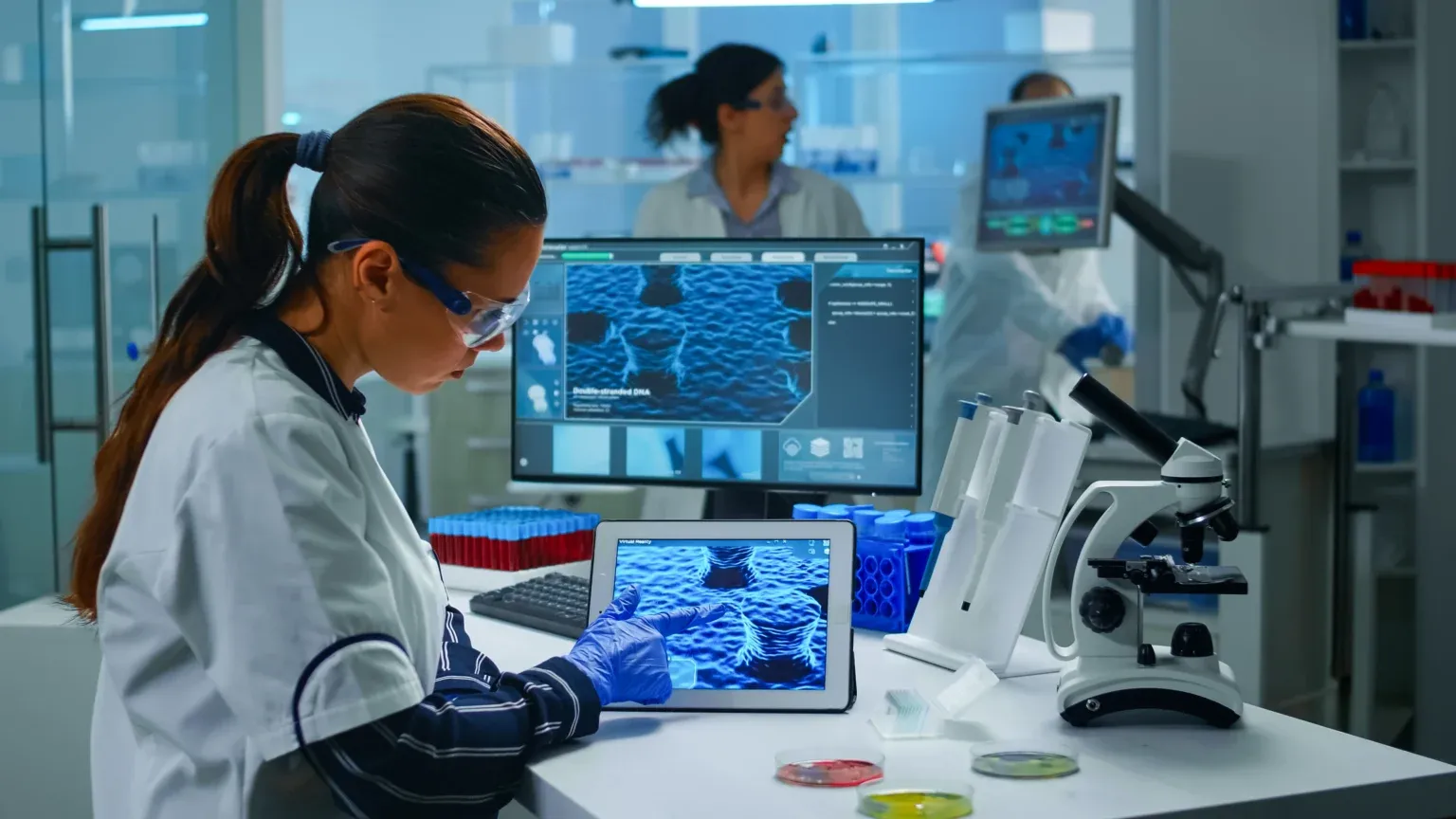

The landscape of Infectious disease diagnostics is undergoing a significant transformation. While conventional microbiological methods such as culture remain an important part of clinical diagnosis, advances in molecular biology are enabling laboratories and clinicians to identify pathogens directly from their genetic material. Technologies such as PCR, RT-PCR, multiplex PCR, next-generation sequencing and AI-assisted data analysis are helping move infectious disease testing toward faster, more comprehensive and increasingly precise diagnostic workflows.
For clinicians, hospitals and diagnostic laboratories, this evolution is particularly important. Infectious diseases can present with overlapping symptoms, multiple pathogens may be involved, and prior antimicrobial treatment can complicate conventional detection. Molecular diagnostics provide additional tools to address these challenges and support more informed clinical decision-making.
The Diagnostic Challenge: When Symptoms Do Not Reveal the Pathogen
Fever, cough, respiratory distress, gastrointestinal symptoms, urinary complaints and systemic inflammation can be caused by many different infectious agents.
In several clinical scenarios, symptoms alone cannot reliably identify the pathogen responsible for the infection.
This can create significant diagnostic uncertainty, particularly in:
- Respiratory infections
- Sepsis and critical-care infections
- Gastrointestinal infections
- Urinary tract infections
- Sexually transmitted infections
- Neonatal and paediatric infections
- Device-associated infections
- Transplant-associated infections
- Recurrent infections
- Infections in immunocompromised patients
Accurate pathogen identification therefore becomes an important component of effective infectious disease management.
Conventional Culture: An Essential Tool with Practical Limitations
Microbial culture has been fundamental to infectious disease diagnosis for decades and continues to play an important role, particularly where phenotypic antimicrobial susceptibility testing and organism isolation are required.
However, culture-based testing depends on the ability of microorganisms to grow under laboratory conditions.
This can create challenges when:
- The pathogen is difficult or slow to culture
- The microbial load in the specimen is low
- Antibiotics have already been administered
- The organism requires specialised growth conditions
- Multiple microorganisms are present
- Rapid clinical decisions are required
- The infection involves microorganisms that are difficult to cultivate routinely
In such circumstances, molecular diagnostics can complement conventional microbiology by detecting pathogen-specific genetic material directly from clinical specimens.
From Growing Pathogens to Detecting Their Genetic Signatures
Molecular diagnostics introduced a fundamentally different approach to infectious disease detection.
Instead of waiting for microorganisms to multiply sufficiently for laboratory identification, molecular tests can search for specific sequences of pathogen DNA or RNA.
This shift enables laboratories to investigate infections at the genetic level.
Techniques commonly used in modern molecular diagnostic workflows include:
Polymerase Chain Reaction — PCR
PCR amplifies selected DNA sequences so that pathogen-specific genetic targets can be detected even when only limited genetic material is present in a sample.
It has become an important technology across many areas of infectious disease testing.
Reverse Transcription PCR — RT-PCR
For pathogens with RNA genomes, RNA can first be converted into complementary DNA before amplification.
RT-PCR is therefore particularly relevant to the detection of many viral pathogens.
Next-Generation Sequencing — NGS
NGS enables analysis of much larger quantities of genetic information and can provide deeper insights into microorganisms, genetic variants and complex microbial populations.
Its expanding role in infectious disease diagnostics is also supporting genomic surveillance and research into emerging pathogens and antimicrobial resistance.
The Evolution from Single-Pathogen Testing to Multiplex PCR
Traditional molecular assays may be designed to detect one pathogen at a time.
However, many clinical syndromes can be caused by numerous organisms that produce similar symptoms.
A patient presenting with respiratory symptoms, for example, may have one of several viral or bacterial infections. Similarly, gastrointestinal disease, sexually transmitted infections and sepsis can involve multiple possible pathogens.
Testing each organism separately can require multiple assays, additional sample volume and greater laboratory resources.
This is where multiplex PCR becomes particularly valuable.
Multiplex PCR is designed to detect multiple genetic targets within a single testing workflow.
Depending on the panel design and clinical indication, this can allow laboratories to investigate several potential pathogens simultaneously.
Why Multiplex Testing Matters in Clinical Practice
Multiplex molecular panels can provide a broader view of the possible microbial causes associated with a clinical syndrome.
Potential advantages include:
- Simultaneous detection of multiple targeted pathogens
- Identification of possible co-infections
- Reduced dependence on sequential single-pathogen testing
- Efficient use of available clinical samples
- Faster narrowing of potential infectious causes
- Greater diagnostic coverage for complex clinical presentations
Rather than asking only:
“Is pathogen A present?”
a multiplex approach can help address the broader clinical question:
“Which of the relevant pathogens associated with this syndrome can be detected in this sample?”
This change in diagnostic approach can be particularly important when several organisms can produce nearly identical clinical presentations.
Detecting Co-Infections and Complex Infectious Disease Profiles
Not every infection involves a single pathogen.
Co-infections can occur, particularly in vulnerable patients and in complex clinical environments.
When testing is restricted to one suspected pathogen, additional infectious agents may not be investigated unless further tests are specifically ordered.
Multiplex molecular diagnostics can help laboratories evaluate multiple predefined organisms simultaneously and identify potential co-detection patterns.
These results must always be interpreted alongside the patient’s clinical condition, specimen type and other diagnostic information. Detection of microbial genetic material does not automatically establish causation in every clinical context.
The value lies in providing clinicians with more comprehensive laboratory information on which to base their assessment.
Culture-Negative Infections: Where Molecular Detection Can Add Value
One of the most challenging situations in infectious disease diagnosis occurs when clinical evidence strongly suggests infection but conventional cultures remain negative.
Culture-negative results may occur for several reasons, including prior antimicrobial exposure, low organism burden, difficult-to-culture microorganisms or specimen-related factors.
Molecular assays do not rely on microbial replication in the same way as conventional culture. Instead, they detect targeted nucleic acid sequences.
This makes molecular testing an important complementary approach in selected culture-negative or diagnostically challenging cases.
It does not mean that molecular testing replaces culture.
The two technologies provide different types of information and can be most powerful when incorporated appropriately into an integrated diagnostic strategy.
Molecular Diagnostics and Antimicrobial Resistance
The global rise of antimicrobial resistance has increased the need for more precise infectious disease diagnosis.
When the causative pathogen is uncertain, broad-spectrum antimicrobial therapy may sometimes be initiated empirically while diagnostic information is awaited.
Rapid identification of relevant pathogens can provide additional evidence to support antimicrobial stewardship decisions.
Molecular testing can also be designed to detect specific genetic markers associated with antimicrobial resistance.
This creates the possibility of obtaining information about:
Pathogen identity + selected resistance determinants
within an integrated molecular workflow.
However, genetic resistance markers and phenotypic susceptibility are not always interchangeable. Molecular AMR findings should therefore be interpreted within the appropriate clinical and microbiological context.
Where Artificial Intelligence Enters the Diagnostic Workflow
As molecular assays become more sophisticated, they can generate increasingly complex datasets.
A multiplex panel may contain numerous targets. Sequencing technologies can generate substantially larger volumes of genomic information.
The diagnostic challenge therefore begins to shift from simply generating data to analysing it effectively.
Artificial intelligence and computational analytics can assist with this process.
AI-enabled systems can potentially support:
- Processing complex molecular datasets
- Identifying patterns across multiple targets
- Supporting interpretation of genomic information
- Standardising parts of the analytical workflow
- Recognising unusual combinations or trends
- Integrating diagnostic information more efficiently
- Supporting surveillance of emerging infectious patterns
The role of AI is not to replace the clinician or microbiologist.
Its value lies in helping specialists process complex information and convert large datasets into more interpretable diagnostic insights.
From Laboratory Data to Clinical Intelligence
The future of infectious disease testing is therefore not simply about detecting more microorganisms.
It is about generating information that can better support clinical decision-making.
An advanced diagnostic workflow may combine:
Molecular biology → Multiplex pathogen detection → Resistance marker analysis → Computational interpretation → Clinical correlation
This interconnected approach has the potential to move diagnostics beyond isolated laboratory results toward a more comprehensive understanding of infection.
For clinicians, this can mean receiving information that helps narrow the diagnostic possibilities.
For laboratories, it can mean expanding molecular testing capabilities without relying exclusively on multiple sequential assays.
For healthcare systems, improved pathogen identification can contribute to infection surveillance and antimicrobial stewardship programmes.
Molecular Diagnostics Across Clinical Specialties
Infectious diseases affect almost every field of medicine.
This is why molecular testing is increasingly being developed around clinical syndromes and specialties, rather than only around individual microorganisms.
Pulmonology
Respiratory infections can involve viral, bacterial and fungal pathogens with overlapping clinical presentations. Molecular respiratory panels can help investigate multiple relevant targets from respiratory specimens.
Gastroenterology
Diarrhoeal and gastrointestinal diseases may be associated with numerous bacterial, viral or parasitic pathogens. Multiplex testing can broaden pathogen investigation from a single sample.
Nephrology and Urology
Urinary tract infections can involve multiple organisms, while recurrent or complicated infections may require more comprehensive investigation.
Sexually Transmitted Infections
Many sexually transmitted infections can remain asymptomatic or produce similar clinical symptoms. Molecular testing allows targeted detection of pathogen-specific genetic material and can facilitate multi-pathogen panel testing.
Neonatology and Paediatrics
Rapid infectious disease investigation can be particularly important in vulnerable neonatal and paediatric populations, where clinical deterioration may occur quickly and sample availability can be limited.
Critical Care and Sepsis
Patients in intensive-care environments may present with complex infections, previous antimicrobial exposure and multiple possible sources of infection. Molecular testing can complement existing microbiological workflows when rapid, broader pathogen investigation is clinically appropriate.
Transplantation
Immunocompromised patients may be vulnerable to a wider spectrum of infectious agents, increasing the need for sensitive and clinically targeted diagnostic strategies.
Building a More Integrated Infectious Disease Diagnostic Strategy
There is unlikely to be a single diagnostic technology that answers every infectious disease question.
The strongest diagnostic approach may involve intelligently combining different methods.
Culture can provide viable organism isolation and phenotypic susceptibility information.
PCR and RT-PCR enable targeted nucleic-acid detection.
Multiplex PCR expands testing across several predefined pathogens simultaneously.
NGS enables much broader genomic investigation.
Resistance-marker testing can identify selected genetic mechanisms associated with antimicrobial resistance.
AI and bioinformatics can help analyse increasingly complex molecular and genomic data.
The value comes from selecting and integrating these technologies according to the clinical question.
BioCipher: Combining Molecular Biology and AI for Advanced Infectious Disease Testing
BioCipher Labs is developing molecular diagnostic solutions designed around the complexity of modern infectious diseases.
By combining advanced molecular biology with technologies including PCR, RT-PCR, multiplex molecular testing, genomics and AI-driven analysis, BioCipher supports pathogen detection across a broad range of clinical specialties.
Its testing portfolio spans areas including pulmonology, gastroenterology, nephrology and urology, reproductive health, sexually transmitted infections, neonatology, transplantation, ophthalmology, dermatology, mycology and antimicrobial resistance.
The objective is to help clinicians, laboratories and diagnostic centres move from broad clinical suspicion toward more targeted molecular evidence.
The Future: From Detection to Precision Infectious Disease Diagnostics
The evolution of infectious disease diagnosis reflects a larger shift taking place across healthcare.
Diagnostics are moving from:
Single pathogen → Multi-pathogen investigation
Culture-dependent detection → Direct molecular detection
Sequential testing → Multiplex testing
Laboratory data → Integrated diagnostic intelligence
Reactive testing → Data-supported precision diagnostics
Culture will continue to remain important within microbiology. But molecular technologies are expanding what laboratories can detect, how quickly multiple pathogens can be investigated and how complex diagnostic information can be interpreted.
As pathogens evolve and antimicrobial resistance becomes increasingly challenging, the ability to combine molecular biology, genomics, multiplex testing and computational intelligence will become increasingly relevant to modern diagnostic workflows.
The future of infectious disease diagnosis will not be defined by one technology replacing another.
It will be defined by better integration of technologies to generate more precise, clinically meaningful information when it matters most.
Moving From Clinical Suspicion to Molecular Clarity
For clinicians, hospitals, laboratories and diagnostic centres, advanced molecular testing can provide another layer of evidence when conventional clinical and microbiological findings do not provide the complete picture.
BioCipher brings together molecular biology, multiplex pathogen detection and AI-enabled analysis to support a more precise approach to infectious disease investigation.
Explore BioCipher’s comprehensive infectious disease testing portfolio across multiple clinical specialties and discover how molecular diagnostics can support your laboratory or clinical workflow.





















Sign in to leave a comment.