
Pricing is one of the first questions homeowners ask when they start researching Custom Window Treatments, and it's also one of the hardest to answer with a single number. Cost depends on room, material, size, and whether you're motorizing. This guide breaks down typical national price ranges by room, so you know roughly what to expect before you request a quote.
A note on the numbers below: these are general market averages compiled from national home-improvement pricing guides, not quoted prices from BAMU Blinds. Actual project cost depends on your specific windows, product choice, and installation needs, and is best confirmed through a free consultation.
What Affects the Cost of Custom Window Treatments
Several factors combine to determine what a project actually costs:
- Window size and count — larger or more numerous windows increase material and labor
- Material — vinyl and faux wood run lower, real wood and premium fabrics run higher
- Product type — blinds, shades, shutters, and drapery each have different price bands
- Motorization — adding a motor typically increases per-window cost
- Installation — professional measuring and mounting adds a labor cost, but reduces the risk of an ill-fitting product
Fabric and finish choice also plays a role. A budget-friendly vinyl blind and a premium real-wood blind serve the same basic function, but the price difference can be significant, and that gap widens further once motorization or a specialty fabric is added.
Room-by-Room Cost Breakdown
National pricing guides put together by home-improvement research sites offer a useful starting point. Here's how the numbers generally break down by room and product type.
Kitchen
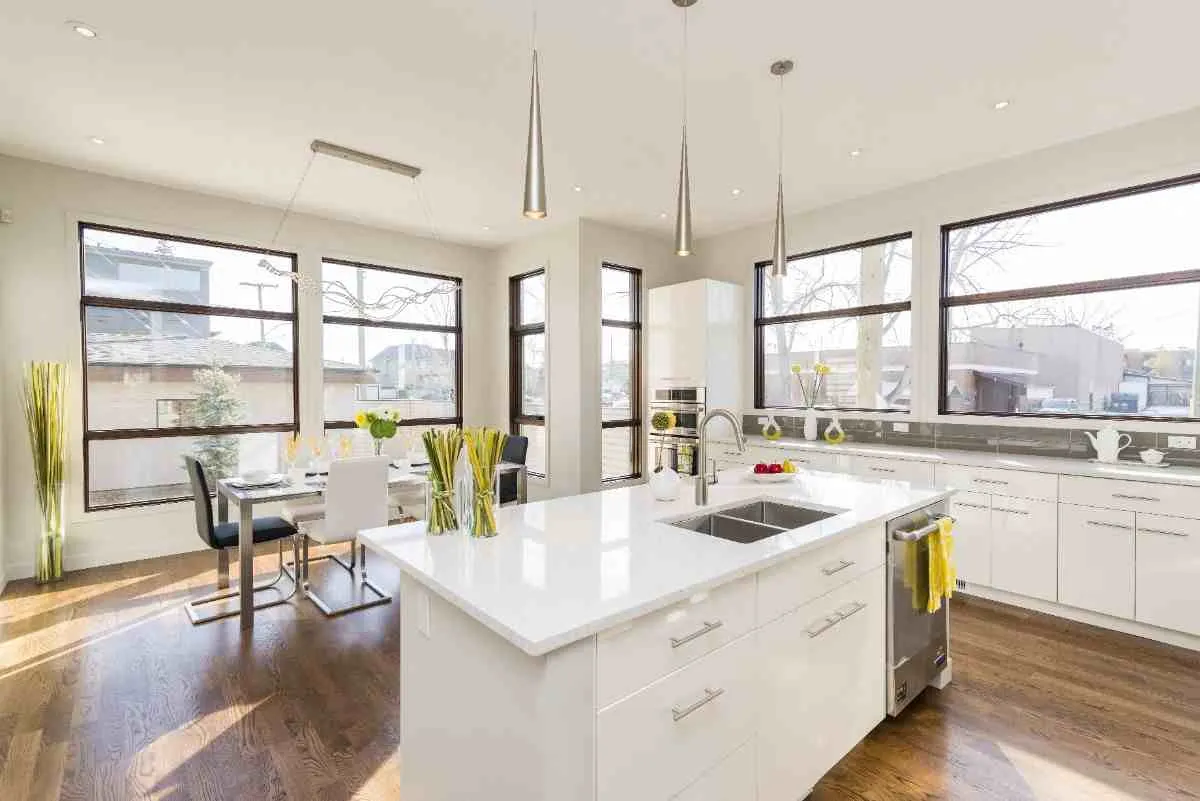
Kitchens usually call for moisture-resistant, easy-to-clean options. Faux wood or vinyl custom blinds are common choices here, generally running in the $50 to $250 per-window range according to national cost guides, with roller shades in a similar band.
Bathroom
Bathrooms have similar moisture concerns. Vinyl and faux wood blinds tend to fall in the lower-to-mid range nationally, roughly $50 to $200 per window, since real wood is generally avoided in humid rooms. Moisture-resistant fabrics for shades are also available for bathrooms where a softer look is preferred over blinds.
Bedroom
Bedrooms often prioritize light control and quiet operation. Cellular and roller shades commonly range from $60 to $600 per window nationally, with motorized versions running higher, generally $350 to $1,000 per window, according to home-improvement pricing guides. Room-darkening fabrics and thicker linings typically sit toward the upper end of that range.
Living Room and Dining Room
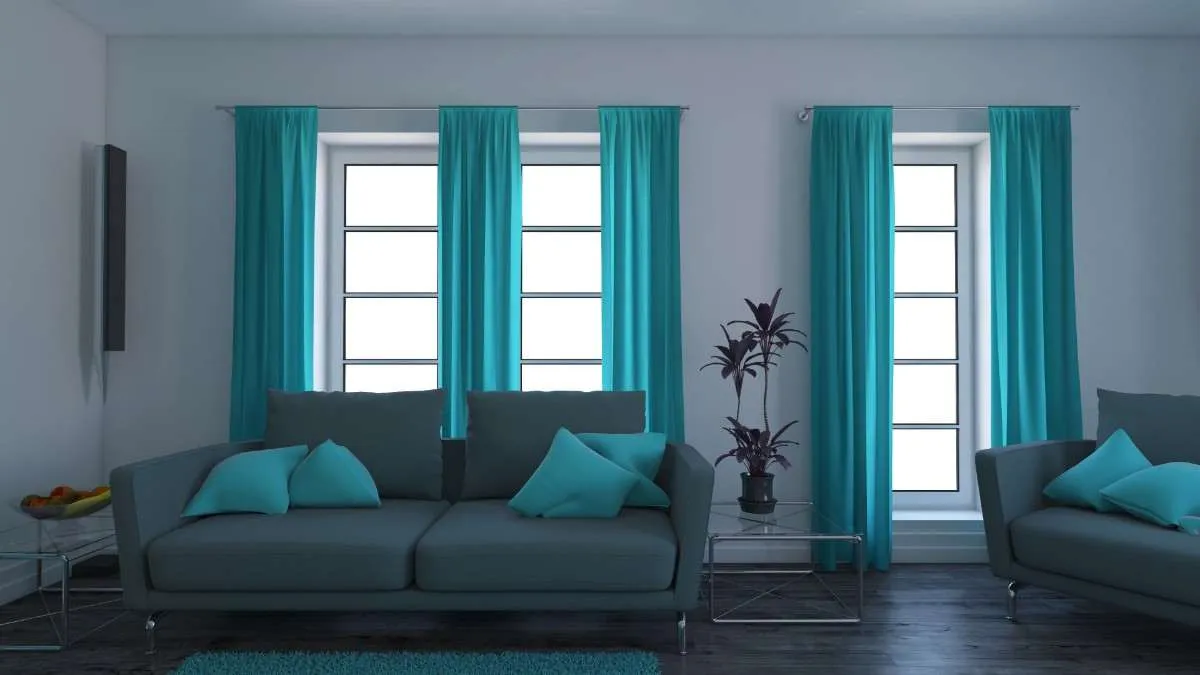
Window shutters and layered drapery are popular in these more visible, design-forward rooms. National pricing guides put plantation shutters around $150 to $800 per window, while custom curtains and drapery panels typically range from $50 to $500 per window depending on fabric.
Many homeowners layer treatments in these rooms, pairing a functional shade or shutter with decorative drapery panels. That layered approach adds to the total cost but is a common choice where the window treatment is part of the room's overall design, not just a light-control tool.
Home Office
Glare control matters most here, especially for screen visibility. Roller or cellular shades in this range work well, and many homeowners add motorization for scheduled light control throughout the workday, which adds to the base per-window price noted above.
Real-World Cost Ranges for a Full Home
Zooming out, national pricing guides estimate that a typical project across 8 to 12 windows using a mix of blinds and shades often lands somewhere between $1,500 and $6,500, while a larger home mixing shutters and shades can run from $8,000 to $12,000 or more. These figures vary significantly by region, material choice, and how many rooms are involved, so they're a starting point for budgeting, not a quote.
Because pricing varies so much window to window, most window-treatment companies, BAMU Blinds included, provide project-specific estimates only after seeing the actual windows and discussing product options.
It's also worth thinking about cost over time rather than just upfront price. Durable materials, such as real wood blinds or plantation shutters, tend to need replacement less often than budget mini-blinds, which can shift the long-term value even when the initial price tag is higher.
Why a Quote Isn't the Same as a Consultation
An online price range tells you roughly what to budget. It doesn't account for your specific window sizes, the fabric or material you'll like once you see it in person, or how many rooms you actually want to update. BAMU Blinds has brought 12+ years of experience and more than 1,000 completed projects to homes and businesses across Washington, DC, Maryland, and Virginia, and every project starts with a free in-home consultation, precise measurement, and product guidance suited to your space and budget.
That consultation is also where motorization, fabric, and room priorities get sorted out, so the estimate you receive reflects your actual windows rather than a national average. It's also the point where questions about maintenance, cleaning, and expected lifespan for each material get answered directly, rather than pieced together from different online sources.
Frequently Asked Questions
What's the average cost of Custom Window Treatments for a whole house?
Based on national pricing guides, a full-home project typically ranges from roughly $1,500 for a smaller home with basic blinds to $12,000 or more for a larger home with premium shutters and shades. Your specific total depends on window count, material, and motorization.
Are made-to-measure blinds more expensive than ready-made blinds?
Generally, yes, because they are measured and made for your exact window dimensions rather than a standard size. The trade-off is a more precise fit and fewer gaps around the frame.
Do plantation shutters cost more than blinds?
Usually. They function as a built-in architectural feature and tend to sit at the higher end of the price range compared to blinds, though they're also often considered a longer-lasting investment.
Does motorization significantly increase the price?
Yes, motorized shades and blinds typically cost more per window than manual versions, since they include a motor and control components in addition to the base product.
How can I get an accurate price for my home?
The most reliable way is an in-home consultation, where measurements, material choice, and room priorities are reviewed together, rather than relying on a national average alone.






















Sign in to leave a comment.