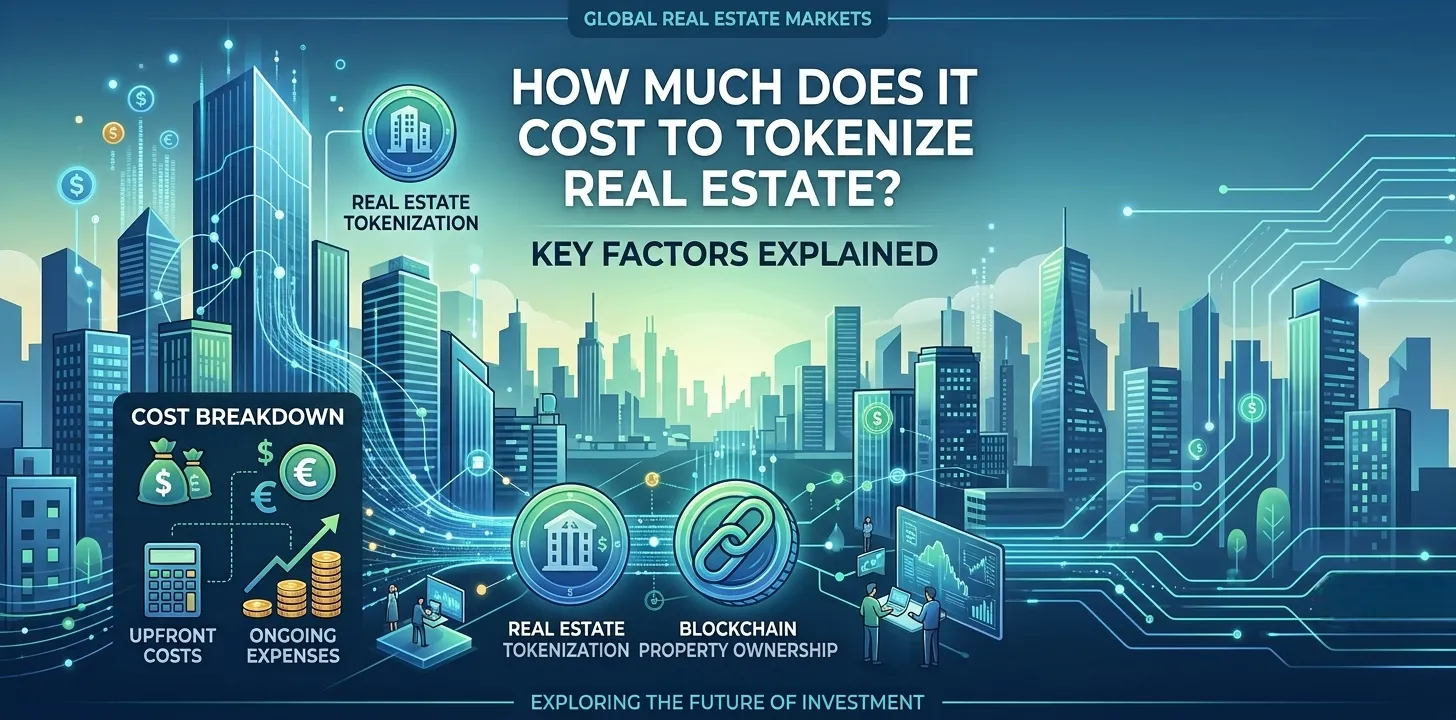

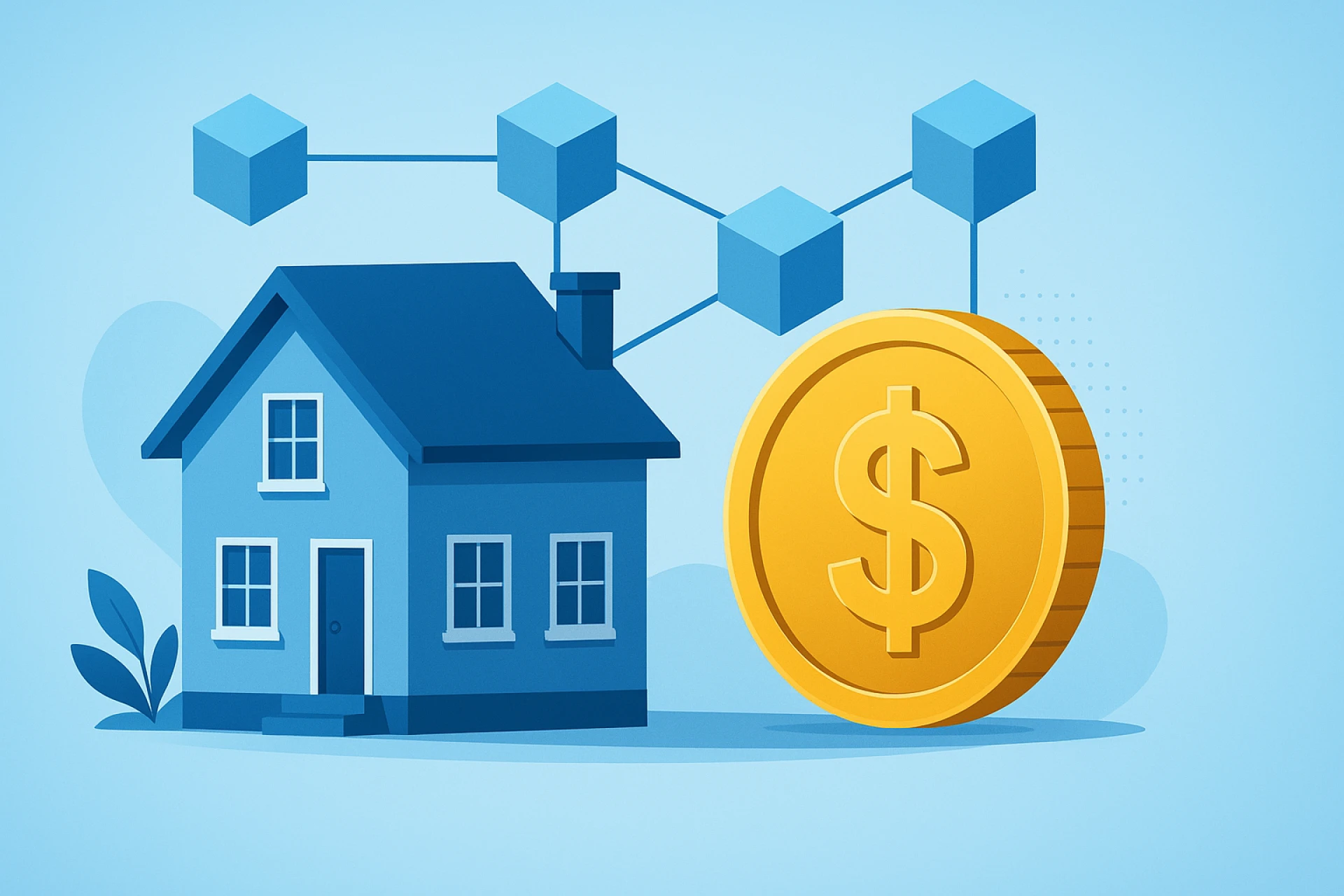
Real estate tokenization is becoming an increasingly practical application of blockchain technology. Instead of representing a property only through conventional ownership documents, tokenization can create blockchain-based digital representations of ownership interests, economic rights, debt claims, or shares in an entity that holds the property. This can support fractional investment, automated distributions, transparent ownership records, and potentially more efficient secondary-market transactions.
The market opportunity is substantial. Deloitte projects that as much as $4 trillion of real estate could be tokenized by 2035, compared with less than $0.3 trillion in 2024. The firm also highlights potential benefits such as broader investor participation, reduced administrative friction, and more efficient asset servicing.
However, one of the first questions property owners, developers, investment firms, and entrepreneurs ask is: How much does it cost to tokenize real estate?
There is no universal price because tokenization is not a single software feature. The overall budget depends on the legal structure, property type, blockchain network, smart contracts, investor onboarding, compliance requirements, platform functionality, security, and whether the project uses an existing infrastructure or requires a completely customized platform.
A relatively simple tokenization project can require a substantially smaller investment than a full-scale ecosystem with its own marketplace, compliance infrastructure, custody integrations, and secondary trading functionality. Understanding the cost components is therefore more useful than focusing on one fixed number.
What Is Real Estate Tokenization?
Real estate tokenization is the process of representing ownership or economic interests connected to real-world property through blockchain-based tokens. The underlying property generally remains an off-chain asset, while the token provides a digital mechanism for representing specified rights associated with that property or an entity that owns it.
For example, suppose a commercial property is valued at $10 million. Instead of requiring one investor to acquire the entire asset, an appropriately structured offering could divide the economic interest into 100,000 digital tokens. An investor might then acquire 1,000 tokens representing a defined fractional interest, subject to the legal and regulatory structure of the offering.
The important point is that creating tokens does not automatically transfer legal ownership of a building. The relationship between the token and the underlying property must be established through enforceable legal agreements and an appropriate ownership structure. This is one reason legal and compliance expenses can be as important as blockchain development costs.
Typical Cost of Tokenizing Real Estate
There is no industry-wide standard price, but a useful planning framework is to consider three broad project categories:
| Project type | Approximate development budget* |
|---|---|
| Basic property tokenization | $20,000–$50,000 |
| Standard tokenization platform | $50,000–$100,000 |
| Advanced/full-scale platform | $100,000–$250,000+ |
| Enterprise multi-property ecosystem | $250,000+ |
*These are indicative technology-development ranges rather than fixed market prices. Legal, licensing, regulatory, property due diligence, custody, audit, marketing, and other third-party expenses may be additional.
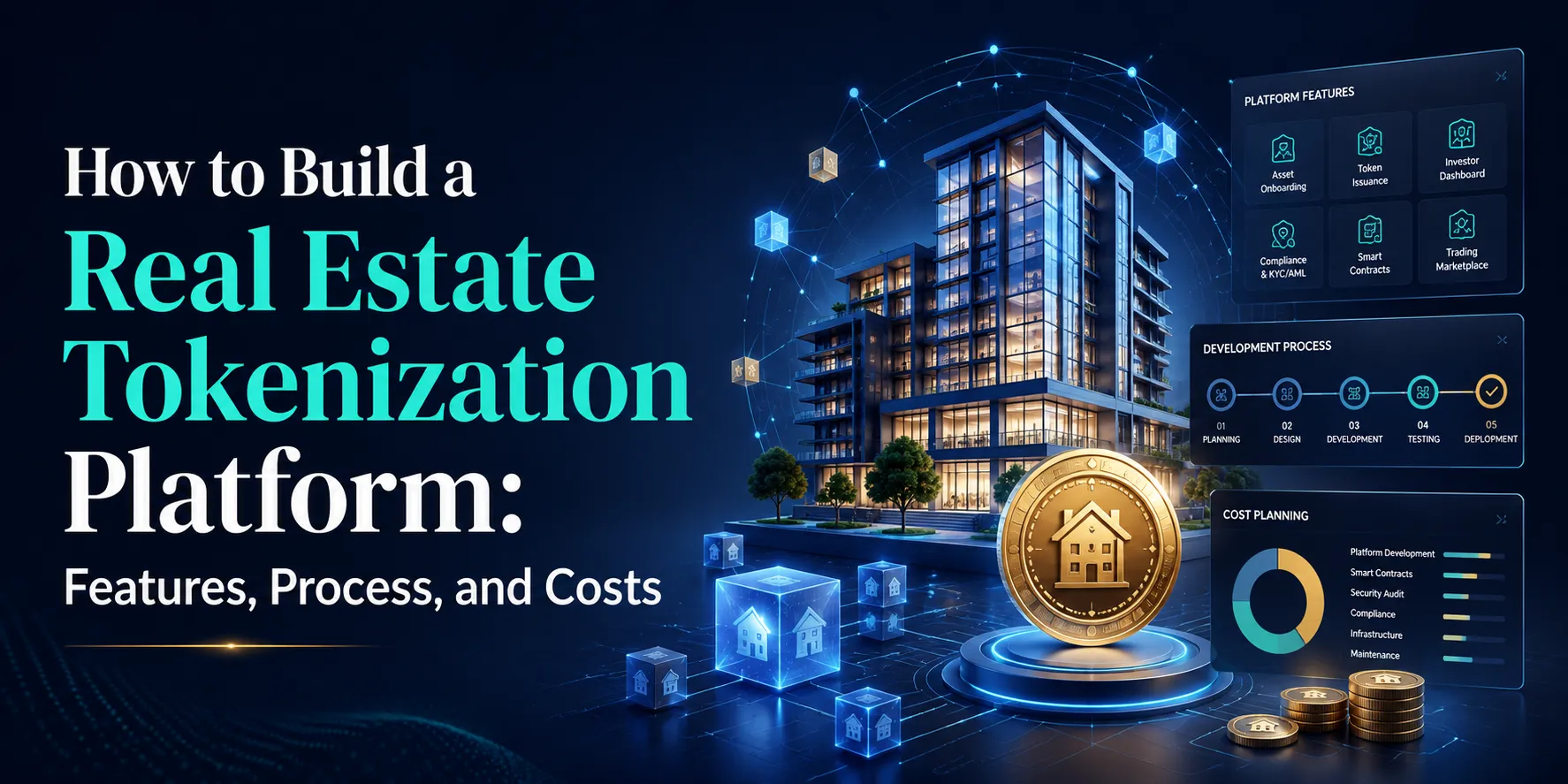
A basic implementation might involve token creation, a smart contract, an investor interface, wallet integration, and fundamental administrative functions. A larger platform could include KYC/AML workflows, investor dashboards, automated distributions, property management integrations, multiple blockchain networks, compliance restrictions, secondary-market functionality, reporting systems, and institutional-grade security.
Therefore, the question should not simply be “How much does tokenization cost?” but rather “What type of tokenization ecosystem does the business actually need?”
1. Legal and Regulatory Costs
Legal structuring is often one of the most significant parts of a real estate tokenization budget.
Before development begins, the issuer needs to determine exactly what the token represents. It could represent equity in a special-purpose vehicle, a debt instrument, fund interests, revenue-sharing rights, or another legally defined interest. The appropriate structure depends on the jurisdiction, property, investors, and nature of the offering.
Lawyers may need to address:
- Property ownership structure
- Securities and investment regulations
- Investor eligibility
- KYC and AML requirements
- Offering documentation
- Tax considerations
- Transfer restrictions
- Privacy requirements
- Custody arrangements
- Distribution and redemption rules
This is particularly important because blockchain technology does not eliminate existing property and financial laws. Deloitte similarly emphasizes the need to consider regulatory compliance, taxation, accounting, custody, confidentiality, and data integrity when implementing tokenized real estate.
Consequently, attempting to minimize legal costs by treating tokenization purely as a software-development project can create substantially greater expenses later.
2. Property Due Diligence and Structuring
The property itself also generates costs.
Before investors receive tokenized exposure to an asset, the issuer may need property valuation, title verification, financial analysis, ownership verification, environmental checks, insurance documentation, and other forms of due diligence.
For example, tokenizing a stabilized office building with clear ownership records may be relatively straightforward compared with tokenizing a property under development with complicated financing arrangements.
The more complicated the underlying asset, the more work may be required to establish a clean connection between the physical property and the digital investment structure.
This is an important distinction: the blockchain may be technically ready, but the asset still needs to be legally and commercially ready for tokenization.
3. Smart Contract Development
Smart contracts are the technical foundation of many tokenization platforms.
A smart contract can govern token issuance, transfers, investor restrictions, ownership records, distributions, voting mechanisms, redemption processes, and other rules. The complexity of these contracts directly influences development costs.
A simple token contract may require relatively limited functionality. By contrast, a regulated real estate token may require sophisticated transfer controls.
For example, the smart contract might need to prevent transfers to wallets that have not completed KYC. It might also restrict certain investors based on jurisdiction, investor category, holding limits, or regulatory requirements.
Additional functionality can include:
- Whitelisting
- Automated dividend distributions
- Investor voting
- Token locking
- Redemption
- Compliance checks
- Role-based administration
- Emergency controls
- Multi-signature authorization
The more business logic embedded into the contract, the more development and testing time is required.
4. Smart Contract Auditing and Security
Security should not be treated as an optional expense.
A vulnerability in a tokenization smart contract can potentially affect investor balances, transfer restrictions, distributions, or ownership records. Professional auditing therefore becomes particularly important when real economic value is represented on-chain.
Audit costs depend on contract complexity, blockchain, codebase size, testing requirements, and the reputation and methodology of the auditing provider.
In addition to a formal smart contract audit, sophisticated projects may conduct penetration testing, infrastructure security assessments, wallet-security reviews, and operational security testing.
Deloitte notes that tokenization does not automatically solve cybersecurity risks and that organizations must still address vulnerabilities associated with systems handling sensitive information.
5. Blockchain Selection and Infrastructure
The blockchain chosen for the project can influence both development and operational costs.
A tokenization platform may prioritize different characteristics depending on its intended users. Transaction costs, scalability, security, ecosystem maturity, interoperability, privacy, and regulatory considerations can all influence the decision.
For instance, a platform targeting frequent smaller transactions may place considerable emphasis on transaction costs. An institutional platform may instead prioritize permissioned infrastructure, compliance capabilities, privacy, and integration with existing financial systems.
Deloitte points out that different blockchains can have different trade-offs between speed, security, cost, scalability, confidentiality, and other requirements.
A multi-chain strategy can further increase development costs because the platform may need additional smart contracts, bridges or interoperability mechanisms, testing, monitoring, and infrastructure.
6. Investor Platform Development
The investor-facing platform is another major cost component.
A professional tokenization platform needs to do considerably more than display a “Buy Tokens” button. Investors may need to create accounts, complete identity verification, review offering documents, connect wallets, purchase tokens, view holdings, receive distributions, monitor property performance, and access transaction history.
A typical interface may contain:
Investor registration → KYC/AML → Offering selection → Investment → Token allocation → Portfolio management → Distributions → Reporting
The more sophisticated the user experience, the greater the development effort.
An institutional platform might also require separate dashboards for property owners, administrators, compliance teams, fund managers, and investors.
7. KYC, AML, Custody and Compliance Integrations
Real estate tokenization frequently involves regulated investment activity, which means compliance infrastructure can become a significant operational expense.
Rather than allowing unrestricted wallet-to-wallet transfers, a platform may need to verify investors before allowing them to purchase or receive tokens. Third-party providers may be integrated for identity verification, sanctions screening, accreditation checks, transaction monitoring, and other compliance processes.
Custody is another consideration. Deloitte notes that custody of tokenized assets presents distinctive challenges and that many enterprises prefer trusted third-party custodians rather than relying entirely on self-custody.
The cost therefore includes not only initial integration but potentially ongoing per-user or per-transaction fees from external providers.
8. Token Marketplace and Secondary Trading
If the objective is simply to tokenize an asset and distribute tokens to a defined group of investors, a marketplace may not be necessary.
But if the business wants investors to trade tokenized interests after issuance, the project becomes significantly more complex.
A secondary marketplace may require:
- Trading interfaces
- Order management
- Investor eligibility checks
- Transfer restrictions
- Settlement mechanisms
- Pricing systems
- Compliance monitoring
- Liquidity management
- Transaction reporting
The value of tokenization partly depends on how effectively digital ownership can interact with compliant markets. Deloitte identifies the emergence of tokenized marketplaces and exchanges as an important development in the sector.
This is one reason a full marketplace-based platform can cost considerably more than a simple token issuance system.
9. Real-World Example: Dubai's Tokenized Real Estate Initiative
Dubai provides an interesting example of how tokenization can connect technology with conventional property infrastructure.
In May 2025, the Dubai Land Department launched a tokenized real estate investment project through the Prypco Mint platform in collaboration with VARA, the Central Bank of the UAE, and Dubai Future Foundation. The first project attracted 224 investors from 44 nationalities, with an average individual investment of AED 10,714.
The example illustrates an important principle: successful property tokenization is not simply about issuing blockchain tokens. It involves regulated platforms, property authorities, financial institutions, investor onboarding, legal structures, and digital infrastructure working together.
It also demonstrates why the cost of a serious tokenization initiative can extend well beyond smart contract development.
10. Property Size Does Not Determine Development Cost
Interestingly, the value of the property does not necessarily determine the technology budget.
A $5 million property and a $500 million portfolio could potentially use similar fundamental tokenization infrastructure. What changes the development cost is the complexity of the business model.
For example, a $500 million property could use a relatively simple issuance structure, while a $20 million portfolio might require sophisticated multi-property management, investor segmentation, secondary trading, multiple jurisdictions, automated distributions, and complex compliance rules.
Therefore, development cost is driven more by platform complexity than property valuation.
How to Reduce Real Estate Tokenization Costs
Cost optimization should focus on removing unnecessary complexity rather than cutting essential security or legal work.
Using an established blockchain instead of creating a proprietary blockchain can significantly reduce infrastructure costs. Similarly, launching a focused minimum viable product before building a complete marketplace can allow businesses to validate investor demand before making a larger technology investment.
A practical approach is to begin with:
- One property or limited portfolio
- One blockchain
- Clearly defined token rights
- Essential KYC/AML functionality
- Secure smart contracts
- Basic investor dashboard
- Administrative management tools
Additional capabilities such as multi-chain support, secondary trading, advanced analytics, mobile applications, and automated integrations can then be introduced as the platform grows.
This approach is particularly useful because tokenization is still developing as a market. Deloitte forecasts substantial growth but also highlights the importance of selecting infrastructure based on regulatory, security, custody, scalability, and operational requirements.
What Is the ROI of Real Estate Tokenization?
The return on investment should not be measured simply by comparing tokenization software costs with traditional property expenses.
The larger opportunity lies in improving the entire investment lifecycle.
Tokenization may potentially expand the investor pool, enable fractional ownership, automate administrative processes, improve transparency, simplify distributions, and create new channels for capital formation.
Deloitte estimates that the tokenized real estate market could reach approximately $4 trillion by 2035, illustrating the scale of the opportunity if adoption continues.
At the same time, tokenization does not guarantee liquidity or higher property values. A token can be technically transferable while still having limited market demand. The success of a project therefore depends on the quality of the underlying asset, legal structure, investor proposition, compliance model, platform usability, and availability of a suitable market.
Conclusion
The cost of tokenizing real estate can range from tens of thousands of dollars for a focused implementation to several hundred thousand dollars or more for an enterprise-grade ecosystem. Legal structuring, property due diligence, smart contract development, auditing, blockchain infrastructure, KYC/AML, investor dashboards, custody, marketplace functionality, and ongoing compliance are the major factors that determine the final investment. With tokenized real estate expected to become a much larger part of the digital-asset ecosystem, businesses need a strategy that balances technology, regulatory requirements, security, and investor experience. Companies exploring Property tokenization development services or Real estate asset tokenization services should therefore work with an experienced technology partner capable of handling the complete lifecycle rather than treating tokenization as simply a token-creation exercise. Blockchain App Factory provides best services for real estate tokenization, helping businesses build secure, scalable, and feature-rich tokenization solutions aligned with their specific business objectives.
FAQs
1. How much does it cost to tokenize a real estate property?
A basic tokenization project may cost around $20,000–$50,000, while advanced platforms can reach $100,000–$250,000 or more depending on functionality and compliance requirements.
2. What is the biggest cost in real estate tokenization?
Legal and regulatory structuring, smart contract development, platform development, security auditing, and compliance infrastructure are usually among the most significant cost components.
3. Does tokenizing real estate mean selling the actual property?
Not necessarily. Tokens can represent ownership or economic interests connected to a legal entity that owns the property, depending on the chosen legal structure.
4. Is smart contract auditing necessary?
For serious investment platforms, independent smart contract auditing is strongly recommended because vulnerabilities can potentially affect token transfers, balances, distributions, and other critical functions.
5. Can a small property be tokenized?
Yes. Tokenization can be applied to individual properties as well as larger portfolios. However, the economic and regulatory feasibility should be assessed before development begins.






















Sign in to leave a comment.