

Stock conflicts between B2B wholesale orders and eCommerce channels are quietly draining revenue from Australian distribution and manufacturing businesses every single day. When a B2B client places a bulk order at 11 PM, and the same stock is sold online at midnight, the result is overselling, broken trust, and costly manual fixes. This is precisely why working with the right Odoo partners Australia has become one of the most strategic business decisions a distributor can make in 2026, not merely a technology upgrade.
Here is what this article covers: how Odoo ERP solves real-world stock conflict problems across B2B and eCommerce channels, why Australian distributors and manufacturers are switching fast, and what to look for before selecting a certified Odoo implementation company in Australia.
The Scale of the Problem Australian Distributors Cannot Ignore
The numbers paint a clear picture of urgency. According to the International Trade Administration, the global B2B eCommerce market is projected to reach USD 36 trillion by 2026, growing at a 14.5% compound annual growth rate. Locally, Australian wholesalers and distributors are racing to meet buyer expectations. Yet, most are still running fragmented systems in which the webstore, warehouse, and accounting platform operate independently of one another.
Research from Gartner confirms that 80% of B2B transactions are now moving to digital channels, and that shift demands inventory systems capable of real-time synchronisation across all sales touchpoints. For a distributor managing AUD 10 million in inventory, even a modest 10% reduction in stock inefficiencies returns AUD 1 to 1.5 million in working capital, according to industry benchmarks.
How Odoo Partners Australia Helps Distributors Prevent Stock Conflicts Between B2B and eCommerce Orders
Choosing a certified top Odoo partner with deep local knowledge is not just about getting software installed. It is about redesigning the operational spine of a distribution or manufacturing business so that every order channel speaks the same language in real time. Here is how experienced Odoo partners Australia make that happen:
- Real-Time Stock Reservation Across All Channels:
When a B2B order is confirmed, Odoo immediately reserves that stock across every connected sales channel — webstore, wholesale portal, and internal sales team alike — so no two channels can sell the same unit simultaneously.
- Single Source of Inventory Truth:
Rather than maintaining separate inventory records for eCommerce and B2B, Odoo creates one centralised stock register. Every quantity update, whether from a warehouse scan, an online checkout, or a sales order, flows back to the same live figure in real time.
- Channel-Specific Pricing Without Stock Conflicts:
Odoo enables distributors to run separate pricing rules for B2B wholesale clients and eCommerce customers, without splitting inventory pools. A wholesale buyer receives their negotiated contract price while an eCommerce customer sees the retail rate, all drawing from the same unified stock figure.
- Automated Stock Alerts and Reorder Triggers:
Once stock drops to a defined threshold, Odoo automatically triggers purchase orders or alerts the procurement team, eliminating the human lag that can lead to overselling during demand spikes or night-time order windows.
- Seamless B2B Portal and eCommerce Integration:
A properly configured Odoo ERP implementation connects the native B2B customer portal directly to the same inventory engine powering the eCommerce storefront. Account-specific catalogues, credit limits, and order histories are all visible in one place, eliminating the confusion that leads to duplicate or conflicting orders.
- Audit Trail for Every Stock Movement:
Every reservation, release, and fulfilment is timestamped and logged inside Odoo, giving distribution managers full visibility into which channel touched which stock unit and when — critical for resolving disputes and improving future planning.
Odoo ERP implementation in Australia has gained considerable momentum, and the data supports the enthusiasm. Odoo now serves over 16 million users worldwide, with more than 120,000 new customers onboarding every single year as of 2026.
Summing Up
The right Odoo partners Australia will not just prevent stock conflicts. They will build the operational infrastructure that allows a distribution or manufacturing business to scale B2B and eCommerce simultaneously — without one channel sabotaging the other.
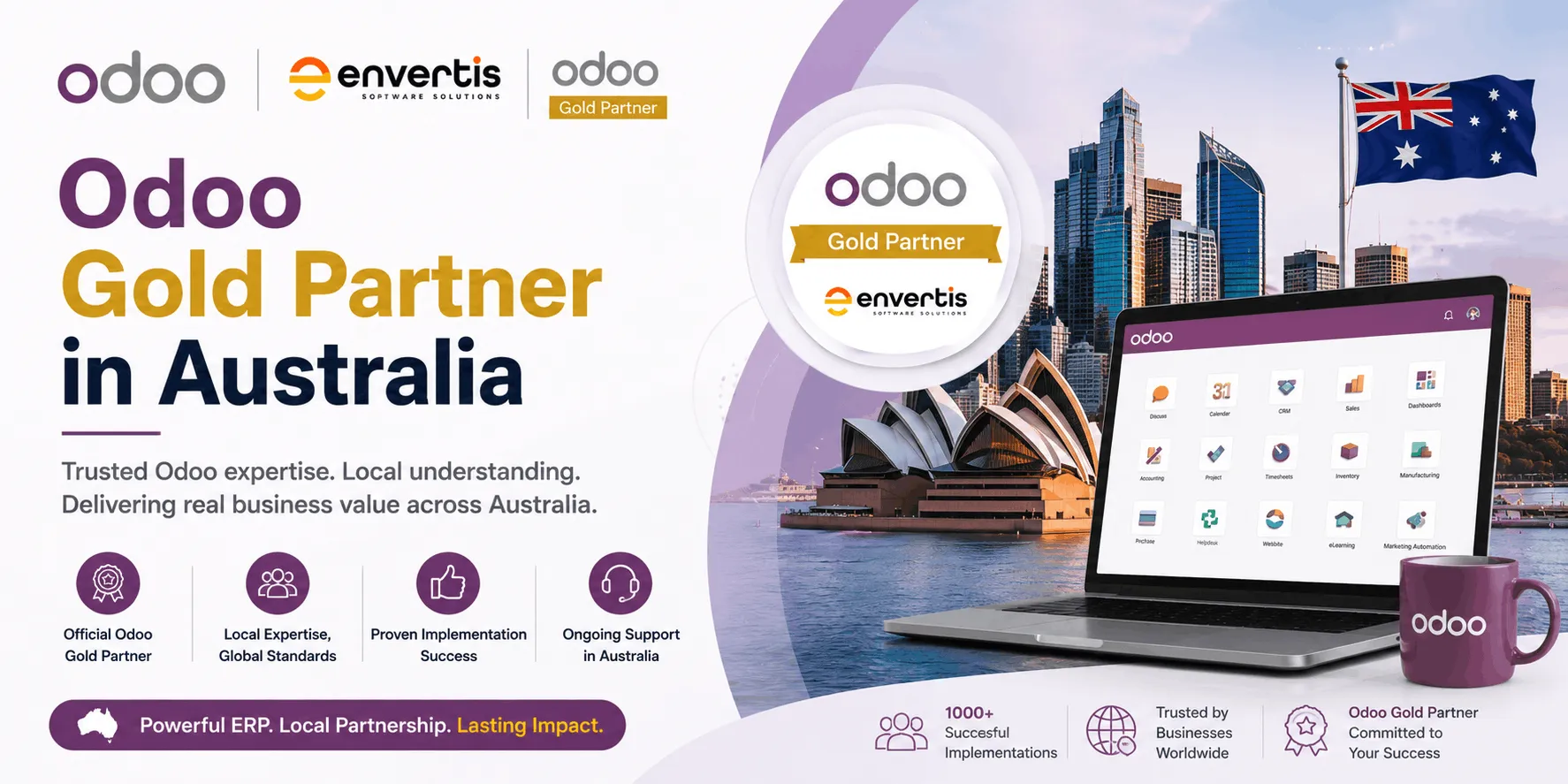
One such operator, trusted by Australian distributors and manufacturers for deep Odoo customisation expertise and local implementation experience, is Envertis.





























Sign in to leave a comment.