


Australia is a big country, and for Shia families, that size creates a very real problem: unless you live in or near Sydney, Melbourne, or a handful of other cities with an established Shia community, finding a proper mosque or madrassa nearby can be genuinely difficult. Online Shia Quran Classes in Australia at any authentic Quranic center address this challenge.
For families in regional Queensland, Perth's outer suburbs, Adelaide, or smaller towns scattered across the country, the nearest Shia center might be hours away — not exactly realistic for a weekly Quran class.
This is precisely the gap that online Shia Quran classes in Australia have stepped in to fill, and for many families, it's turned out to be a far better fit than the drive-across-the-city model ever was.
Why Distance Makes Online Learning Especially Useful in Australia
Unlike more densely populated countries where a Shia mosque might be a twenty-minute drive away, Australia's population is spread across vast distances. A family in regional Victoria or rural New South Wales may have no local Shia community at all, let alone a dedicated Quran academy.
Online classes remove this barrier entirely — a child in Darwin or Hobart can access the exact same quality of teaching as a child in central Sydney, without either family needing to relocate or travel.
Time zone differences within Australia itself (spanning three separate zones) also make it easier for online academies to offer flexible scheduling that actually fits a family's day, rather than forcing everyone into one fixed weekly slot at a physical center.
How the Process Actually Works at Online Shia Quran CLasses in Australia
Step 1: An initial assessment.
Most academies start with a short trial lesson to gauge the child's current level — whether they're starting completely from scratch with Arabic letters, midway through Noorani Qaida, or already reading and ready to refine tajweed.
Step 2: Matching with a suitable teacher
A good academy pairs the child with a teacher based on age, current level, and personality fit — not just whoever happens to be free. For younger children especially, this match matters enormously for keeping them engaged.
Step 3: Structured, progressive lessons
From there, learning typically follows a clear sequence: Noorani Qaida for foundational letter recognition, followed by tajweed for correct recitation, then gradually introducing translation and meaning as the child's reading becomes more confident.
Older children often continue into fiqh Jaffari, Shia aqaid, and the biographies of the Prophets and Imams, building a fuller Islamic education over time.
Step 4: Regular, flexible sessions
Lessons usually happen two to three times a week for shorter, focused sessions rather than one long weekly class — a pattern that tends to produce better retention, particularly for younger learners.
Step 5: Ongoing progress tracking
Parents typically receive updates on what's being covered and how their child is progressing, which is often easier to stay on top of with online classes than with a traditional drop-off class where progress can be harder to observe firsthand.
What a Comprehensive Curriculum Should Include
A genuinely well-rounded academy doesn't stop at recitation. Beyond Noorani Qaida and Tajweed, look for programs that also cover Quran translation, correct Namaz taught step by step, everyday Duas, and a grounding in Shia beliefs — including who the Ahlul Bayt are, the concept of Imamate, and age-appropriate lessons on Islamic history.
For families wanting their children to grow up with a complete religious identity rather than just recitation skills, this breadth matters just as much as recitation accuracy.
Why English-Speaking Teachers Matter for Australian Families
One challenge that comes up often for Western-raised Shia kids — including many in Australia — is a language and cultural gap with teachers who may be more comfortable instructing in Urdu, Farsi, or Arabic than in English.
Children who've grown up entirely in an English-speaking environment often struggle to connect with a teacher who can't easily explain concepts, answer questions, or build rapport in their first language.
This is a genuine, practical consideration for Australian parents comparing academies — a teacher's qualifications matter, but so does their ability to actually communicate with a child who thinks and processes in English.
Making the Right Choice for Your Family
When comparing options for online Shia Quran classes in Australia, it's worth asking about the teacher's Shia theological training, their experience with children specifically, how structured the curriculum is, and — importantly for many Australian households — whether lessons are conducted comfortably in English.
A trial lesson remains the best way to see all of this in action before committing to ongoing classes.
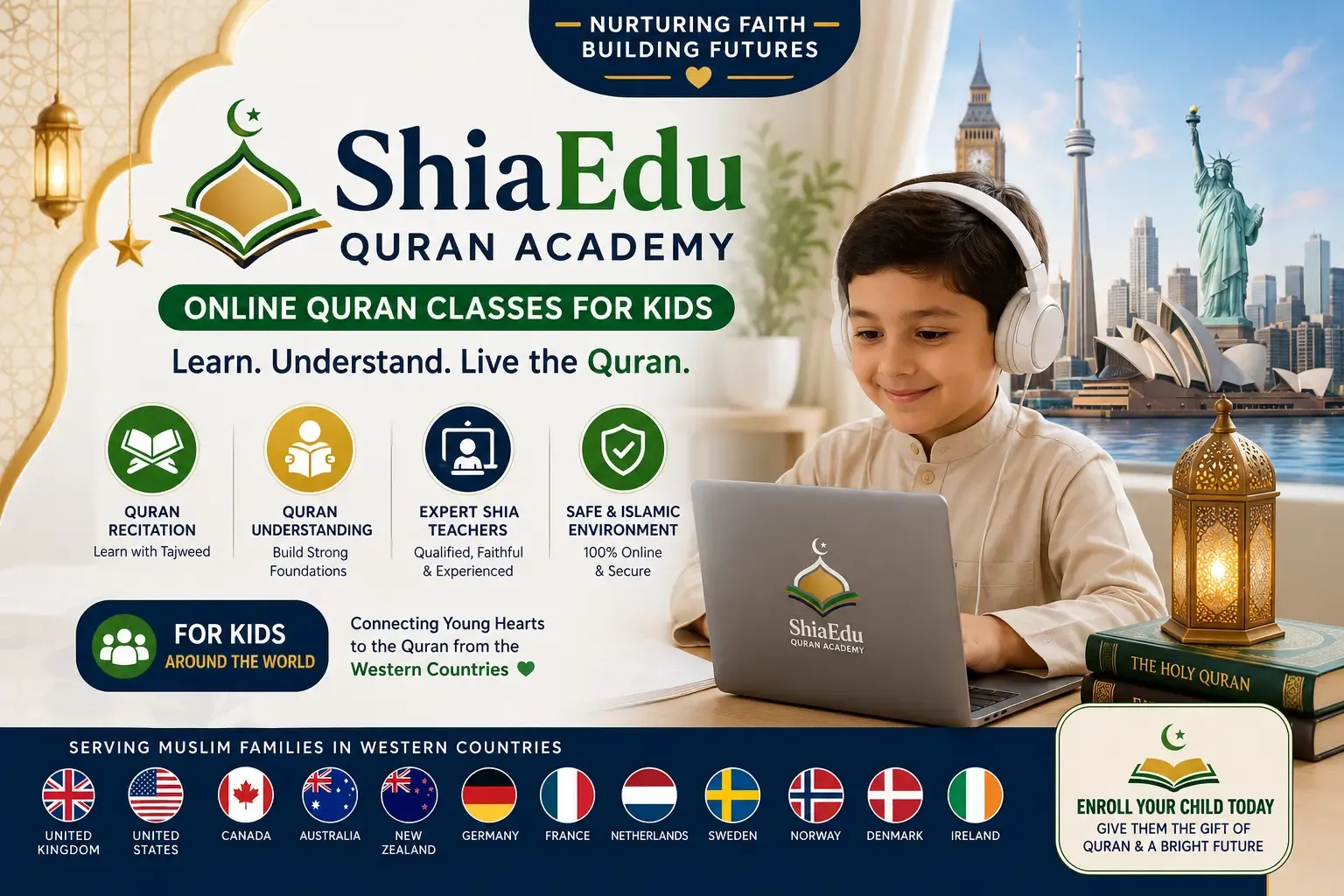
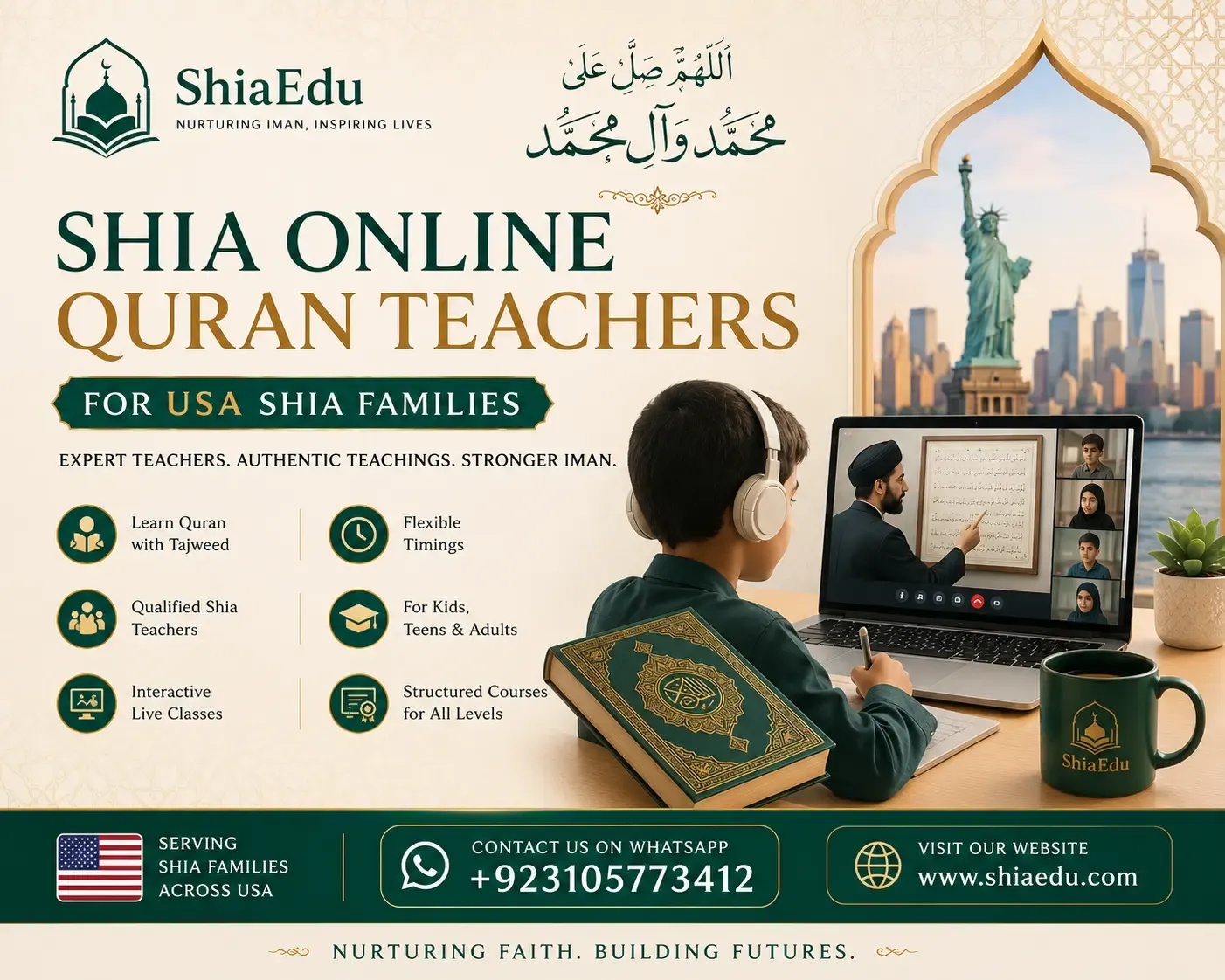
This is an area where ShiaEdu has built a genuine advantage for Western families. With English-speaking teachers trained specifically in Shia jurisprudence and Tajweed, ShiaEdu is designed with exactly this kind of family in mind — kids growing up in Australia, the UK, the US, and elsewhere in the West who need lessons that feel natural to follow, taught by instructors who understand both the religious content and the cultural context these children are growing up in.
Final Thoughts
For Shia families spread across Australia's vast geography, online Quran classes have become far more than a convenient alternative — they've become the most realistic way to ensure children receive a consistent, properly grounded Islamic education regardless of where the family happens to live.
With the right academy, English-speaking teachers, and a structured curriculum covering everything from Noorani Qaida to Shia beliefs and history, distance no longer has to stand in the way of a child's religious education.





















Sign in to leave a comment.