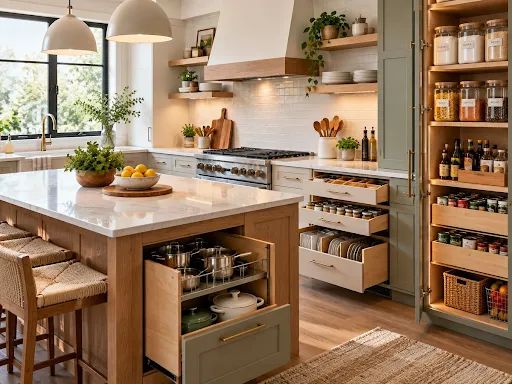

Kitchen organization becomes increasingly important as households accumulate more food, cookware, appliances, and everyday supplies. Without enough storage, even a well-designed kitchen can quickly become cluttered. Pantry cabinets provide a practical way to organize these items while keeping the rest of the kitchen easier to use.
Unlike ordinary cabinets, pantry storage can provide dedicated space for food supplies and larger household items. Tall layouts can take advantage of vertical space, while shelves and compartments can make it easier to separate different categories of products.
For homeowners planning a kitchen update, pantry design deserves attention from the beginning. Effective pantry storage solutions can make everyday tasks more convenient while helping the kitchen maintain a cleaner and more organized appearance.
Why Dedicated Pantry Storage Matters
Many kitchens rely on several cabinets to store food items. While this approach can work, it may make it difficult to know where different products are located.
A dedicated pantry area creates a central location for dry goods, packaged foods, baking supplies, and other household essentials. Grouping similar items together can reduce the time spent searching through multiple cabinets.
Pantry storage can also help free other cabinets for cookware, dishes, and kitchen equipment. This creates a clearer division between different types of storage and can make the overall kitchen easier to manage.
The result is not simply more storage. It is better-organized storage.
Making Better Use of Vertical Space
Pantry cabinets are often designed vertically, making them particularly useful in kitchens where floor space is limited.
A tall cabinet can provide multiple levels of storage without requiring a large footprint. This allows homeowners to use areas that might otherwise remain underused.
However, vertical storage should still be designed around accessibility. Items used every day should be placed within easy reach, while less frequently needed supplies can occupy higher shelves.
Using vertical space intelligently can help homeowners increase capacity without making the kitchen feel crowded.
Organizing Pantry Items by Frequency of Use
One of the simplest ways to improve pantry functionality is to organize items according to how often they are used.
Frequently used ingredients can be kept at eye level or in easily accessible sections. Baking supplies, snacks, canned goods, and specialty ingredients can each have designated areas.
This system makes it easier to locate products and identify when supplies need to be replaced.
It can also reduce unnecessary movement during meal preparation. When commonly used ingredients are stored together, homeowners can access what they need without repeatedly opening different cabinets.
Choosing the Right Pantry Cabinet Layout
Not every kitchen requires the same pantry configuration. The ideal layout depends on the available space, household size, cooking habits, and storage requirements.
A narrow kitchen may benefit from a tall pantry cabinet that uses vertical space efficiently. Larger kitchens may accommodate multiple pantry sections or a more substantial storage area.
Door configuration also matters. Traditional hinged doors can provide broad access, while specialized designs may offer different approaches to organizing shelves and supplies.
Homeowners should consider how much space is available and how the pantry will interact with nearby cabinets, appliances, and walkways.
Combining Pantry Storage With Kitchen Design
Storage should support the overall kitchen design rather than appearing disconnected from it.
Matching pantry cabinets with the rest of the cabinetry can create a more cohesive appearance. Similar colors, finishes, hardware, and door styles help different storage areas feel like part of one coordinated design.
This is especially important when pantry cabinets are positioned in highly visible areas. A well-matched pantry can contribute to the kitchen's visual character while providing practical storage.
Homeowners can also consider whether pantry doors should blend into the surrounding cabinetry or create a distinct design feature.
Pantry Storage for Different Household Needs
Household storage requirements vary considerably. A family with several members may need substantial space for packaged foods, snacks, beverages, and cooking supplies.
Smaller households may require less capacity but still benefit from a dedicated pantry system. Homeowners who bake frequently may want larger shelves for ingredients and equipment, while people who prepare meals in advance may need space for containers and bulk ingredients.
The right pantry design begins with understanding these habits. Instead of choosing storage based on a generic layout, homeowners can plan around what they actually keep and use.
This makes the finished kitchen more practical and reduces wasted storage space.
Reducing Countertop Clutter
Kitchen countertops often become temporary storage areas when cabinets do not provide enough convenient space. Food packages, small appliances, and other supplies can quickly take over valuable work surfaces.
A well-planned pantry can reduce this problem by giving these items a dedicated home. Keeping supplies inside organized cabinets leaves more countertop space available for preparation and cooking.
A less cluttered countertop can also make the kitchen feel larger and easier to maintain. This is particularly helpful in smaller kitchens where available work surface is limited.
Storage therefore affects more than organization. It can influence how spacious and comfortable the entire room feels.
Considering Accessibility and Everyday Convenience
Storage only works well when homeowners can access it easily. Pantry shelves should be positioned at practical heights, and the interior layout should make it easy to see stored items.
Deep shelves can provide considerable capacity, but they may also make items harder to reach if they are not properly organized. Adjustable shelving can provide greater flexibility as household needs change.
Accessibility should also be considered for children, older family members, or anyone with mobility limitations. Frequently used items should be positioned where they can be reached safely and comfortably.
These details can make a significant difference in daily kitchen use.
The Role of Quality Cabinet Construction
Pantry cabinets often carry considerable weight because they may hold canned foods, jars, bottles, and other supplies. Strong construction and reliable hardware are therefore important.
Homeowners should look at cabinet materials, shelving strength, hinges, finishes, and installation quality when evaluating pantry options.
A well-constructed pantry should remain stable and functional through regular household use. Quality materials can also help maintain the appearance of the cabinet over time.
The investment should be considered in terms of long-term usefulness rather than only the initial appearance.
Creating Flexible Storage for Future Needs
Household storage requirements can change. Families may grow, cooking habits may change, or homeowners may begin purchasing different types of products.
Flexible pantry design can accommodate these changes more effectively. Adjustable shelves and adaptable layouts allow homeowners to reorganize storage as their needs evolve.
This flexibility can make a pantry more useful over the long term. Instead of being designed around one specific collection of items, the storage system can adapt to changing routines.
Planning for future use is particularly valuable during a major kitchen remodeling project because cabinetry is typically expected to last for many years.
Why Thoughtful Cabinet Planning Matters
Pantry cabinets are only one part of the kitchen storage system. Their placement needs to work with base cabinets, wall cabinets, appliances, countertops, and movement through the room.
Poor placement can create unnecessary obstacles or reduce available workspace. Careful planning, on the other hand, allows each cabinet to contribute to a more efficient layout.
Homeowners considering custom kitchen cabinetry can focus on storage needs while also considering the visual relationship between different cabinet areas.
This integrated approach helps ensure that the pantry feels like a natural part of the kitchen rather than an isolated storage feature.
Conclusion
Pantry cabinet design can have a meaningful impact on kitchen organization and everyday convenience. By creating dedicated storage, homeowners can reduce clutter, make better use of vertical space, and keep frequently used supplies easier to access.
The most effective pantry systems are planned around real household needs. Shelf placement, cabinet height, accessibility, construction quality, and future flexibility all contribute to how well the storage performs.
A thoughtful pantry can therefore do more than hold food. It can support a cleaner countertop, a more organized kitchen, and a smoother daily routine.




















Sign in to leave a comment.