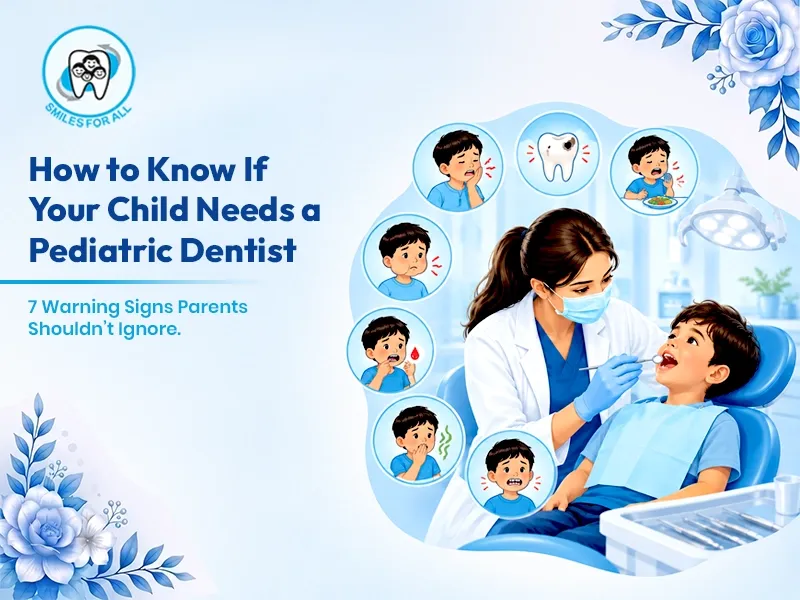

A child doesn't always say, "I have a toothache."
Sometimes the first sign is much less obvious.
They may stop eating a particular food, chew on one side of their mouth, complain that cold water hurts, resist brushing, or become unusually uncomfortable during meals.
For parents, these small changes can be useful clues.
Not every change means something is wrong with a child's teeth. Children naturally go through phases with food, brushing, and behaviour. But when a change persists or appears alongside other symptoms, it's worth paying attention.
Watch the behaviour, not just the complaints
Young children may not have the words to explain dental discomfort accurately.
A parent may therefore notice a problem through behaviour before hearing a direct complaint.
For example, a child who normally enjoys crunchy foods may suddenly avoid them. Another child may start chewing only on one side. Someone who usually cooperates with brushing may begin pulling away whenever the toothbrush reaches a particular area.
These changes don't tell you exactly what the problem is. They simply tell you that something may deserve closer attention.
Eating differently can be a clue
Changes during meals are easy to overlook.
If your child avoids hard or crunchy foods, takes longer to chew, refuses to bite with a particular area, or complains while eating, dental discomfort is one possibility.
Tooth decay, sensitivity, gum irritation, or a dental injury can affect eating.
If the behaviour keeps happening, a dental examination is more useful than trying to work out the cause at home.
For parents who want a more detailed breakdown of the symptoms that should not be ignored, this guide to pediatric dental warning signs explains when professional evaluation may be appropriate.
Cold foods suddenly cause discomfort
Ice cream is a classic example.
A child who repeatedly complains about one tooth after eating something cold may be experiencing sensitivity. Hot foods and drinks can also trigger discomfort.
There are several possible causes, so parents shouldn't assume that sensitivity automatically means a cavity.
The important thing is whether the symptom is recurring.
Look at the teeth occasionally
Parents don't need to perform a dental examination at home.
But taking a quick look at your child's teeth from time to time can help you notice changes.
White patches, brown or dark areas, unusual discoloration, or visible holes can all be reasons to arrange professional assessment.
A lack of pain doesn't necessarily mean everything is fine. Some dental problems can develop before a child experiences noticeable symptoms.
Pay attention to the gums
Healthy gums shouldn't repeatedly appear swollen, red, or tender.
Repeated bleeding while brushing also deserves attention, particularly when it continues despite improving brushing technique and oral hygiene.
Plaque buildup and gum inflammation are possible causes, but other issues can also contribute.
If gum bleeding or swelling persists, it's better to have it assessed rather than simply treating it as part of normal childhood.
Brushing behaviour can reveal discomfort
Children often need reminders to brush.
That's normal.
A sudden change is different.
If your child starts avoiding brushing, complains when a particular tooth is touched, or becomes unusually distressed during oral hygiene, consider whether discomfort could be involved.
This is especially worth noticing when brushing problems occur together with bad breath, gum swelling, tooth sensitivity, or changes in eating.
Teeth and bite change as children grow
Children's mouths are constantly developing.
Parents may notice crowded teeth, unusual spacing, teeth appearing in unexpected positions, or changes in how the upper and lower teeth meet.
These observations don't automatically mean orthodontic treatment is necessary.
Sometimes the appropriate approach is simply to monitor development. A dentist can determine whether the child's teeth and bite are developing normally and whether further evaluation is needed.
Dental anxiety is also worth understanding
A child who is afraid of the dentist isn't necessarily being difficult.
Dental instruments, unfamiliar surroundings, previous experiences, or fear of pain can all contribute to anxiety.
A child-focused dental team can use age-appropriate communication and behaviour-management techniques to make visits more comfortable.
Positive experiences during childhood can also make regular dental care easier later.
When should parents arrange an appointment?
Parents should consider a dental examination when symptoms are persistent or begin affecting normal activities.
Reasons to arrange a visit can include:
- Recurring tooth pain
- Repeated sensitivity
- Visible changes or cavities
- Difficulty chewing
- Swollen or bleeding gums
- Dental injuries
- Persistent bad breath
- Noticeable changes in tooth development
- Anxiety that is preventing necessary dental care
A routine dental appointment can also be useful even when a child appears healthy. Preventive visits allow a dental professional to monitor oral hygiene, tooth eruption, developing bite patterns, and early signs of decay.
Early evaluation doesn't automatically mean treatment
This is important for parents who worry that a dental appointment will immediately lead to a procedure.
An examination may simply confirm that everything is developing normally.
If a concern is found, the dentist can determine whether it needs treatment, monitoring, preventive care, or further assessment.
The goal is not to treat every small variation. It's to understand what's happening before a potentially manageable concern becomes more complicated.
For families in Moshi and nearby Pimpri-Chinchwad areas, Health & Smiles Dental Clinic's guide to children's dental warning signs provides additional information about symptoms parents should watch for and situations where professional dental evaluation may be appropriate.
The earlier a persistent change is noticed, the easier it is to make an informed decision about the next step.



























Sign in to leave a comment.