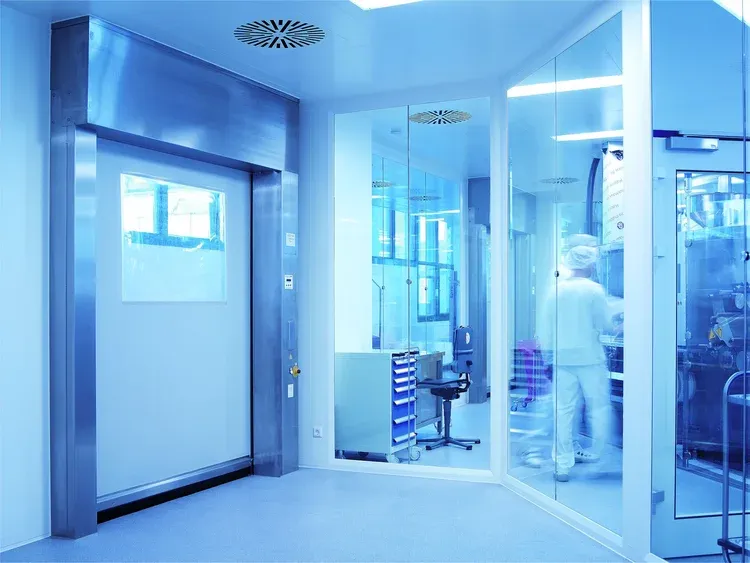

In pharmaceutical manufacturing, the smallest details can have an important role. A production room may contain sophisticated equipment, carefully controlled airflow, specialized surfaces, and strict cleaning procedures. Yet all of those measures depend on the facility being designed as a complete system.
One often overlooked component is the door.
A pharmaceutical cleanroom door is not simply an entrance that separates one room from another. Its construction, movement, seals, surfaces, and maintenance can affect how people and materials travel through controlled spaces. The right door can also make daily operations more convenient without creating unnecessary openings between areas.
This article explains what to consider when selecting doors for pharmaceutical cleanrooms and why their design deserves careful attention.
What Makes a Pharmaceutical Cleanroom Different?
A cleanroom is a controlled area where environmental conditions are managed according to the needs of the process taking place inside. Depending on the facility, this can involve controlling airborne particles, temperature, humidity, pressure, and other factors.
Think of the room as a carefully balanced bubble. The facility works to keep unwanted influences outside while maintaining suitable conditions inside.
Every doorway creates a potential connection between that controlled space and another area. Whenever someone enters or leaves, the balance can be affected temporarily.
That is why door design becomes important. The door should work with the room rather than make environmental control more difficult.

The Door Is Part of the Cleanroom System
It is useful to stop thinking of a cleanroom door as an isolated product.
The room may have an air handling system, filtration equipment, specialized walls, ceilings, flooring, lighting, and cleaning procedures. The door sits within that arrangement and must work alongside these components.
For example, if two adjoining rooms have different pressure conditions, opening the door creates a temporary path between them. The amount of time the doorway remains open and how well the door closes afterward can therefore matter.
The door does not create the cleanroom environment by itself. Instead, it forms one part of the overall strategy used to maintain controlled conditions.
Smooth Surfaces Make Cleaning Easier
Pharmaceutical facilities commonly have strict cleaning routines. Surfaces may need to be wiped or disinfected regularly, so a door should not introduce unnecessary places where dirt or residue can collect.
A straightforward surface is easier to inspect and clean than a design containing many complicated recesses.
The same principle applies to door edges and surrounding areas. The construction should be appropriate for the cleaning procedures used inside the facility.
Different pharmaceutical operations may use different cleaning agents and methods, so material selection should be discussed before installation.
A door that looks suitable in a showroom may not necessarily be the right choice for a particular production environment.
Sealing Helps Maintain Separation
The edges of a door matter almost as much as the panel itself.
When a door closes, suitable seals can help limit unwanted movement of air around the opening. The exact requirements depend on the cleanroom design and the conditions between adjoining spaces.
Imagine closing a window during a windy day. A window that fits properly provides a much better barrier than one with large gaps around its edges.
Cleanroom doors operate according to a similar basic idea, although the technical requirements can be considerably more demanding.
Proper installation is important as well. Even a well designed door can perform poorly if it is incorrectly fitted or damaged.
Different Rooms Have Different Needs
There is no single door specification that automatically suits every pharmaceutical facility.
A room used for material preparation may have different requirements from a packaging area. A laboratory may operate differently from a manufacturing room, while a storage area can have its own environmental considerations.
The amount of traffic also varies.
One doorway may be used several times an hour. Another could be crossed constantly by employees, carts, and equipment. These differences should influence the choice of door construction and operating method.
Understanding the actual use of each opening is therefore one of the first steps toward selecting an appropriate solution.
Managing People and Material Movement
Pharmaceutical production involves more than employees walking between rooms.
Ingredients, containers, samples, tools, packaging materials, cleaning supplies, and equipment may all need to move through controlled areas.
Poorly planned access points can slow down these activities.
Consider an employee pushing a cart through a doorway. If the person has to stop, put down what they are carrying, operate a difficult door, and then continue, the entrance becomes an obstacle to normal work.
A suitable door system can make movement more predictable. Depending on the facility, different operating methods may be used to provide access while maintaining appropriate separation.
The objective should be to support the workflow without compromising the environmental requirements of the space.
Automatic Operation Can Improve Convenience
Some pharmaceutical environments benefit from doors that can operate without requiring workers to touch the door directly.
Hands free operation can be useful when employees are wearing protective clothing or carrying materials. Depending on the application, activation can involve sensors, switches, or other controls.
However, automation should always be selected according to the facility's requirements.
The control system should be intuitive enough that workers understand when and how the door operates. Safety features should also be appropriate for the movement of the door and the type of traffic using the opening.
Convenience should never come at the expense of controlled access or worker safety.
Safety Requires More Than a Fast Closing Door
A pharmaceutical facility can be a busy workplace. Employees may move quickly between rooms while handling products, containers, or equipment.
Door movement therefore needs to be predictable.
Suitable safety features can help detect an obstruction and reduce the possibility of a person or object being struck. The exact features required depend on the equipment and installation.
Staff training also matters. Workers should know how to use the door correctly and what to do if it behaves unexpectedly.
Regular inspection can identify worn components, unusual sounds, inconsistent movement, or other signs that attention may be required.
Choosing Materials for the Environment
Material selection should be based on actual operating conditions.
A pharmaceutical facility may have frequent cleaning, controlled temperatures, moisture exposure, or contact with cleaning products. Some areas may require particularly durable finishes because the doors are used constantly.
The surrounding environment should therefore be discussed before the door is specified.
Managers should consider questions such as:
- How often will the door be cleaned?
- Which cleaning products are used?
- How many times will the door operate each day?
- Will carts or machinery pass through?
- What are the temperature and humidity conditions?
- Does the opening connect spaces with different environmental requirements?
Answers to these questions can help narrow down suitable designs.
Maintenance Should Be Planned From the Beginning
A cleanroom door may operate thousands of times during its service life. Like any frequently used equipment, it needs attention to remain dependable.
Maintenance can include checking moving components, controls, seals, sensors, and other parts specified by the manufacturer.
Regular inspections are particularly useful in pharmaceutical facilities because unexpected equipment problems can disrupt carefully organized production activities.
A planned maintenance schedule also gives facility teams a chance to identify deterioration before it becomes a major operational problem.
Maintenance records can help teams track recurring issues and determine when components require adjustment or replacement.
Installation Matters as Much as Selection
Choosing a suitable door is only part of the process.
Installation should take into account the surrounding wall construction, opening dimensions, floor conditions, adjacent equipment, traffic routes, and other elements of the facility.
A poorly installed door may not provide the expected performance even when the product itself is suitable.
For this reason, measurements should be checked carefully before fabrication and installation. The completed installation should also be inspected to ensure that the door moves correctly and closes as intended.
Good coordination between the door provider, facility team, and installation professionals can prevent avoidable complications.
Considering a Specialized Door Provider
Pharmaceutical projects often involve requirements that differ from those of ordinary commercial buildings. Facility managers may therefore want to work with a provider familiar with industrial and controlled environments.
Newport Company offers industrial door solutions for applications where controlled access, dependable operation, and suitable environmental performance are important considerations.
When discussing a project, facility managers can provide information about room conditions, opening dimensions, traffic levels, cleaning practices, and the types of materials or equipment moving through the doorway.
The more accurately the application is understood, the easier it becomes to identify a door configuration that fits the facility.
How the Right Door Can Support Operations
A properly selected cleanroom door can contribute to several everyday objectives.
It can provide a physical boundary between rooms, make employee movement more convenient, support cleaning routines, and help reduce the duration of unnecessary openings.
It can also contribute to a more organized traffic pattern. When doors are selected according to the way a facility actually operates, employees are less likely to encounter awkward access points or unnecessary interruptions.
Still, expectations should remain realistic. A door cannot independently guarantee cleanliness or compliance. Pharmaceutical quality depends on the complete facility, including procedures, equipment, environmental controls, sanitation, personnel practices, and regulatory requirements.
Conclusion
Doors deserve more attention than they often receive in pharmaceutical facility planning. They are repeatedly used points of transition, connecting spaces that may have carefully controlled conditions.
The right construction, surface, sealing arrangement, operating method, and maintenance plan can help a door fit naturally into that environment. Careful planning also makes it easier for employees and equipment to move through the facility without unnecessary disruption.
Ultimately, selecting a pharmaceutical cleanroom door is about matching the product to the room and its purpose. When traffic, cleaning, environmental conditions, safety, installation, and maintenance are considered together, the doorway becomes a useful part of the pharmaceutical manufacturing system rather than simply an opening in the wall.
























Sign in to leave a comment.