If you've ever caught a strange, sulfur-like smell drifting through your yard or noticed a sewage odor inside your house that won't go away, you already know how frustrating hidden drain problems can be. A trusted plumber in Hypoluxo that homeowners call for these mystery smells often turns to one simple, proven method: smoke testing. It's fast, it's accurate, and it shows exactly where a pipe is cracked, disconnected, or leaking gases into places they shouldn't be.
This blog walks you through what smoke testing actually is, how it works, why it matters for your home's health and safety, and what to expect if a plumber recommends it for your property.

What Is Plumbing Smoke Testing?
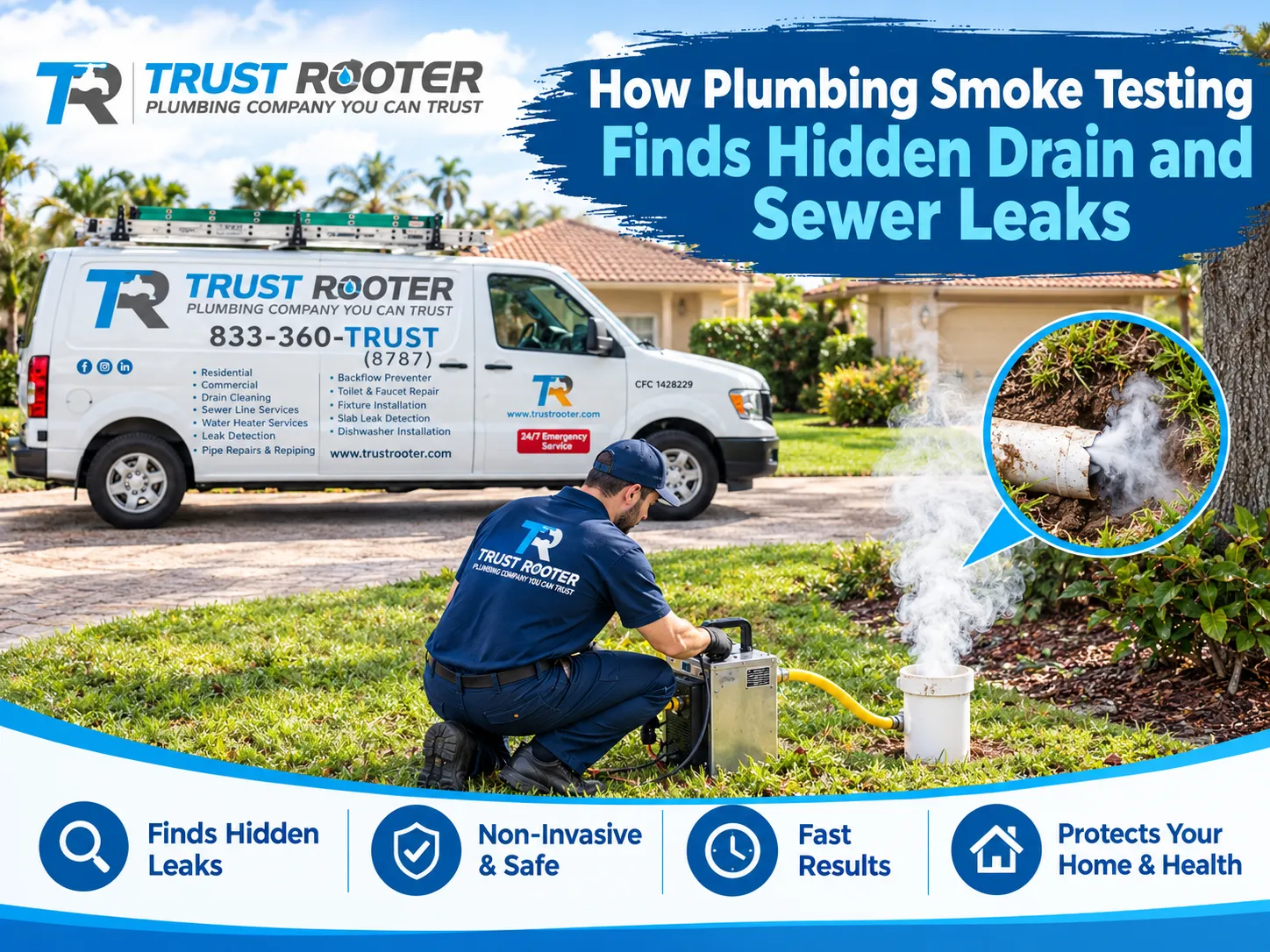
Plumbing smoke testing is a diagnostic method where a plumber pumps non-toxic smoke into a home's drain or sewer system to find leaks, cracks, or bad connections. The smoke rises and escapes through any opening in the pipe, showing up as visible smoke at the leak point, whether that's a crack in the yard, a gap around a vent pipe, or a loose joint under the house.
Here's how the process typically works, step by step:
- The plumber blocks off drain openings like sink traps and toilets to keep the smoke contained within the pipe system.
- A smoke machine pushes a thick, white, non-toxic vapor into the sewer line through a cleanout or vent stack.
- The smoke travels through the pipes under light pressure, following the exact path water and sewer gas would take.
- Wherever there's a break, crack, or disconnected joint, the smoke escapes and becomes visible above ground or inside the home.
- The plumber marks these spots and documents them with photos before beginning repairs.
This method matters because underground pipes are, by nature, hidden from view. You can't see a crack three feet below your lawn, and you definitely can't see a separated joint inside a slab foundation. Smoke testing turns an invisible problem into something you can literally watch happen in real time.
Why Sewer Gas Leaks Are More Than Just a Smell Problem
A sewer gas leak isn't only unpleasant, it can affect your health and your home's structure. Sewer gas contains methane and hydrogen sulfide, and breathing it in small amounts over a long period can cause headaches, nausea, and irritation to your eyes and throat. In larger concentrations, especially in an enclosed crawl space, it can be dangerous.
There's also a fire risk to consider, since methane is flammable. A slow leak in a crawl space near a water heater or furnace pilot light is a combination no homeowner wants. Beyond safety, a leaking sewer line under your yard can erode soil, cause your foundation to shift slightly over time, and attract pests looking for moisture. None of these problems announce themselves loudly. They build quietly until something forces the issue, like a sudden smell or a wet patch of grass that never dries out.
Understanding why professional plumbing smoke testing is essential for accurate diagnostics comes down to this: guessing where a leak is located almost always leads to unnecessary digging, wasted time, and repair costs that could have been avoided with one clear test.
Signs You Might Need a Smoke Test
Homeowners usually don't call for a smoke test out of curiosity. Something tips them off first. A rotten egg smell near a floor drain, a musty odor in the basement that gets worse after rain, or a patch of unusually green grass in the yard (a sign nutrients from a sewage leak are feeding the soil) are all common triggers. Some people notice gurgling sounds in their pipes when no water is running, which can point to a vent line pulling in air from an unintended opening.
Older homes with cast iron or clay pipes are more prone to these issues simply because the materials degrade over decades. A pipe installed in the 1960s has had a lot more time to crack, shift, or corrode than one installed ten years ago. If your home falls into that older category and you're smelling something off, a smoke test is often the quickest way to get real answers instead of guessing.
Smoke Testing vs Other Leak Detection Methods
Homeowners often ask how smoke testing compares to other diagnostic tools plumbers use. Here's a straightforward breakdown:

Smoke testing and camera inspections often work best as a pair. The camera shows what's happening inside the pipe, while smoke testing shows where gas is escaping outside the pipe. Many plumbers recommend using both together for a complete picture, especially before any major repair work begins.
What Affects the Cost of a Smoke Test
Pricing for this service depends on a few practical factors, and understanding what affects the price of sewer smoke testing can help you budget realistically before scheduling a plumber. The size of your home's plumbing system plays a big role, since a larger house with more drain lines takes longer to test thoroughly. Access also matters. If your cleanouts are easy to reach, the job goes faster. If a plumber has to remove a toilet or access a crawl space with limited clearance, that adds labor time.
The complexity of the issue itself is another factor. A single suspected leak near one bathroom is a much smaller job than testing an entire home's sewer line after months of unexplained odors. Some companies charge a flat rate for a standard test, while others base pricing on square footage or the number of drain lines involved. Getting a written estimate before the work starts is always a smart move, so there are no surprises on the invoice.
A Real-World Example of Why This Matters
Consider a common scenario: a homeowner in an older neighborhood keeps smelling sewage in their bathroom every few days, but only sometimes. A plumber snakes the drain, finds nothing, and the smell returns a week later. This back-and-forth can go on for months if the real issue is a cracked vent pipe in the attic, not a clog at all. A smoke test solves this in under two hours by pushing smoke through the vent system and watching where it escapes. If smoke appears seeping out near a roof penetration or an attic joint, that's the answer nobody could find by snaking alone. This kind of pinpoint diagnosis is exactly why smoke testing has become a standard tool rather than a last resort.
If you're dealing with a smell that keeps coming and going without a clear source, it's worth asking your plumber directly whether a smoke test makes sense for your situation before more invasive work is scheduled.
What to Do Next
Hidden drain and sewer leaks rarely fix themselves, and waiting usually means a bigger repair bill down the road. If you've noticed persistent odors, damp spots in your yard, or gurgling drains, a smoke test can give you a clear answer in a single visit instead of weeks of guessing. It's a straightforward, low-mess way to protect your home's plumbing system and your family's health.
Trust Rooter offers professional smoke testing and drain diagnostics for homeowners who want real answers, not repeated guesswork. Reach out to schedule an inspection and get to the bottom of what's really going on beneath your home.
People Also Ask
Is smoke testing safe for my home and family?
Yes, the smoke used is non-toxic and specifically designed for plumbing diagnostics. It has a distinct smell so it's easy to identify when it escapes, but it won't harm people, pets, or plants. Ventilation after the test clears any lingering odor within a short time.
How long does a smoke test take to complete?
Most residential smoke tests take between one and two hours, depending on the size of the home and how many drain lines need testing. Larger properties or more complex plumbing systems may take slightly longer to fully inspect.
Can smoke testing damage my pipes?
No, the smoke is introduced under low pressure, similar to normal airflow through a vent system. It doesn't put stress on pipe joints or materials, making it a safe, non-invasive way to inspect your plumbing without risking additional damage.
Will I need to leave my house during the test?
You typically don't need to leave, though the plumber may ask you to stay outside briefly while smoke is introduced. Once testing is finished, any smoke that entered living spaces clears quickly with normal ventilation like open windows or fans.
How often should sewer lines be smoke tested?
There's no fixed schedule, but homes older than 30 years or those with a history of drain odors benefit from testing every few years. If you've never had unexplained smells, testing usually isn't needed until a specific issue comes up.
























Sign in to leave a comment.