How Podcasts Are Helping Local Organizations Build Stronger Communities

When I think about what makes a local organization memorable, I do not immediately think about logos, advertisements, or social media posts. I think about conversation. People remember the person who answered their question, the speaker who explained something clearly, or the community leader who took time to listen.
That is one reason podcasts have become an interesting tool for local organizations. A podcast gives people another way to hear familiar voices, discover new perspectives, and learn about the work happening around them. It can also help an organization reach people who may never walk through its doors.
Giving Local Voices a Wider Audience
Every community has people with stories worth hearing. They may be teachers, business owners, volunteers, religious leaders, artists, coaches, parents, or longtime residents.
A podcast gives those people a platform.
Instead of relying only on traditional meetings or printed newsletters, organizations can record conversations and make them available whenever listeners have time. Someone who misses an event can listen later. Someone who lives outside the immediate neighborhood can still follow the discussion.
This flexibility makes podcasts especially useful for organizations trying to remain connected with a changing audience.
I also like the fact that podcast conversations can feel more personal than a standard announcement. A written notice might explain what an organization is doing, but a conversation can explain why it matters.
Starting With Real Questions
A successful local podcast does not need to cover every possible topic. In many cases, the strongest episodes begin with questions people are already asking.
What does a particular community program do? Why does a local tradition continue? How can residents become involved? What challenges are families facing? What does a particular faith tradition teach about an everyday issue?
These questions provide natural starting points.
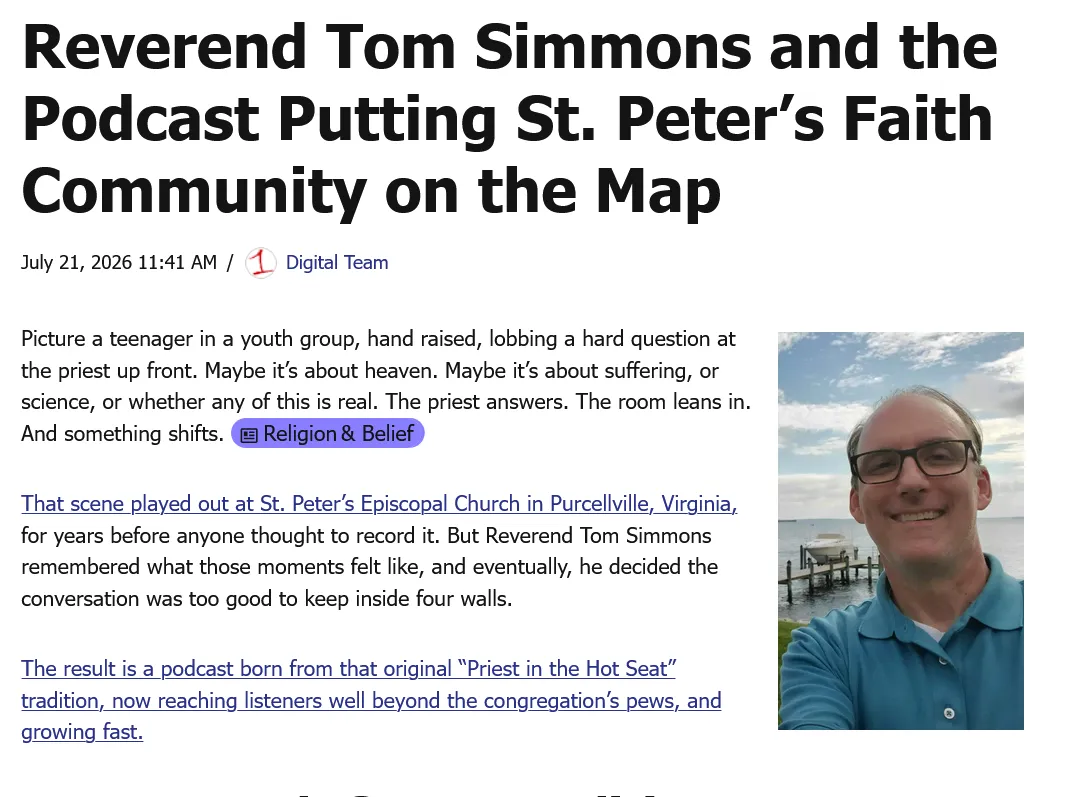
The example of Tom Simmons demonstrates how a podcast can grow from an existing community conversation. His work with St. Peter's Episcopal Church includes a podcast designed to create space for questions about faith and connect the church with a wider audience. The project developed from an earlier discussion format known as “Priest in the Hot Seat.”
That concept can be adapted to many types of organizations. A local nonprofit could invite people to ask questions about its programs. A school could discuss education with teachers and parents. A historical organization could invite residents to share memories of the area.
The subject is different, but the purpose is similar: make room for meaningful conversation.
A Podcast Does Not Need to Be Complicated
One mistake organizations can make is assuming that podcasting requires a large budget.
Good sound quality matters, but starting small can be sensible. A basic recording setup, a quiet room, and a clear plan can be enough for an initial series.
I would rather hear an honest conversation recorded with simple equipment than a highly produced episode that has nothing useful to say.
A small pilot also gives an organization time to learn. After several episodes, the team can review which subjects attracted attention, which guests connected well with listeners, and which parts of production took the most time.
This information can guide future investment.
Consistency Helps Build an Audience
Publishing one episode can introduce an organization to new listeners, but regular content gives people a reason to return.
That does not mean every organization needs to publish weekly. A monthly or twice-monthly schedule may be more realistic for a small team.
The important thing is reliability.
Listeners should know roughly when they can expect another episode. A consistent schedule also makes it easier to organize interviews, prepare questions, record conversations, and promote new content.
Recurring segments can make production even easier. For example, an organization might begin each episode with a listener question, move into a guest conversation, and end by highlighting upcoming community activities.
Over time, this structure can become familiar to listeners.
Bringing Difficult Topics Into the Open
One of the most useful things a podcast can provide is a comfortable setting for subjects that are difficult to discuss in a short social media post.
Faith, family, education, community problems, social change, and personal experiences can all require more context than a short update allows.
A podcast gives the host and guest time to explain their views carefully.
The St. Peter's podcast example shows how this longer format can support discussions around faith and challenging questions. The wider FingerLakes1.com platform also maintains a substantial collection of podcasts and live programming, demonstrating how audio and video conversations can become part of a broader local media environment.
For community organizations, that longer format can be valuable because listeners hear not only an answer but also the reasoning and experience behind it.
Turning Listeners Into Participants
A podcast should not have to be a one-way communication channel.
Organizations can invite listeners to submit questions, suggest subjects, recommend guests, or respond to previous discussions. With appropriate moderation, these responses can become part of future episodes.
This creates a useful cycle.
The organization publishes a conversation. Listeners respond. Those responses inspire another conversation. The next episode then gives the audience another opportunity to participate.
This approach can make a podcast feel less like advertising and more like an ongoing community project.
It also helps organizations understand what their audiences actually care about rather than relying entirely on assumptions.
Connecting Digital Audiences With Real Communities
There is an important distinction between building an online audience and building a community.
A large number of listeners does not automatically create strong relationships. The real opportunity comes when digital engagement encourages people to participate in the organization itself.
A church podcast might encourage listeners to attend a service or community event. A nonprofit could direct listeners toward volunteer opportunities. A local historical group could invite people to an exhibition or public presentation.
In this way, the podcast becomes a bridge.
The digital conversation introduces people to an organization, while in-person experiences allow those relationships to grow.
Making Every Episode Useful
Before recording an episode, I would ask one simple question: what will the listener take away from this conversation?
The answer could be a new piece of information, a different perspective, a practical resource, or simply a better understanding of another person.
Having a clear purpose helps prevent episodes from becoming unfocused.
It also makes promotion easier. Instead of telling people that a new episode is available, an organization can explain what listeners will learn from it.
That difference may seem small, but it changes the way content is presented.
Building a Long-Term Resource
The value of a podcast can continue long after an episode is first published.
Older conversations can become resources for new community members. An interview about local history may remain useful for years. A discussion about an organization's services can help people discover those services months after publication.
This creates a growing library of community knowledge.
For organizations with limited marketing resources, that lasting value is worth considering. A well-planned conversation can continue attracting listeners while also strengthening the organization's digital presence.
Keeping the Human Element
Technology can make communication easier, but people are still the reason audiences listen.
The most memorable community podcasts are likely to be those where guests sound comfortable, hosts genuinely listen, and conversations feel natural rather than scripted.
That is why I would focus less on trying to imitate large commercial podcasts and more on creating something that reflects the personality of the organization.
A local podcast does not need celebrity guests or complicated production to be useful. It needs good questions, thoughtful guests, reliable publishing, and a genuine interest in the people it serves.






Sign in to leave a comment.