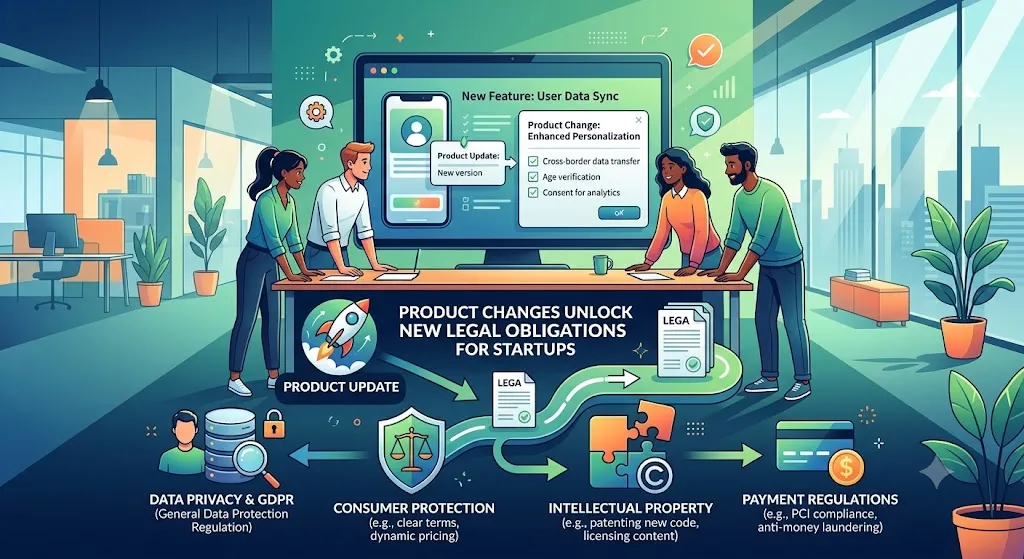

Startups often modify their products as customer needs change and new opportunities emerge. A software platform may introduce new features, a financial technology product may add payment services, or a health technology business may begin handling new types of information. While these changes can support growth, they can also create legal obligations beyond those considered when the product was first launched.
A product change can affect privacy requirements, consumer protection, intellectual property, contracts, advertising standards and sector specific regulations. The legal impact depends on the nature of the change, the market in which the product is offered and the information collected from users. Startups should therefore consider legal requirements as part of product development rather than only after a new feature reaches the market.
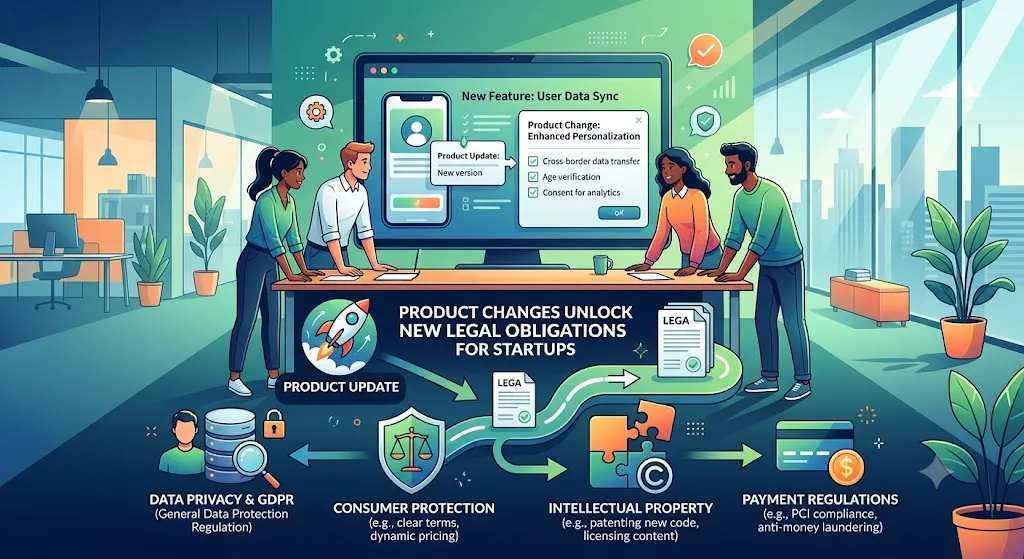
Changes in Product Features Can Alter Compliance Requirements
Adding a new feature may change how a startup collects or processes information. For example, a feature involving location tracking, payment processing or user profiling can introduce additional privacy and security considerations. The startup should understand what information the feature requires and whether existing notices and internal procedures accurately reflect its use.
The change may also affect contractual relationships with customers and service providers. Existing terms may not cover a new service or functionality. Reviewing contracts before launch can help identify provisions requiring amendment. It also gives the startup an opportunity to communicate material changes clearly to users.
New Data Collection Can Create Privacy Responsibilities
Product development frequently involves collecting additional customer information. A platform may begin requesting contact details, behavioural information, location data or other personal information. Each new category of information should have a legitimate and clearly understood purpose within the product.
Startups should review their privacy notices and data handling procedures when collection practices change. They should consider how the information is obtained, where it is stored, who can access it and how long it is retained. New data uses may also require changes to consent mechanisms or other legal processes, depending on the applicable requirements.
Product Changes Can Affect Consumer Protection
A new feature can change the way a product is marketed, priced or used. This may affect consumer rights and disclosure obligations. For example, introducing a subscription model can create new requirements concerning pricing, renewals, cancellation procedures and communication with customers.
Marketing claims should also reflect the actual capabilities of the revised product. Startups should avoid presenting a feature as having capabilities or benefits which cannot be reasonably supported. Product descriptions, advertising materials and customer communications should be reviewed whenever significant functionality or pricing changes are introduced.
Payment Features May Introduce Additional Obligations
Startups sometimes expand from offering a basic service to providing payment related functionality. This can significantly change the legal and regulatory landscape. Handling payments, facilitating transactions or storing financial information may involve additional security, contractual and regulatory considerations.
The startup should determine whether the new functionality involves regulated activities or requires the use of appropriately authorised third party providers. Contracts with payment processors should also be reviewed. Data security requirements may become more important where financial information is processed or stored as part of the product.
New Markets Can Change the Legal Position
A product change may also involve expansion into new geographical markets. A feature permitted in one jurisdiction may be subject to additional requirements elsewhere. Privacy rules, consumer protection standards, advertising restrictions and sector specific regulations can differ between markets.
Startups should assess the legal position before releasing a revised product to customers in another jurisdiction. Local requirements may affect product design, contractual terms, disclosures or data processing arrangements. Early review can help prevent costly changes after the feature has already been deployed.
Product Changes Can Affect Intellectual Property Rights
New functionality may involve software developed by employees, contractors or external technology providers. Startups should confirm ownership of the intellectual property created during product development. This becomes particularly important when external developers or consultants contribute code, designs, documentation or other material.
Third party technology also requires careful review. A new software library, application programming interface or licensed platform may impose conditions on how the resulting product can be distributed or modified. Startups should understand relevant licence terms before incorporating external technology into a commercial product.
Contracts May Need to Be Updated
Product changes can make existing customer agreements inaccurate. Terms may describe an earlier version of the service, while the revised product operates differently. This can create uncertainty over customer rights, limitations of liability, service commitments and payment obligations.
Startups should review customer agreements, supplier contracts and partner arrangements before implementing material changes. Where necessary, amendments should be documented clearly. Contractual updates can help ensure the legal framework remains aligned with the actual product being provided.
Product Changes Can Create New Security Responsibilities
New features may increase the amount or sensitivity of information processed by a startup. They may also create additional access points into internal systems. A product update should therefore be reviewed from a security perspective before deployment.
Security assessments can help identify vulnerabilities introduced by new functionality. Startups should consider access controls, authentication, encryption, monitoring and incident response procedures as relevant to the product. A security issue following a major product change can create financial, contractual and reputational consequences.
Sector Specific Rules May Become Relevant
Some product changes can move a startup into a more regulated area. A general software platform may introduce financial features, health related services or educational functionality. Such changes can bring additional statutory or regulatory requirements depending on the service being offered.
Founders should identify whether the revised product falls within a regulated sector before launch. The analysis should consider the actual functionality rather than the startup's original business description. A company may need to review licences, approvals, disclosures or operational controls when its product evolves into a new area.
Product Changes Should Be Documented
Maintaining a record of product changes can help startups demonstrate how legal and operational decisions were made. Documentation may include product specifications, internal approvals, risk assessments, testing records and updated customer communications. These records can also assist the team when future changes are introduced.
A documented review process helps establish accountability within the organisation. It allows founders and management teams to identify which changes require legal review before release. Over time, this approach can create a more consistent process for managing product development and compliance.
Legal Review Can Support Product Development
Legal review does not need to delay innovation. When integrated into the product development process, it can help identify requirements before significant resources are committed. Reviewing privacy, contracts, intellectual property and regulatory issues early can reduce the need for major changes after launch.
Startups dealing with complex product changes may consider advice from startup lawyers for legal matters before introducing significant functionality. Legal guidance can help assess contractual, regulatory and intellectual property considerations associated with the revised product. The appropriate scope of review will depend on the startup's industry, customers and proposed changes.
Strong Legal Foundations Help Startups Adapt
A startup with organised corporate records and clear contractual arrangements may find it easier to manage product changes as the business grows. Founders should maintain accurate incorporation records, ownership documents, commercial agreements and intellectual property records from the early stages of the business.
For startups operating in India, guidance from startup registration lawyers in India can help founders understand the legal foundations required when establishing a company. Proper corporate documentation does not remove the need for ongoing compliance, but it can provide a clearer structure as the business develops new products and services.
Conclusion
Product development and legal compliance are closely connected. A change in functionality can affect privacy, consumer rights, intellectual property, contracts, security and sector specific obligations. Startups should therefore assess the legal consequences of significant product changes before releasing them to customers.
A structured review can help founders identify new obligations early and align product design with applicable requirements. Regular legal and compliance checks can also support sustainable growth as the startup introduces new features, enters new markets and develops new commercial relationships. Legal planning should remain part of the product lifecycle rather than being treated as a separate exercise after development is complete.




























Sign in to leave a comment.