

A father in Albuquerque admitted, a few weeks into services, that he'd built up an expectation in his head almost entirely from things he'd read online, most of it either overly clinical or oddly optimistic, and neither version had prepared him for what the actual day-to-day experience looked like. The real thing was slower, more collaborative, and considerably less dramatic than either the clinical descriptions or the hopeful anecdotes had suggested.
Setting realistic expectations before services begin tends to make the entire experience easier for a family, since a gap between what's expected and what actually happens is often the real source of early frustration, more than anything about the therapy itself.
What the Early Weeks Realistically Involve
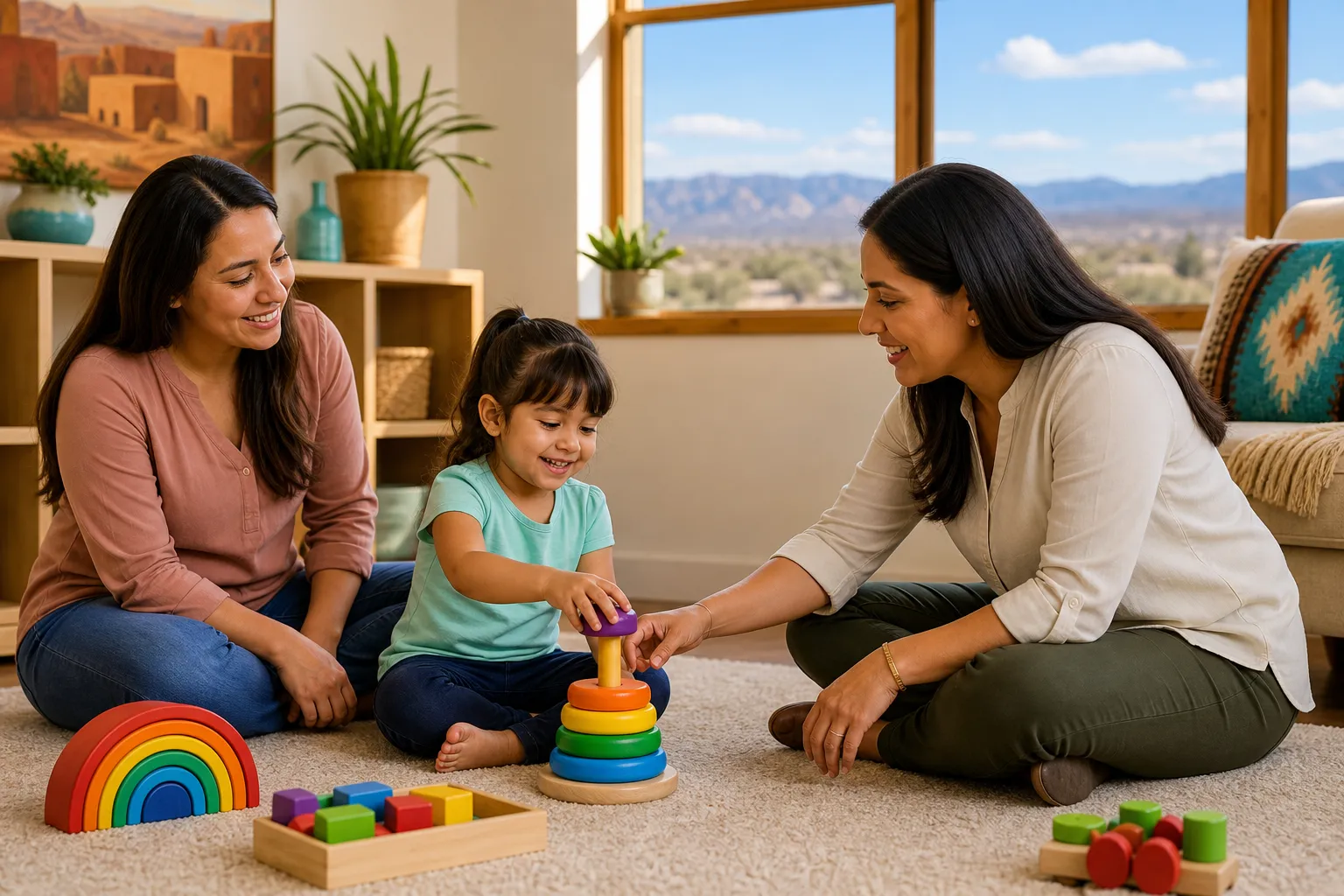
The first several sessions typically focus on building rapport and collecting baseline data rather than immediately diving into intensive teaching. This isn't a delay or a sign of a slow start. It's a deliberate, necessary phase that ensures the goals eventually chosen actually reflect a specific child rather than a generic starting template applied without knowing them.
Parent training also tends to begin fairly early, often overlapping with this initial phase, since caregivers are considered active participants in the process rather than passive recipients of a service performed entirely by a technician. Families who understand this involvement upfront tend to engage with it more readily than those expecting therapy to be something that happens entirely without their participation.
What a Realistic Pace of Progress Looks Like
Progress tends to be gradual and cumulative rather than marked by sudden, dramatic breakthroughs. A skill built over weeks often shows up first in a small, easy-to-miss way, a slightly longer pause before frustration, a gesture used a little more consistently, before it becomes clearly visible in daily life. Providers describing Elite Steps ABA's approach to this process tend to walk families through what early, subtle progress actually looks like, precisely so it doesn't go unrecognized simply because it wasn't dramatic.
No responsible provider promises a specific pace or a specific outcome by a specific date, since every child's course through services differs meaningfully based on their own starting point, goals, and circumstances at home, and treating any single family's timeline as a universal benchmark tends to set everyone up for disappointment.
Why Collaboration Matters More Than Families Often Expect
Families who engage actively, asking questions, sharing observations, reinforcing strategies consistently between sessions, tend to see the overlap between formal therapy and daily life deepen faster than families who treat sessions as something entirely separate from the rest of the week. The Behavior Analyst Certification Board has published guidance emphasizing the caregiver's role as an active partner in treatment, not merely an observer of services delivered independently by a technician.
The father in Albuquerque eventually let go of both versions of the expectation he'd built online. What replaced them was something quieter and, in his own words, more workable: a process he understood well enough to actually participate in, rather than simply watch happen.


























Sign in to leave a comment.