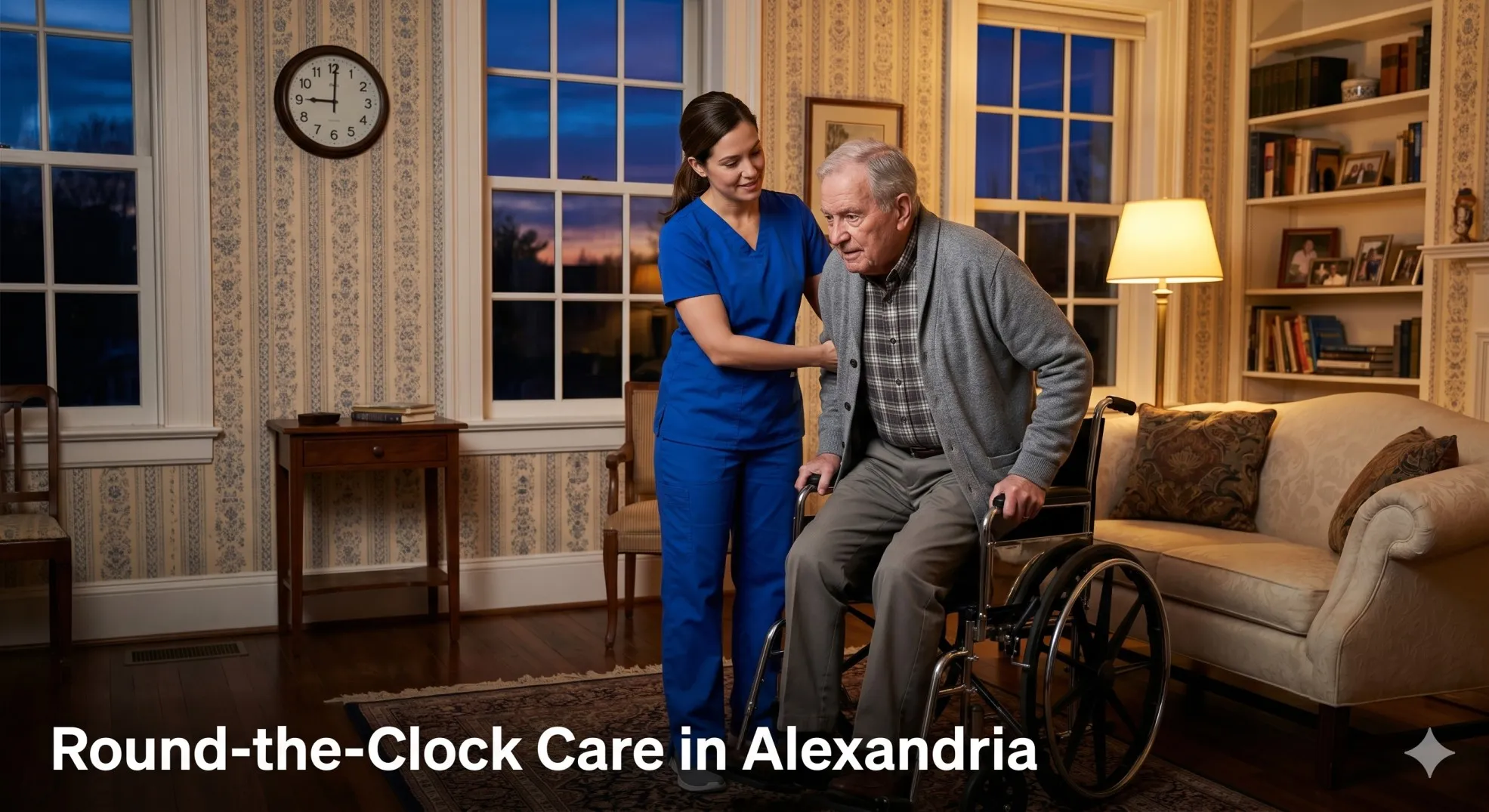

Getting out of bed in the morning used to be simple. Now it takes a moment. A careful shift of the legs. A hand on the nightstand. A breath before standing.
For many seniors living with mobility challenges, this is how every day begins. And it does not stop there. Getting dressed. Walking to the kitchen. Using the bathroom safely. Every ordinary task that others do without thinking becomes something that requires effort, focus, and a little bit of courage.
If this is your reality, or the reality of someone you love, you deserve more than just getting by. You deserve to move through your day safely, comfortably, and with your dignity fully intact.
That is exactly what 24-hour home care services in Alexandria are designed to provide.
What Mobility Challenges Actually Feel Like
It is worth saying clearly: losing mobility is not just a physical experience. It is an emotional one, too.
When moving around becomes difficult, the world quietly gets smaller. Trips outside become less frequent. Social activities get skipped. Independence, something most people have never had to think about, suddenly feels fragile.
Many seniors describe this period as one of the loneliest of their lives. Not because people stop caring, but because the simple ability to move freely through the world is so deeply tied to who we are.
Mobility challenges in older adults are most commonly caused by:
- Arthritis and joint pain, which make movement stiff and painful
- Parkinson's disease, which affects balance and coordination
- Stroke, which can cause weakness or paralysis on one side of the body
- Osteoporosis and fractures, particularly after a fall
- Heart or lung conditions that reduce stamina and energy
- General muscle weakness from reduced activity over time
Whatever the cause, the result is the same. Daily life becomes harder. The risk of falling increases. And the fear of falling, which is just as real as the fall itself, can cause a senior to move less, which weakens the body further still. This is a cycle that the right support can genuinely interrupt.
Why Mobility Challenges Cannot Wait Until Morning
Here is something families often do not fully appreciate until it is too late.
Mobility challenges do not follow a schedule. They do not wait for a convenient hour or a time when someone is around to help.
Falls happen in the middle of the night. A senior wakes up disoriented, reaches for something in the dark, and loses balance. Someone with Parkinson's freezes mid-step in the hallway at 2 am. A person recovering from a hip replacement tries to get to the bathroom alone and does not make it safely.
These moments are not rare. According to the CDC, 1 out of 4 seniors falls each year. This is the core reason why 24-hour home care services in Alexandria matter so much for seniors with mobility challenges. Not because something is constantly going wrong. But because when something does go wrong, someone is there to calmly help.
What 24 Hour Home Care Services Actually Provide
Round-the-clock care does not mean a single caregiver is awake and watching every moment of the night. It means that there is always someone present in the home, available to assist the moment they are needed.
For seniors with mobility challenges in Alexandria, 24-hour home care typically includes:
Safe Movement and Transfer Assistance
Getting in and out of bed. Moving from the bed to a chair. Sitting down and standing up from the toilet. These transfers are among the highest-risk moments of a mobile-challenged senior's day.
A caregiver provides the physical support and guidance to make these movements safe. They position themselves correctly, use proper technique, and ensure that every transfer happens without unnecessary strain on the senior's body.
Fall Prevention Around the Clock
A trained caregiver does not just respond to falls. They actively work to prevent them.
This means keeping pathways clear and well-lit at night. It means ensuring mobility aids like walkers and canes are always within reach. It means noticing when a senior seems unsteady and slowing things down before a fall has the chance to happen.
Personal Care with Dignity
Bathing, dressing, grooming, and toileting become significantly harder with limited mobility. A caregiver assists with each of these tasks in a way that is safe, gentle, and respectful.
Dignity matters enormously here. A good caregiver understands that accepting help with personal care is not easy for many seniors. They approach it with patience, sensitivity, and genuine care for the person in front of them.
Overnight Monitoring and Reassurance
For many seniors with mobility challenges, the night brings its own set of worries. What if I need the bathroom and fall? What if I need help and no one hears me?
Having a caregiver present overnight removes that anxiety. It allows a senior to rest properly, knowing that if they need to get up, someone is there to help them do it safely.
Mobility Aid Support
Canes, walkers, rollators, and wheelchairs all require correct use to be effective. A caregiver ensures mobility aids are being used properly, are positioned correctly, and are in good working order. They also help a senior build confidence in using them, which is just as important as the physical support.
Encouragement of Gentle Movement
Staying as active as possible, within safe limits, is one of the most important things a senior with mobility challenges can do for their long-term health.
A caregiver encourages and supports gentle daily movement, short walks around the home, seated exercises, and stretches recommended by a physiotherapist. This kind of consistent, supported activity helps maintain strength, reduce stiffness, and slow further decline.
Meals, Medication, and Daily Routine
Good nutrition supports muscle strength and energy. Medications taken correctly support the conditions that affect mobility. And a consistent daily routine creates predictability that reduces risk.
A round-the-clock caregiver ensures all of these happen reliably, morning, afternoon, and night.
The Emotional Side of Mobility Care
For a senior living with mobility challenges, the emotional impact is real and significant. The loss of independence. The frustration of needing help with things that used to be effortless. The worry about being a burden to the family.
A good caregiver sees all of this, not just the physical need. They show up consistently. They learn your routine. They know how you like your tea and what time you prefer to get dressed, and which chair you find most comfortable.
Over time, they become a trusted, familiar presence, and that relationship does more for well-being than any piece of equipment or home modification ever could.
Loneliness and low mood are both known to worsen physical health in older adults. Connection, on the other hand, genuinely helps. The companionship that comes with 24-hour home care services in Alexandria is not a bonus feature. It is part of the care itself.
Staying at Home in Alexandria
Many seniors in Alexandria have built their lives here, their friendships, their routines, the walks they know by heart, and the neighbors they have known for years. Leaving home is not something most of them want to do. And with the right care in place, they do not have to.
24-hour home care services make it possible to remain safely in a familiar, beloved home even when mobility becomes seriously limited. That matters far more than most people realize.
Research consistently shows that seniors who remain in their own homes experience better emotional well-being, lower rates of cognitive decline, and a stronger sense of identity and purpose.
The Bottom Line
Mobility challenges change daily life. But they do not have to take away safety, dignity, or independence.
With the right round-the-clock support in place, seniors in Alexandria can continue living in the home they love, moving through each day with confidence, and resting through each night without fear.
Frequently Asked Questions
1. What are 24-hour home care services?
24-hour home care means a caregiver or rotating team of caregivers is present in the home around the clock. They provide assistance whenever it is needed, day or night, including overnight support for seniors who need help with mobility, personal care, or safety monitoring.
2. How do 24-hour home care services help seniors with mobility challenges specifically?
Caregivers provide safe transfer assistance, fall prevention, overnight monitoring, personal care, mobility aid support, and gentle encouragement of daily movement. Their consistent presence significantly reduces fall risk and supports both physical and emotional well-being.
3. Is 24-hour home care the same as live-in care?
They are similar but slightly different. Live-in care means one caregiver lives in the home and is available throughout the day, with a designated sleep period at night. 24-hour care typically involves rotating caregivers in shifts so that someone is always fully awake and alert. A care advisor can help identify which is the right fit.
4. What conditions most commonly require 24-hour mobility support at home?
Common conditions include Parkinson's disease, stroke recovery, severe arthritis, hip or joint replacement recovery, osteoporosis with a fall history, and advanced heart or lung disease. Any condition that significantly affects balance, strength, or coordination may benefit from round-the-clock support.
5. How do I know if my loved one needs 24-hour care rather than part-time support?
Signs that round-the-clock care may be needed include a recent fall or near-fall, unsafe transfers when alone, nighttime wandering or confusion, inability to get to the bathroom safely without help, or a family member who is no longer able to be present consistently. A care assessment can help clarify the right level of support.

























Sign in to leave a comment.