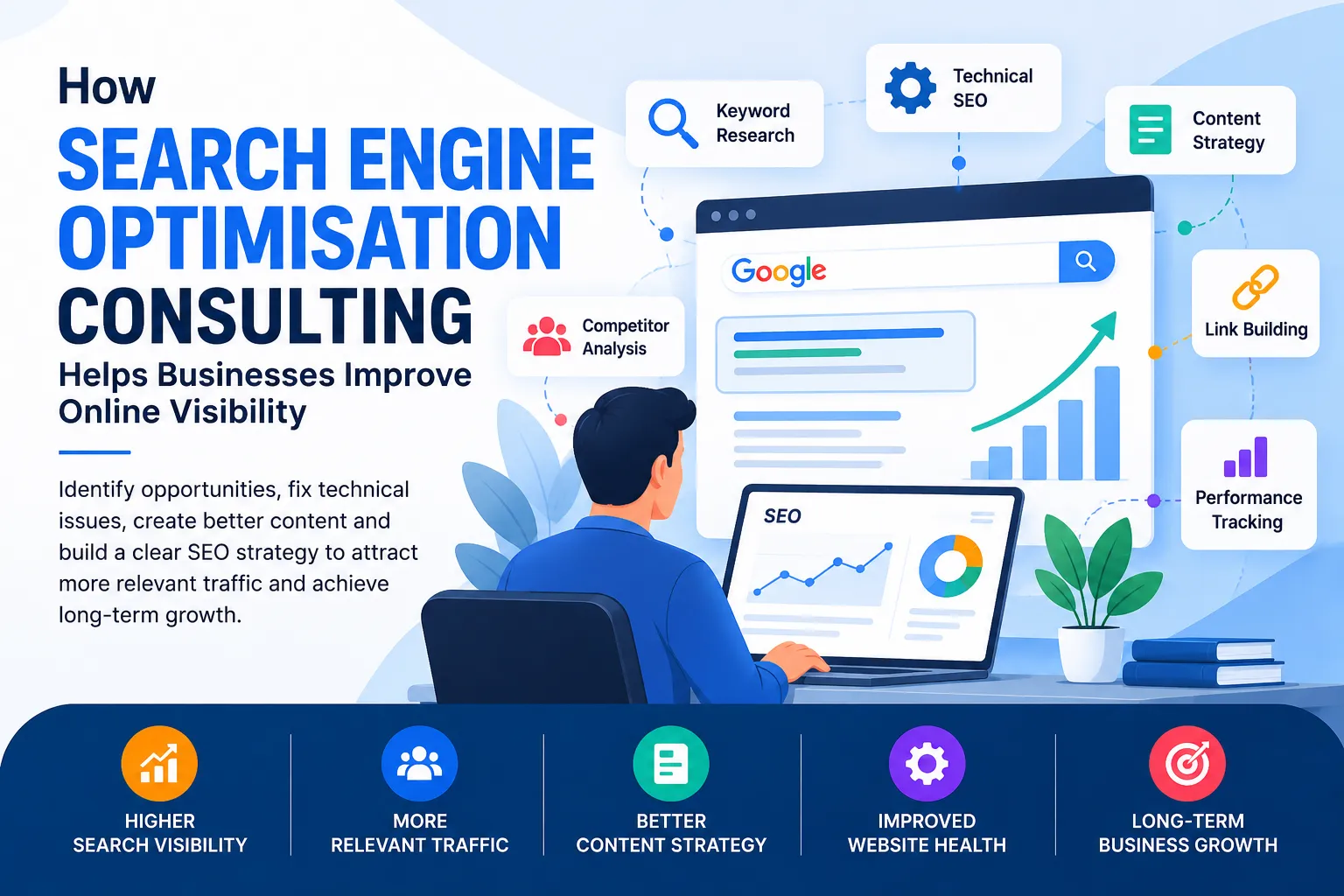

Search engines remain an important way for customers to discover businesses, compare solutions and find answers to their questions. However, achieving consistent visibility in search results requires more than adding keywords to website pages. Businesses need a clear strategy that considers technical performance, content quality, search intent and the overall website experience. This is where search engine optimisation consulting can help organisations identify opportunities and make more informed decisions about their organic search strategy.
SEO has become increasingly multidisciplinary. It involves technical website improvements, content planning, keyword research, internal linking, authority development and performance analysis. Consulting can help businesses understand which areas need attention and how to prioritize improvements based on their objectives.
What Is Search Engine Optimisation Consulting?
Search engine optimisation consulting involves evaluating a website's search performance and recommending actions to improve its visibility in organic search results.
An SEO consultant may assess the website's technical structure, existing content, keyword targeting, internal links, competitor visibility and user experience.
The objective is to identify issues and opportunities, then develop a practical plan for improving organic search performance.
Depending on the business, consulting may focus on resolving technical problems, expanding content coverage, improving existing pages or developing a long-term SEO strategy.
Why Businesses Need an SEO Strategy
Without a defined strategy, businesses may spend time creating content that does not address their audience's needs or improving pages that have limited business value.
An SEO strategy helps connect search activity with business goals.
For example, a service business may want to attract visitors searching for specific solutions, while an e-commerce company may focus on product categories and transactional queries.
A strategy should consider the target audience, relevant search terms, competition, available resources and expected outcomes.
Keyword Research and Search Intent
Keyword research helps businesses understand the language people use when searching for information, products or services.
However, search volume alone should not determine which keywords receive priority.
Search intent is equally important. Someone searching for a definition may want educational information, while someone searching for a specific service may be closer to making a purchasing decision.
SEO consulting can help map keywords to appropriate pages and identify gaps in the existing content.
This reduces the risk of multiple pages targeting the same intent or important search queries having no relevant landing page.
Technical SEO and Website Health
Technical SEO helps search engines discover, crawl and understand website content.
A technical review may examine:
- Crawlability and indexability
- XML sitemaps
- Robots.txt directives
- Canonical tags
- Redirects and broken links
- Duplicate content
- Mobile usability
- Page performance
- Structured data
- Internal linking
Not every website needs changes in every area. Recommendations should be based on actual issues and their potential impact.
For example, publishing more articles may not be the best immediate priority if important pages cannot be crawled or are incorrectly marked as non-indexable.
Content Optimization and Topical Coverage
Content remains an important part of SEO because it helps businesses answer users' questions and explain their offerings.
Consultants may review existing pages to identify missing information, outdated details, unclear headings or mismatches between content and search intent.
They may also recommend new articles, service pages or supporting resources.
The goal should be to create genuinely useful content rather than publishing large quantities of similar pages simply to target more keywords.
A well-organised content strategy can help businesses address different stages of the customer journey while strengthening the relationship between related pages through internal links.
Competitor Analysis
Competitor analysis helps businesses understand which websites are visible for relevant search queries and what opportunities may exist.
An SEO review can compare competitors' content coverage, site structures, page formats and authority signals.
This analysis should be used to identify useful gaps rather than copy competitors' content.
Businesses can differentiate themselves by providing more practical information, original insights, clearer explanations and stronger user experiences.
Measuring SEO Performance
SEO performance should be evaluated using several metrics rather than a single ranking position.
Useful indicators include:
- Organic clicks
- Search impressions
- Click-through rate
- Keyword visibility
- Organic sessions
- Conversions and enquiries
- Indexed pages
- Engagement with key landing pages
Google Search Console can provide information about search impressions, clicks, queries and page performance. Analytics tools can help businesses understand what visitors do after arriving on the website.
Results should be interpreted over appropriate periods because search performance can fluctuate due to competition, seasonality, algorithm changes and other factors.
Prioritising Recommendations
An SEO audit may produce a long list of recommendations, but not every issue needs immediate attention.
Consulting can help prioritise actions based on their likely impact, implementation effort and business importance.
For example, correcting an indexing issue affecting an important service page may be more urgent than making a minor heading adjustment on a low-traffic article.
A prioritised roadmap helps marketing and development teams work towards clear objectives.
SEO and the Wider Digital Experience
Organic visibility is only one part of the customer journey. Once visitors reach a website, they still need to find relevant information and understand the next step.
Page design, navigation, content clarity and calls to action can influence whether organic traffic produces meaningful outcomes.
Leo9 Studio works across design, technology and marketing, making the relationship between website experience and digital performance relevant for businesses looking to connect their online presence with broader objectives.
Final Thoughts
Search engine optimisation consulting helps businesses understand their organic search performance, identify opportunities and develop a structured improvement plan.
By combining technical analysis, keyword research, content optimization, competitor evaluation and ongoing measurement, businesses can make better decisions about where to invest their SEO resources.
The most effective approach is not to chase rankings in isolation. It is to create a technically sound website with useful content and a clear experience for the people who visit it.


















Sign in to leave a comment.