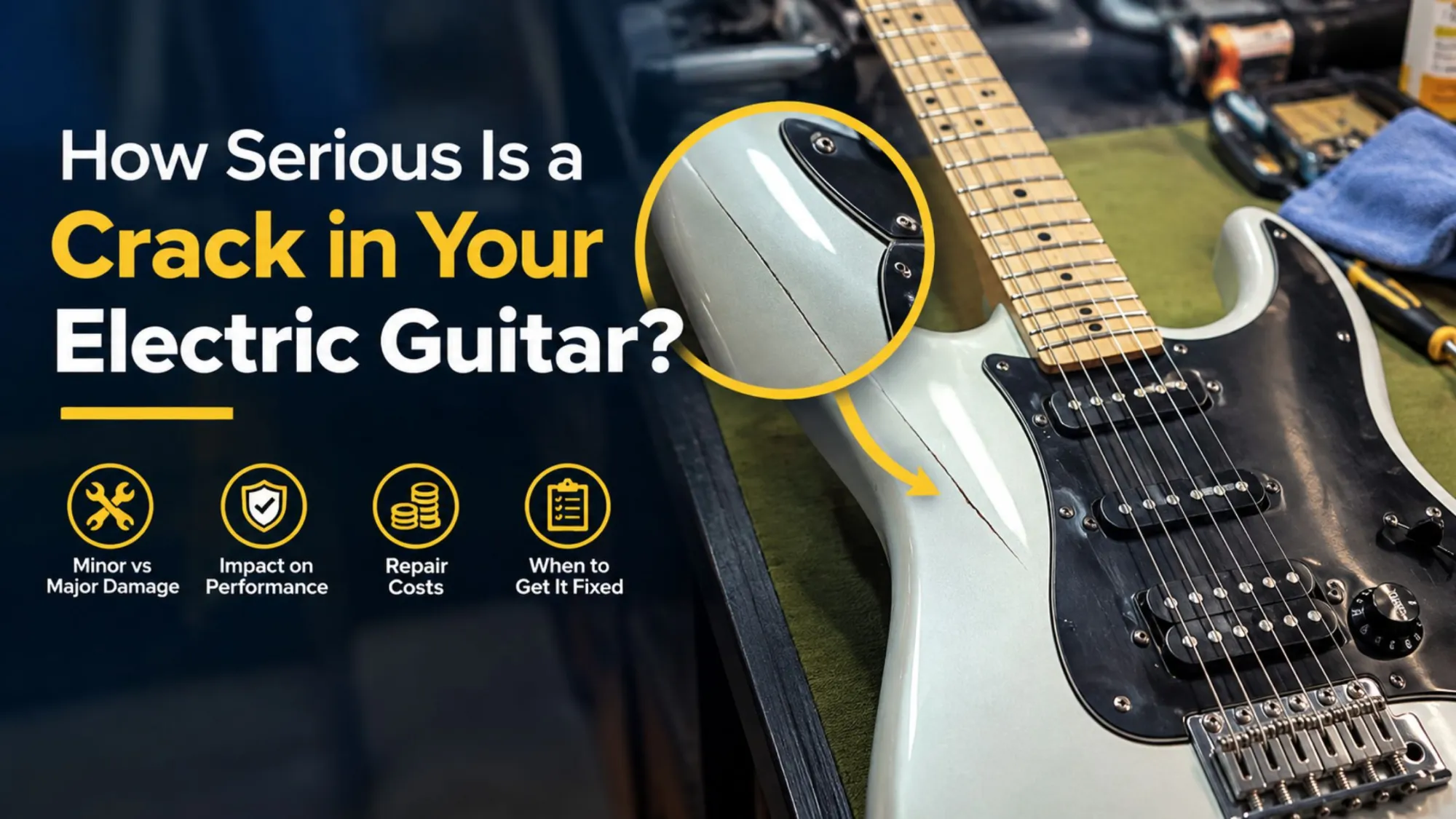

Seeing a crack on your electric guitar can be worrying, especially if it is an instrument you have owned and played for years. The good news is that not every crack means serious damage. Some cracks affect only the finish, while others can weaken the wood and affect the guitar's stability.
So, how serious is a crack in your electric guitar? It mainly depends on where the crack is, how deep it is, whether it is spreading, and whether it affects the way your guitar plays.
A Small Crack Does Not Always Mean Major Damage
A thin line in the finish can happen as the guitar ages or reacts to changes in temperature and humidity. While it may look worrying, it does not necessarily mean the wood underneath is damaged.
A more serious concern is a crack that:
- Goes through the finish and into the wood
- Becomes longer or wider
- Creates a visible gap
- Appears around the neck or headstock
- Changes the guitar's alignment or playability
- Follows an impact or fall
The deeper and more active the crack appears, the more important it is to have it checked.
Where the Crack Is Can Tell You How Serious It Is
The location of the crack is one of the biggest clues.
A small crack in an open area of the body may be less concerning than one near the neck joint or headstock because these areas handle more physical stress.
Cracks Around the Headstock
A headstock crack deserves attention because the strings place constant tension on this area. A serious crack can affect its strength and become worse if left untreated.
If you see a crack around the headstock, have it inspected instead of assuming it is only cosmetic.
Cracks Around the Neck
A neck crack can also be serious because the neck needs to remain strong and properly aligned.
You may notice changes in string height, tuning stability, or how the neck feels while playing. These changes can indicate that the crack is affecting the guitar's structure.
Cracks on the Guitar Body
A body crack can be minor or serious depending on its location and depth.
A small finish crack may not affect the guitar's structure. However, a deeper crack near the bridge, neck joint, or another stressed area should not be ignored.
What Makes an Electric Guitar Crack Serious?
A simple question can help: Is the crack only visible, or is it changing the guitar?
A crack becomes more concerning when you notice changes such as:
- The crack is getting longer or wider
- The wood appears separated
- The neck looks or feels different
- The guitar becomes harder to keep in tune
- String height changes
- New buzzing appears
- The bridge or neck area looks unstable
These signs do not always prove that the crack caused the problem, but they are reasons to have the guitar inspected.
Can You Keep Playing a Cracked Electric Guitar?
Sometimes, yes. It depends on the crack.
If the damage is limited to the finish and remains stable, it may not require immediate structural repair. However, playing with a deep or spreading crack can allow the damage to become worse.
This is especially important when the crack is near the neck, headstock, bridge, or another area under stress.
If you are unsure about the damage, getting an assessment before continuing to play heavily is the safer choice.
What Causes Electric Guitar Cracks?
Sudden changes in temperature and humidity can cause wood to expand and contract. Repeated changes can place stress on the guitar over time.
Accidental impacts are another common cause. A fall, bump, or pressure on the guitar can create a crack that may not be obvious at first.
Leaving an electric guitar in extreme heat, cold, or very dry conditions can also increase the risk of damage.
Can Electric Guitar Crack Repair Fix the Problem?
In many cases, yes. The repair depends on whether the crack is cosmetic or structural.
With electric guitar crack repair, a technician can examine the damaged area and determine how deep the crack goes. The repair may involve stabilizing the wood, addressing the finish, or correcting related damage.
A finish crack and a structural crack require different approaches. Avoid using glue or other quick fixes on a serious crack, as they can make professional repair more difficult.
What About Electrical Problems After a Crack?
A crack does not automatically mean your guitar's electronics are damaged.
If you also experience weak output, unwanted noise, cutting out, or pickup problems, the electrical system may need separate attention. In some cases, an electric guitar electronics upgrade may be useful, but that is different from repairing the crack.
First determine whether the problem is structural, electrical, or both. This can help you avoid unnecessary repairs.
Summary:
A useful rule is simple: the deeper, larger, faster-growing, or more strategically located the crack is, the more seriously you should take it.
Pay particular attention to cracks around the headstock, neck, bridge, and neck joint. You should also seek help if the guitar's tuning, string height, alignment, or playability changes after the crack appears.
You do not need to panic when you notice a crack. Many guitar cracks can be repaired, especially when they are identified early. The first step is finding out whether the damage is cosmetic or structural.
Taking action early can help protect your electric guitar and keep it playable for years to come.



















Sign in to leave a comment.