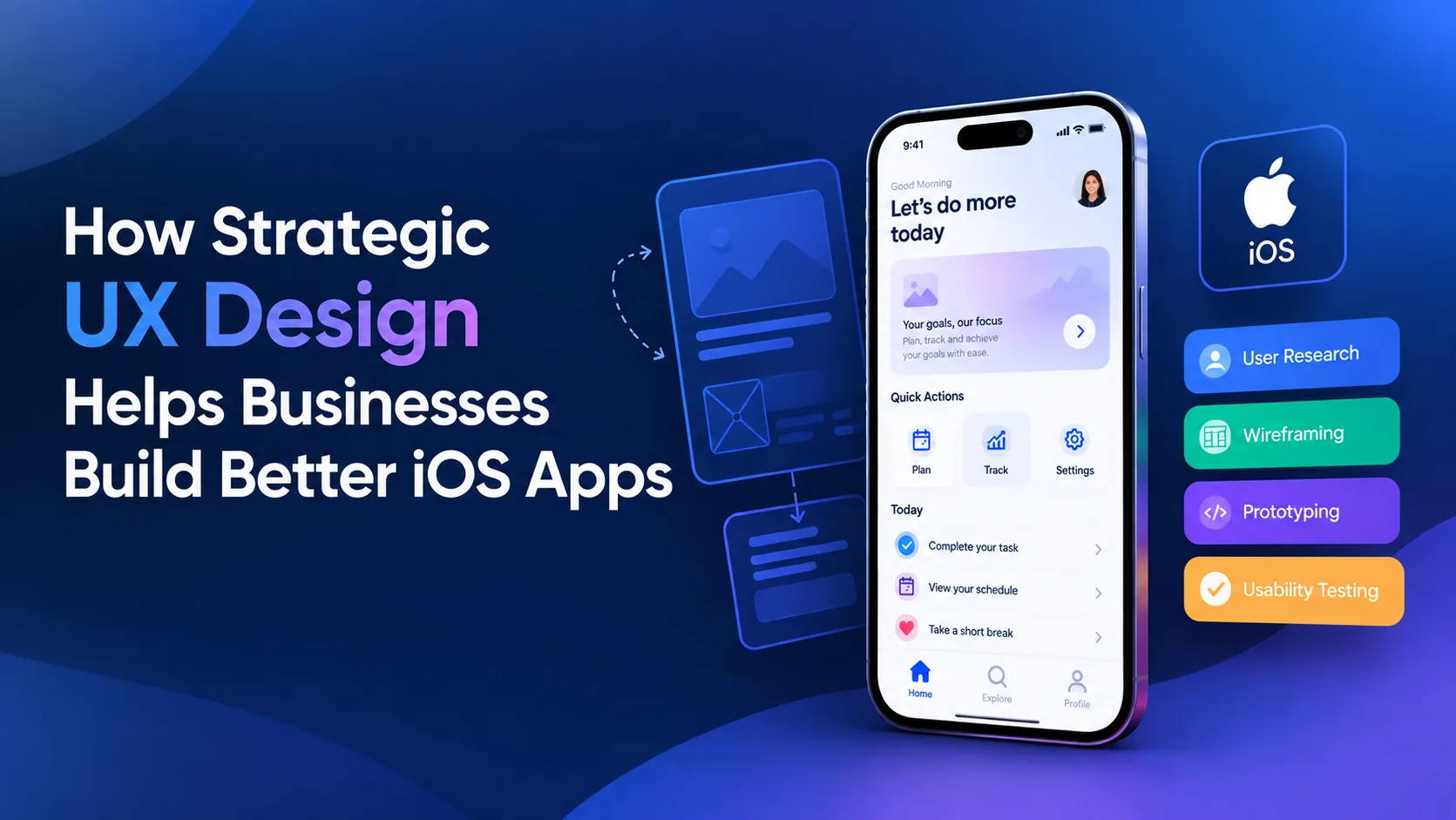

A successful iOS app needs more than a polished interface. Users expect intuitive navigation, fast interactions, clear content, and experiences that feel natural within the Apple ecosystem. Strategic UX design helps businesses turn these expectations into product decisions that improve usability and engagement.
Working with an experienced iOS app development company can help businesses connect UX strategy with technical implementation from the beginning. This ensures that the app is designed around real user needs while staying practical to develop and scale.
Start With User Research
Strategic UX begins with understanding who will use the app and what they expect from it. User research helps identify pain points, common behaviors, motivations, and the tasks users need to complete.
These insights can guide everything from information architecture to navigation and feature prioritization. Instead of designing based on assumptions, businesses can create an iOS app user experience around actual user requirements.
Simplify the User Journey
iOS users should be able to complete important tasks without unnecessary steps. A complicated flow can lead to frustration, even when the app offers useful features.
UX designers can map key user journeys and remove unnecessary interactions. Clear navigation, logical screen hierarchy, and well-placed actions can make the app easier to understand and use.
Design for the iOS Ecosystem
Good UX should consider established iOS interaction patterns and platform expectations. Elements such as navigation, gestures, typography, spacing, accessibility, and system-level interactions should feel familiar to users.
Following iOS design principles can reduce the learning curve while helping the app feel consistent with the wider Apple ecosystem.
Prioritize Accessibility
Accessibility should be part of UX planning rather than an afterthought. Businesses should consider readable typography, sufficient contrast, touch target sizes, VoiceOver compatibility, and other accessibility requirements during design.
An accessible mobile app UI design can make the product easier to use for a broader range of customers while creating a more inclusive experience.
Connect UX With Business Goals
Strategic UX is not only about making an app look good. It should support measurable business objectives such as higher conversions, better retention, increased feature adoption, or fewer support requests.
For example, an ecommerce app might simplify the checkout journey, while a financial app could focus on making complex information easier to understand. The UX strategy should reflect the actions that matter most to the business.
Test Before You Build at Scale
Prototypes allow businesses to test important user flows before investing heavily in development. Usability testing can reveal confusing navigation, unclear labels, or unnecessary steps while changes are still relatively easy to make.
This makes UX prototyping an important part of the iOS app development process. Feedback from real or representative users can then guide improvements before the final product is built.
Build a Consistent UI
Once the UX structure is established, a consistent visual system helps create a smoother experience across the app. Reusable components, consistent typography, spacing, buttons, colors, and interaction patterns can improve both usability and development efficiency.
A well-defined iOS UI design system also makes it easier to maintain the app as new features and screens are introduced.
Measure and Improve After Launch
UX work does not end when an iOS app goes live. Businesses should monitor user behavior, reviews, retention, conversion rates, and feature adoption to identify areas that need improvement.
Regular UX improvements can help the app adapt to changing user expectations and business goals instead of becoming outdated after launch.
Conclusion
Strategic UX design helps businesses create iOS apps that are easier to navigate, more accessible, and better aligned with user expectations. From research and user journeys to prototyping, platform-specific design, and continuous testing, each stage can reduce friction and improve the overall app experience.
Businesses can leverage professional UI UX design services to bring these UX principles into their product strategy and development process. At RipenApps, these principles can be applied to create iOS experiences that are intuitive, user-focused, and built around real user needs. A thoughtful approach to UX can help turn an iOS app from a collection of features into a product that users can understand, trust, and continue using.


























Sign in to leave a comment.