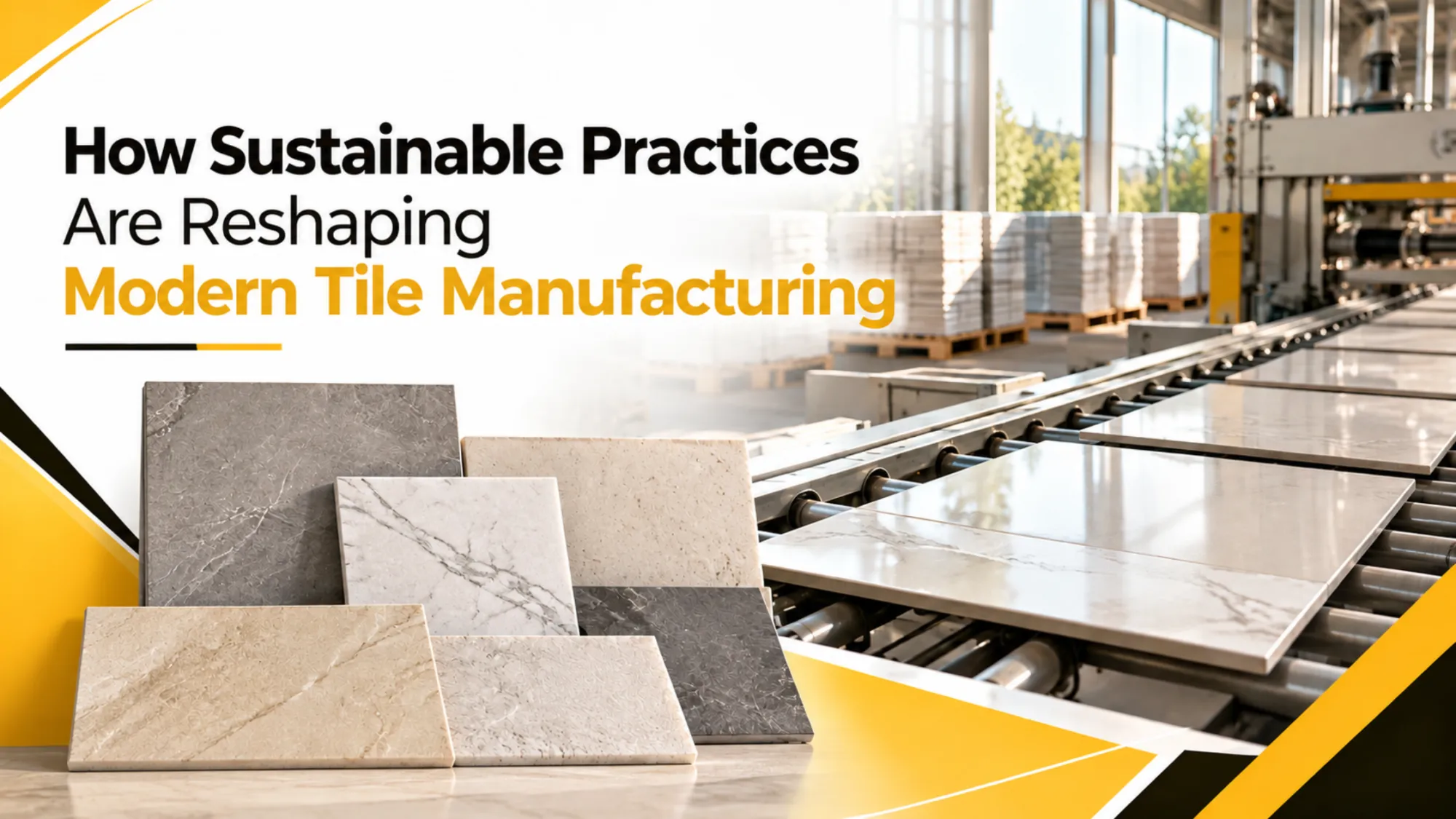

Walk into any tile showroom today and you'll notice something different in the air, quite literally. The glazes smell less sharp. The lighting overhead is often solar-fed. And somewhere in the fine print of the product tag, a phrase keeps showing up: made with recycled content.
This shift didn't happen by accident. Sustainable tile manufacturing has moved from a niche selling point to the backbone of how modern factories operate, and the change is rewriting the rules of an industry that has, for over a century, run on fire, clay, and enormous amounts of water.
Tiles have always been sold on beauty and durability. What's new is that the story now starts long before installation, in the quarry, the kiln room, and the wastewater tank.
And for anyone building, renovating, or simply curious about where their floors come from, that backstory is becoming impossible to ignore.
Why the Industry Had to Change
Traditional tile production is resource-hungry by nature. Firing clay and porcelain bodies at temperatures well above 1,000°C consumes enormous energy, and older kilns leaked a large share of that heat straight into the atmosphere.
Water, meanwhile, is used at almost every stage ,mixing raw materials, shaping bodies, polishing surfaces, and older facilities often used it once before sending it down the drain as effluent.
Add to this the sheer volume of offcuts, broken tiles, and glaze sludge generated during production, and it's easy to see why regulators and consumers alike started asking harder questions.
Global building codes tightened, energy costs climbed, and buyers, particularly architects and developers working on green-certified projects, began demanding proof of environmental responsibility rather than just a promise printed on a brochure.
The result is a manufacturing landscape now defined by sustainable tile production: methods that treat energy, water, and raw material as finite resources to be managed rather than consumed without consequence.
Recycled Materials Are No Longer an Afterthought
Perhaps the most visible change is in what actually goes into a tile body today. Recycled materials in tile manufacturing now include crushed glass, reclaimed ceramic waste, mining by-products, and even industrial ash that would otherwise sit in a landfill. Blended correctly, these materials don't compromise strength, in several cases, they improve it, since recycled glass and feldspathic waste can tighten a tile's microstructure during firing.
This matters more than it might seem. A single tile factory can generate tonnes of unfired scrap and broken pieces in a normal production cycle. Feeding that scrap back into the body mix, rather than trucking it to a dump, closes a loop that the industry ran open for decades.
It also reduces dependence on virgin clay extraction, which carries its own land-use and biodiversity costs.
For buyers evaluating porcelain slab manufacturers, this is one of the clearest ways to separate genuine sustainability claims from marketing language, ask what percentage of recycled content actually goes into the body, not just the packaging.
Energy Efficiency: Where the Real Savings Happen
Firing is the single largest energy draw in tile production, which is exactly why energy-efficient tile production has become the industry's biggest engineering focus.
Modern roller kilns are built with better insulation, optimized burner placement, and heat-recovery systems that capture exhaust heat and redirect it to preheat incoming material or dry freshly pressed tiles. That single change alone can cut fuel consumption meaningfully across a production run.
Many facilities have also shifted a portion of their electricity load to solar power, particularly in regions with high year-round sun exposure, a fitting fit for Indian manufacturing hubs, where rooftop and captive solar installations are increasingly common.
Combined with variable-frequency drives on compressors and pumps, these upgrades trim the overall carbon footprint of a plant without slowing down the line.
None of this is cosmetic. Energy is one of the largest line items in tile production costs, so efficiency gains here tend to be the ones manufacturers pursue most aggressively, the environmental benefit and the balance-sheet benefit point in the same direction.
Water: The Quiet Crisis Getting Solved
Water conservation rarely gets the spotlight that energy does, but it's just as central to eco-friendly tile manufacturing.
Closed-loop water recycling systems now let factories reuse processed water dozens of times before it needs treatment or replacement, dramatically cutting both fresh-water draw and wastewater discharge.
Sludge from these systems, once treated, can often be reintroduced into raw material mixes rather than disposed of separately.
This is particularly significant in water-stressed manufacturing regions, where a single ceramics cluster can draw on shared groundwater resources used by surrounding communities.
Cutting consumption here isn't just good practice, in many cases, it's becoming a regulatory requirement tied to a factory's operating license.
Low-Impact Glazes and Smarter Finishes
The visual appeal of a tile, its shine, texture, and color depth, comes from its glaze, and glazes have historically relied on heavy metals and high-VOC compounds to achieve certain effects.
That's changing. Low-VOC, lead-free glaze formulations now deliver comparable finishes, from matte stone looks to high-gloss polish, without the same chemical burden during firing or the same off-gassing risk indoors after installation.
This shift feeds directly into the growing category of eco-friendly tiles, which combine a smaller manufacturing footprint with genuinely healthier indoor air quality once installed, a detail that matters increasingly to homeowners and commercial designers working on wellness-certified spaces.
Large Format Isn't Just a Design Trend — It's an Efficiency Move
The rise of large format porcelain tiles deserves a mention here too, because bigger slabs aren't purely an aesthetic choice.
Fewer, larger pieces mean fewer grout lines, faster installation, and, critically, less material waste per square foot of coverage compared to cutting multiple smaller tiles to fit the same space.
Manufacturing efficiencies in slab-pressing technology have made these larger formats viable at scale, aligning a design trend with genuine resource savings on both the factory floor and the job site.
What This Means Once the Tiles Reach Your Home
Sustainability doesn't end at the factory gate. How a tile performs over its lifespan, how long it lasts, how much cleaning product it needs, how often it gets replaced, is itself an environmental factor.
A durable, easy-to-maintain surface reduces the resource cost of ownership over time. If you're weighing long-term upkeep, these maintenance tips for long-lasting tile flooring are a useful starting point for keeping a sustainably made floor performing well for decades rather than years.
Make Sustainable Tile Manufacturing the Standard for Your Next Project
The trajectory is unmistakable: sustainable tile manufacturing is no longer a marketing checkbox, it's the baseline expectation for any serious producer.
Recycled content, smarter kilns, closed-loop water systems, and cleaner glazes are converging into a model that treats environmental responsibility as inseparable from product quality, giving architects, contractors, and homeowners tiles that do more with less energy, water, and waste, without compromising on how a finished space looks or feels.
If you're sourcing for a project and want that responsibility built into the product itself, look closely at how your supplier handles these exact questions.
A serious porcelain tiles company will walk you through its energy practices, water systems, and recycled content without hesitation, and that transparency is the clearest signal of where the industry is headed.
Ask the right questions before you choose your next supplier, and let sustainability be part of the decision, not an afterthought.




















Sign in to leave a comment.