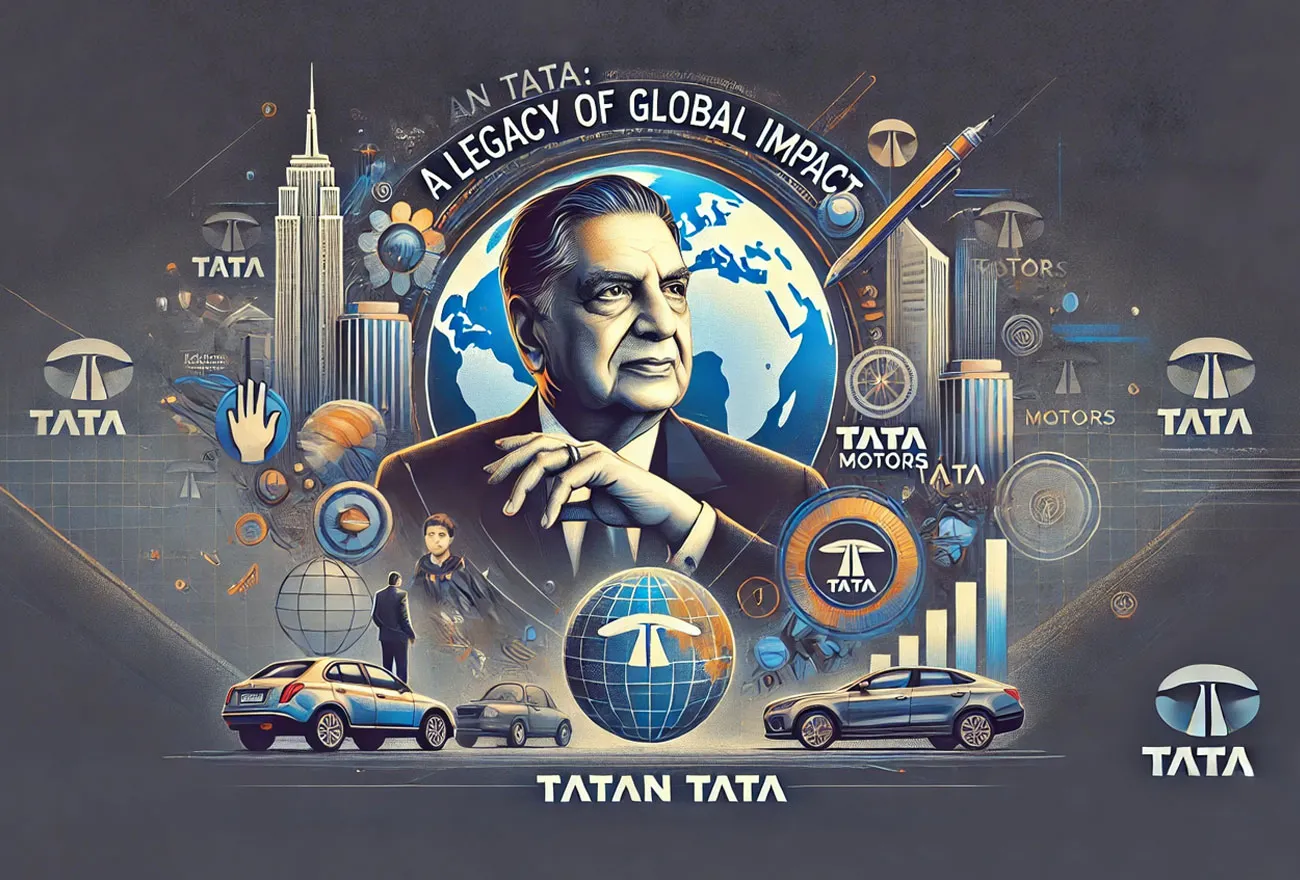

Few names have influenced India’s automotive story as deeply as Ratan Tata. His leadership helped transform Tata Motors from a primarily commercial-vehicle manufacturer into a global automotive company with a presence across passenger vehicles, electric mobility and luxury automobiles. For Motorbazee, his contribution represents more than business success—it is a story of vision, courage and long-term thinking.
Ratan Tata’s journey with Tata Motors was marked by decisions that carried significant risks but created lasting value. One of the most important milestones came in 1998, when Tata Motors introduced the Tata Indica, India’s first indigenously developed passenger car. The model demonstrated that an Indian company could design and build a car specifically for Indian consumers.
Visit Us:- How Tata Motors Reached All-Time Highs Thanks to Ratan Tata: a Tribute from Motorbazee
From Indian Roads to Global Luxury
Perhaps the boldest chapter in Tata Motors’ transformation was the acquisition of Jaguar Land Rover (JLR) in 2008. The deal brought two internationally recognised automotive brands into the Tata Motors family and dramatically expanded the company's global footprint.
At the time, the acquisition attracted considerable attention because it represented a major international commitment by an Indian automotive company. In subsequent years, JLR became an important contributor to Tata Motors' consolidated performance.
The scale of that transformation was evident in FY2024. JLR generated approximately £29 billion in revenue, while Tata Motors reported consolidated revenue of nearly ₹1.20 lakh crore for the year. JLR also delivered its highest full-year profit before tax and exceptional items since FY2015, according to Tata Motors.
Building a Stronger Tata Motors
Ratan Tata's influence was not limited to acquisitions. His broader philosophy encouraged innovation, engineering capability and products designed for changing customer needs.
Tata Motors subsequently expanded its passenger-vehicle portfolio and entered the electric-vehicle market aggressively. The Nexon EV became a significant part of the company's electrification strategy, while Tata Motors developed a broader range of electric passenger vehicles.
The company's commercial-vehicle business also remained an important foundation. Tata Ace, introduced in 2005, became a major force in India's last-mile transportation market, helping small businesses and entrepreneurs move goods more efficiently.
The Road to Record Stock Levels
Tata Motors' stock-market journey reflects the company's operational transformation, although share prices are influenced by many factors beyond the legacy of any one individual.
In March 2024, Tata Motors reached a record stock price after announcing plans to separate its commercial-vehicle and passenger-vehicle businesses into two listed entities. Reuters reported that the shares climbed as much as 7.9% following the announcement.
Strong business performance also supported investor confidence. In FY2024, Tata Motors reported ₹17,500 crore in consolidated profit after tax, while automotive free cash flow reached ₹14,100 crore.
These achievements cannot be attributed solely to Ratan Tata. They reflect the work of thousands of employees, engineers, leaders, suppliers and customers over many years. However, his strategic decisions helped create the foundation on which this transformation was built.
A Legacy That Goes Beyond Numbers
Ratan Tata passed away in October 2024, leaving behind a legacy that extends well beyond corporate balance sheets. Tata Motors itself has acknowledged that his vision was instrumental in the acquisition of JLR and in shaping the company's journey.
For Motorbazee, remembering Ratan Tata means remembering an approach to business that combined ambition with purpose. His story demonstrates how an Indian automotive company could think globally while continuing to develop products for Indian consumers.
Tata Motors' evolution—from Indica to electric vehicles and from Indian commercial vehicles to Jaguar and Land Rover—is ultimately a story of transformation. Ratan Tata played a defining role in that journey, and his influence continues to be reflected in the company he helped reshape.
FAQ
1. What was Ratan Tata's contribution to Tata Motors?
Ratan Tata played a major role in Tata Motors' transformation, including the development of passenger vehicles and the 2008 acquisition of Jaguar Land Rover.
2. When did Tata Motors acquire Jaguar Land Rover?
Tata Motors completed the acquisition of Jaguar and Land Rover in 2008.
3. Did Ratan Tata alone make Tata Motors successful?
No. Tata Motors' growth resulted from the combined efforts of its employees, management, engineers, partners and customers. Ratan Tata's leadership and strategic decisions were an important part of that history.
4. Why is Tata Motors' stock performance significant?
Its record levels reflected a combination of business performance, investor expectations, JLR's recovery, domestic operations and corporate developments such as the proposed business restructuring.
5. What is Ratan Tata's lasting legacy at Tata Motors?
His lasting legacy includes global ambition, product innovation, the JLR acquisition and the transformation of Tata Motors into a diversified global automotive business.






















Sign in to leave a comment.