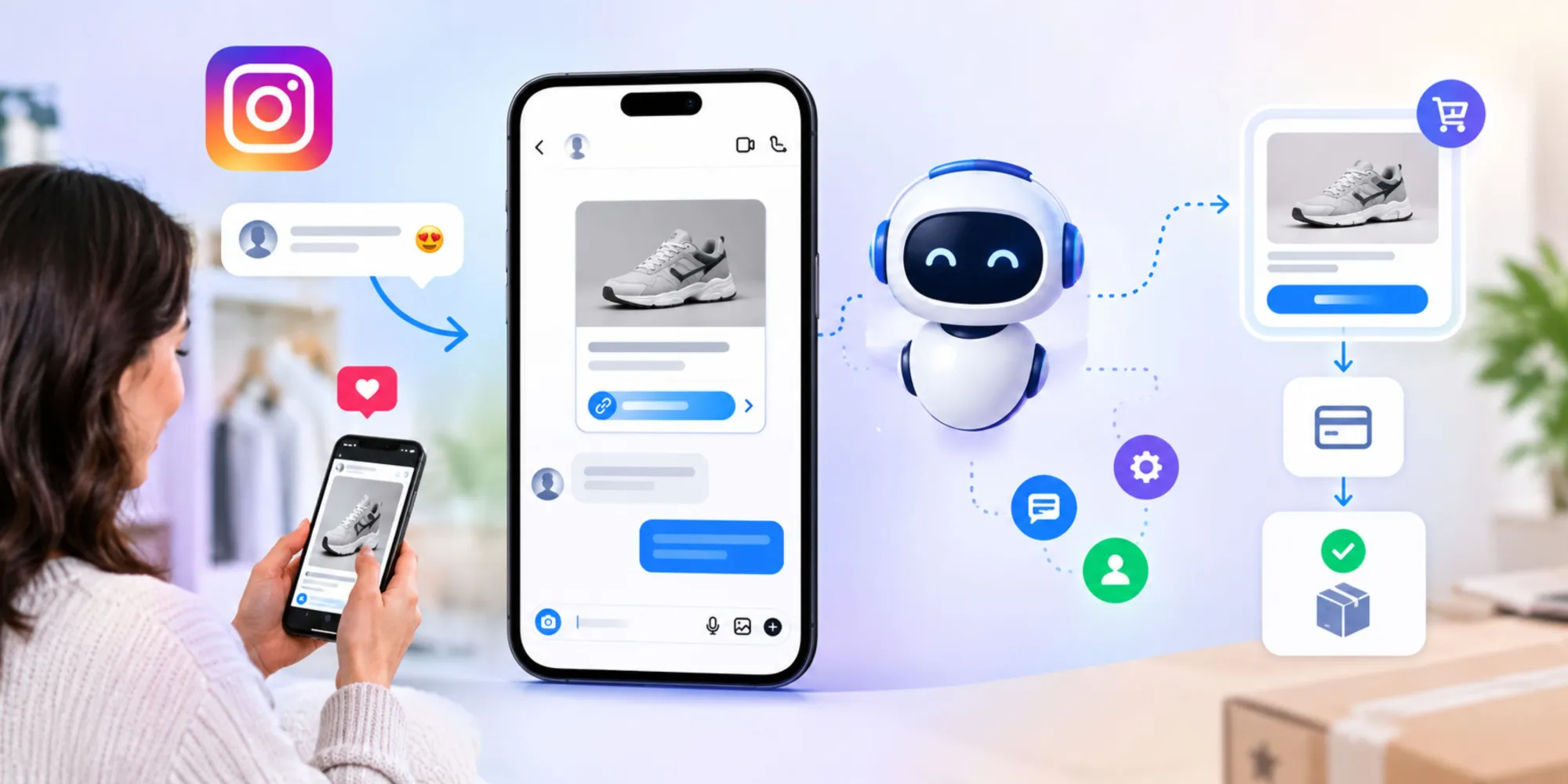

A successful Instagram product drop can create hundreds or thousands of comments and DMs within minutes. For ecommerce brands, that surge is valuable—but it can quickly become a customer-service bottleneck. Questions such as “Price?”, “Where can I buy this?”, “Send the link,” “Is size M available?” and “Does this ship to my city?” can overwhelm a social media team precisely when purchase intent is highest.
This is where AI social media automation for brands becomes particularly useful. Instead of treating Instagram automation as a simple autoresponder, brands can build a product-drop workflow that detects intent, sends the correct product link, answers common questions, qualifies shoppers and routes complicated conversations to human agents.
Why Product Drops Create an Instagram DM Problem
Product launches behave differently from everyday social media activity. A normal Instagram post may generate conversations gradually throughout the day. A limited product drop can generate a concentrated spike immediately after a Reel, Story or creator collaboration goes live.
The problem is not simply message volume. It is response timing.
A shopper who comments “LINK” is already interested in the product. If the brand responds several hours later, the shopper may have moved on or purchased elsewhere. Current Instagram automation workflows increasingly focus on reducing this gap by turning comments into immediate private conversations and delivering the relevant destination link.
For brands running limited launches, drops, flash sales or restocks, this makes Instagram DMs part of the sales funnel—not just a customer-support channel.
Build a Comment-to-DM Product Drop Workflow
The most practical setup starts with a simple trigger:
Instagram post/Reel → Comment → Automated DM → Product information → Product link → Checkout
For example, a sneaker brand launches a new limited-edition shoe and publishes a Reel with the CTA:
“Comment DROP and we’ll send you the product link.”
When a user comments “DROP,” the automation identifies the keyword and sends a private message containing the correct product URL.
A stronger version of the workflow can provide context instead of immediately dumping a link:
“You found the new Apex Runner. It’s available now in Black and White. Here’s the product page: [link]. Want help choosing a size?”
This approach gives the shopper an immediate next step while keeping the conversation open.
Comment-to-DM systems can also use different triggers for different products, campaigns or offers. That is especially important when multiple SKUs are being promoted simultaneously.
Use Product-Specific Links, Not a Generic Homepage
One of the biggest mistakes during a product drop is sending every Instagram user to the homepage.
If someone comments on a Reel for a specific product, the automated DM should ideally take them directly to that product's landing page or checkout destination.
Consider a fashion brand launching three products:
- Product A → /products/linen-shirt
- Product B → /products/oversized-jacket
- Product C → /products/cargo-pants
Each Instagram post should have its own trigger and destination.
For example:
“Comment JACKET” → Send Jacket URL
“Comment SHIRT” → Send Shirt URL
This removes unnecessary navigation and makes the automation measurable. It also prevents a common product-drop failure: sending a shopper to an outdated campaign page or the wrong product.
For Shopify-based businesses, Instagram automation can be connected to product and store workflows so the conversation can move from discovery to product information and ultimately to checkout.
Handle “Price?”, “Size?” and “Availability?” Automatically
During a launch, brands often receive the same questions repeatedly.
Examples include:
- “How much is it?”
- “Is this available in XL?”
- “What colors are available?”
- “When will it ship?”
- “Do you deliver internationally?”
- “Is the discount still active?”
- “Can you send the link?”
These questions are excellent candidates for structured automation.
An AI-powered system can use approved product information and brand guidelines to generate responses while maintaining a consistent tone. Some current ecommerce-focused Instagram systems combine comment automation and DM automation with product catalogs or knowledge bases so responses can be grounded in product information rather than generated from a blank prompt.
However, brands should define what automation is allowed to answer. Product availability, pricing, discount codes and shipping information can change quickly. Automation should use current data wherever possible rather than relying on static information that may become outdated during the campaign.
Add Human Escalation for High-Intent or Complex Conversations
Automation should handle repetitive conversations, but it should not force every customer through the same automated path.
A shopper asking “Send me the link” can receive an automated response.
A shopper asking:
“I have sensitive skin, which product should I choose?”
may need a trained representative.
Similarly, complaints, refund requests, unusual shipping issues and complicated purchase questions should have a clear human escalation path.
Modern social-commerce workflows increasingly combine automated responses with human review and centralized conversation management. This allows teams to process routine interactions automatically while concentrating human attention on conversations that require judgment.
Design for the Spike Before the Drop Starts
Automation should be configured before the campaign goes live—not after the comments start arriving.
At least 24–72 hours before a major product drop, prepare:
- Trigger keywords for every promoted product.
- Product URLs and backup URLs.
- Pricing and availability information.
- Shipping and returning FAQs.
- DM response templates.
- Human escalation rules.
- Campaign-specific tracking parameters.
- Fallback responses for unknown questions.
Also test the complete customer journey using a separate account before publishing the campaign.
A useful pre-launch test is:
Comment → Trigger → DM → Product page → Cart → Checkout
If any step fails, thousands of potential shoppers could encounter the same problem once the Reel gains traction.
Monitor Volume and Protect the Customer Experience
High-volume automation is not about sending as many messages as possible. It is about responding accurately while maintaining a natural customer experience.
Brands should monitor:
- Comment-to-DM trigger volume
- DM delivery success
- Link clicks
- Product-page visits
- Conversations requiring human intervention
- Frequently asked questions
- Conversion from DM to purchase
- Unanswered or failed conversations
This data can also improve the next product drop. If 30% of questions ask about sizing, for example, the next campaign can put sizing information directly into the first automated message.
Where AI Social Media Management Fits
Instagram DM automation is only one component of a broader AI social media management strategy.
A product-drop campaign may require AI-assisted content creation, publishing, comment monitoring, DM automation, audience segmentation and performance analysis. Connecting these activities helps brands move from isolated automation to an integrated social-commerce workflow.
For brands working with agencies or technology partners such as Debut Infotech, this broader approach can also support customized workflows around ecommerce platforms, campaign data and customer conversations.
The goal is not to make Instagram conversations completely robotic. The goal is to automate predictable work so social teams can spend more time on high-value customer interactions.
Final Takeaway
High-volume Instagram product drops create a simple business challenge: demand can arrive faster than a team can respond.
A well-designed automation system solves this by connecting the public comment to a private DM, matching the conversation to the correct product, delivering the relevant product link and escalating complex questions to a human.
The most effective workflow is therefore not simply “comment and receive a link.” It is:
Product content → Intent trigger → Instant DM → Accurate product information → Relevant product link → Qualification → Human support when needed → Checkout
For ecommerce brands running launches, limited drops and flash campaigns, this turns Instagram from a high-volume inbox into a structured, measurable part of the customer journey.






















Sign in to leave a comment.