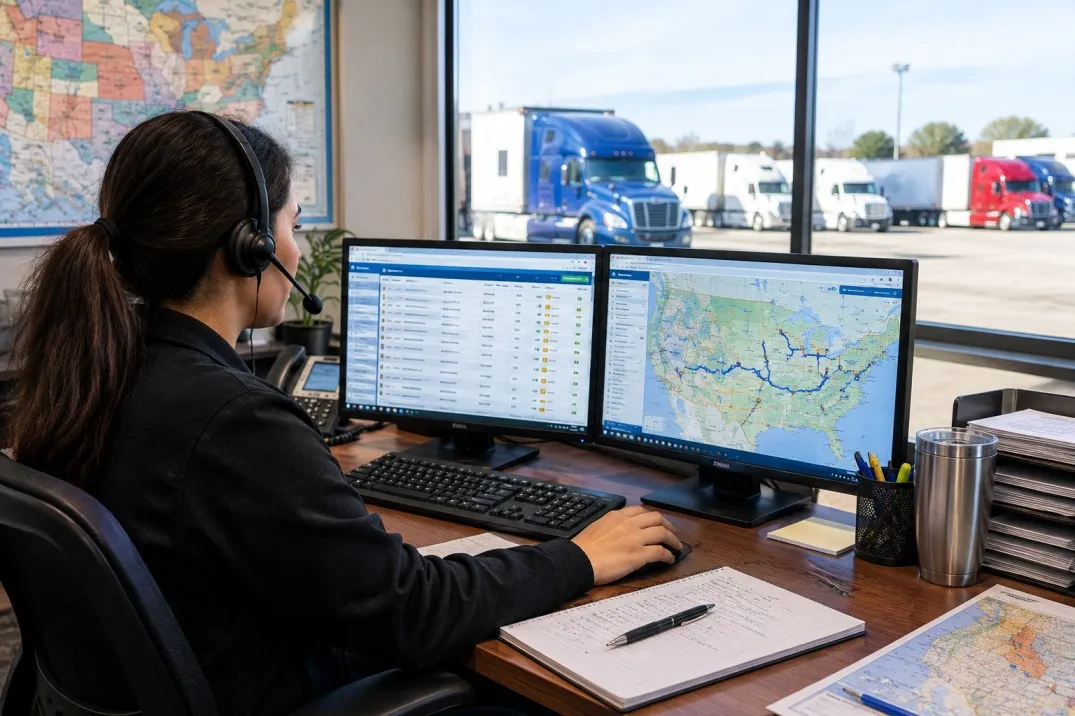


Truck dispatching is one of the fastest ways to break into the trucking and logistics industry without years of prior experience. All you really need is a high school diploma, sharp communication skills, and the right training, which is why more beginners are starting with a truck dispatcher training course in USA before applying for their first job. Whether you want to work for a carrier or run your own dispatch service from home, this guide walks you through exactly what the job involves, the steps to get started, the skills that make you hireable, and what you can expect to earn.
What Does a Truck Dispatcher Actually Do?
A truck dispatcher acts as the go-between for drivers, carriers, and clients. Day to day, that means matching available trucks with loads, scheduling pickups and deliveries, tracking shipments in transit, handling paperwork like rate confirmations and billing, and stepping in to solve problems the moment a route changes or a delivery runs late. It's a fast-paced desk job built almost entirely around a phone and a laptop, which is exactly why communication and organization matter more than any diploma.
How to Become a Truck Dispatcher in the USA: 6 Steps
Step 1: Meet the Basic Education Requirements
There's no dedicated "dispatcher degree." A high school diploma or GED is the minimum most carriers ask for. An associate degree in logistics, supply chain, or transportation management isn't required, but it can help you stand out when applying to a larger carrier or brokerage.
Step 2: Take a Truck Dispatcher Training Course in the USA
This is the step most beginners skip and later regret. A good truck dispatcher training course in USA teaches you the parts of the job you can't pick up from a job description alone, reading and booking loads on platforms like DAT or Truckstop, understanding FMCSA rules and hours-of-service limits, using dispatch and routing software, and handling real conversations with brokers and drivers through mock calls. Most self-paced online courses run a few weeks and cost somewhere between $300 and $600, and several, including well-reviewed programs on Udemy, are built specifically to take someone with zero experience to job-ready.
Step 3: Get Hands-On Experience in Logistics or Trucking
Even an entry-level role in freight, customer service, or warehouse operations gives you real context for how loads move and what drivers actually deal with on the road, which makes you a far more credible dispatcher than someone who's only completed a course.
Step 4: Learn Dispatch Software, Load Boards & GPS Tools
Once you understand the job, get comfortable with the tools that run it: transportation management systems (TMS), load boards like DAT and Truckstop, and GPS or route-mapping software. Employers expect you to move between these without hesitation, since a slow dispatcher costs a carrier real money in idle trucks and missed pickups.
Step 5: Get Certified (Optional, But a Strong Edge)
Certification isn't mandatory, but a recognized credential signals to carriers that you know the industry's rules and software cold, a small investment that can make your resume stand out against other entry-level applicants.
Step 6: Apply for Jobs or Launch Your Own Dispatch Service
From here, you have two paths. Apply directly to carriers, freight brokerages, or third-party logistics (3PL) companies for an in-house role. Or, if you'd rather work independently, register a business, get an EIN, and dispatch for owner-operators on a contract basis, many independent dispatchers run this entirely from home.
Skills That Make You Stand Out as a Dispatcher
Must-Have Soft Skills
Dispatching lives and dies on communication. You're negotiating rates, calming a driver stuck in traffic, and reassuring a client whose delivery is running late, often all in the same hour. Multitasking, patience under pressure, and clear, confident phone communication matter more than almost any technical skill.
Technical Skills Employers Look For
Beyond the soft skills, employers want dispatchers who can move fast in a TMS, pull loads off a board without guidance, read a route efficiently, and keep clean records in a spreadsheet or CRM. The faster you're comfortable with these tools, the sooner you're trusted with a full book of drivers.
Truck Dispatcher Salary & Job Outlook in the USA
Pay varies by experience, location, and whether you work in-house or independently, but most truck dispatchers in the U.S. earn somewhere in the $40,000–$55,000 range annually, with experienced dispatchers at larger carriers earning more. Independent dispatchers who build a solid client base of owner-operators can often out-earn salaried roles, though income there depends entirely on how many trucks they dispatch for. As freight volume keeps growing, so does demand for dispatchers who can keep trucks moving efficiently, making this a genuinely stable entry point into the logistics industry.
Conclusion
Becoming a truck dispatcher in the USA doesn't require a college degree or years in the industry, it requires the right foundation. Start with a solid truck dispatcher training course in USA, pick up some real-world exposure to how freight actually moves, and get comfortable with the load boards and dispatch software the job runs on. From there, whether you join a carrier's dispatch team or build your own book of owner-operator clients as an independent dispatcher, you'll have everything you need to succeed in one of the most accessible, in-demand roles in American logistics.
FAQs: Becoming a Truck Dispatcher
Do you need a degree to become a truck dispatcher in the USA?
No. A high school diploma or GED is enough to start. A related associate degree can help but isn't required.
How long does a truck dispatcher training course take to complete?
Most self-paced online courses take a few weeks to finish, depending on how much time you put in each week.
How much does a truck dispatcher training course in the USA cost?
Typically between $300 and $600, though pricing varies by provider and how comprehensive the curriculum is.
Can a truck dispatcher work from home?
Yes many dispatchers, especially independent ones working with owner-operators, run their entire operation remotely with just a laptop, phone, and dispatch software.
Disclaimer
This article is intended for general informational purposes only and does not constitute career, financial, or legal advice. Salary figures, course costs, certification requirements, and job market conditions mentioned above are approximate and can vary by state, employer, and training provider. Readers should verify current requirements and pricing directly with training providers, employers, and relevant industry or regulatory bodies before making any career or financial decisions.
























Sign in to leave a comment.