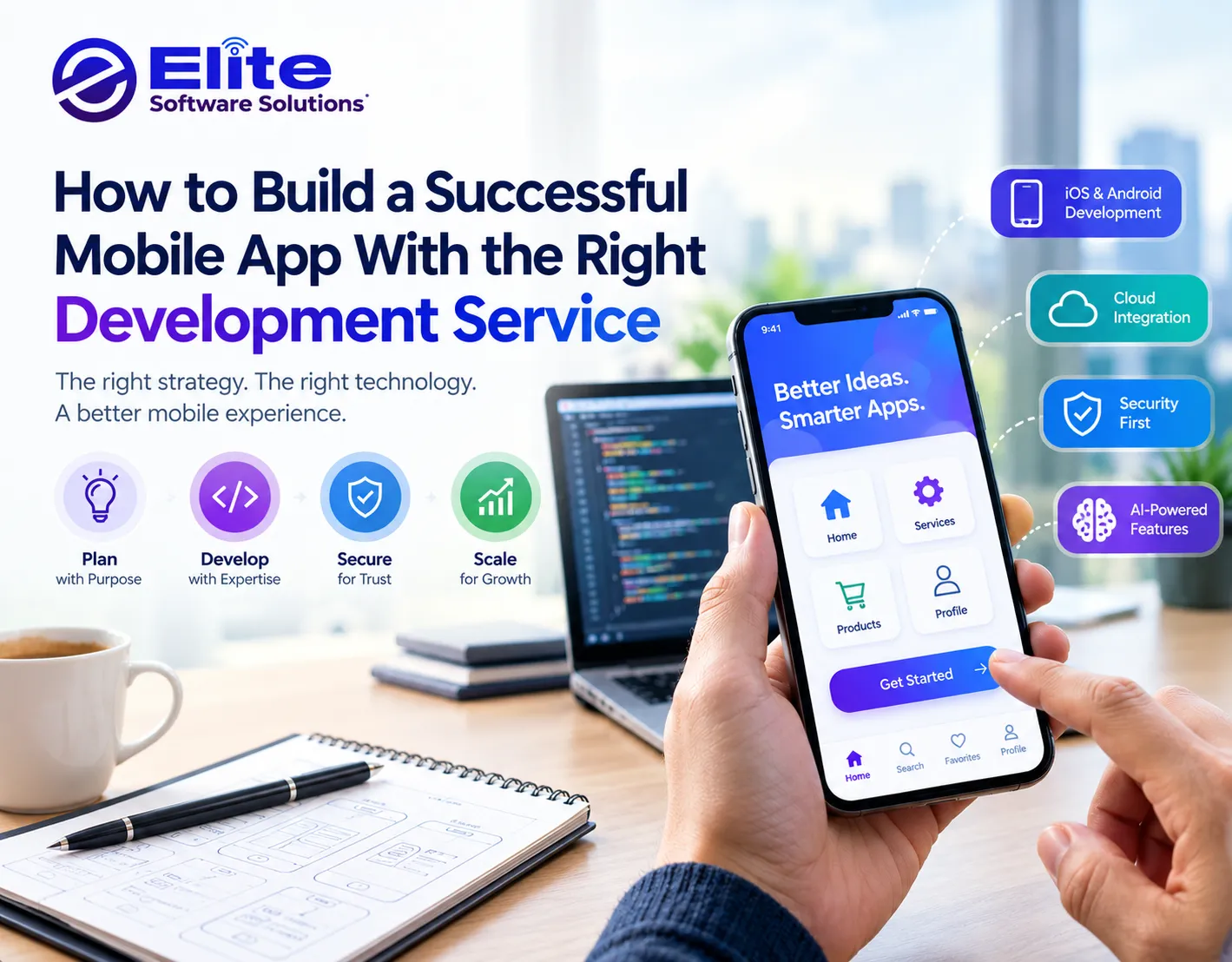

Mobile apps have become an important part of how businesses communicate with customers, sell products, deliver services, and manage everyday operations. From banking and healthcare to retail, education, travel, and logistics, organizations increasingly rely on mobile experiences to stay connected with users. However, simply having an app does not guarantee success. A successful mobile application needs to solve a real problem, provide a smooth user experience, perform reliably, and evolve as customer expectations change.
The scale of the mobile ecosystem highlights why businesses are taking app development seriously. According to GSMA’s Mobile Economy 2026, mobile technologies and services generated approximately $7.6 trillion in economic value in 2025, representing 6.4% of global GDP. GSMA expects that contribution to reach $11.3 trillion by 2030 as 5G, AI, and other digital technologies become more deeply integrated into businesses and consumer experiences.
For companies planning a new application, choosing the right mobile application development service can therefore have a significant impact on the final product. The development partner influences everything from technology selection and interface design to security, scalability, testing, deployment, and long-term maintenance.
Start With a Clear Business Purpose
Before thinking about programming languages, app screens, or advanced features, businesses should clearly define what the application is expected to accomplish. A successful app begins with a genuine business or customer problem.
For example, an e-commerce company may want to simplify purchasing, while a healthcare organization may need an application for appointments, communication, and access to health information. A logistics company could require real-time delivery tracking, whereas an internal enterprise app might focus on improving employee productivity.
Defining the purpose early helps prevent unnecessary features from consuming development time and budget. It also gives the development team measurable objectives against which the application's success can eventually be evaluated.
Understand Your Target Users
An app can be technically impressive and still fail if it does not match the expectations of its users. Understanding the target audience should therefore be part of the development process from the beginning.
Businesses should consider how customers currently interact with their services, what problems they experience, which devices they use, and what they expect from a mobile experience. User research, interviews, competitor analysis, and behavioral data can help identify these requirements.
This information should influence navigation, interface design, notifications, onboarding, payment methods, accessibility, and even the overall technology architecture. A simple application that users understand immediately is often more valuable than a complicated application filled with features they rarely use.
Choose the Right Technology Strategy
One of the major decisions in mobile app development is determining whether to build a native application, a cross-platform application, or a combination of technologies.
Native development can provide strong performance and deep access to platform-specific capabilities. Cross-platform development, meanwhile, can allow businesses to create applications for multiple operating systems while sharing a significant portion of the codebase. The right choice depends on factors such as functionality, budget, performance requirements, development timeline, and future expansion plans.
A professional development partner should explain these options in business terms rather than simply recommending a technology because it is popular. The technology should support the application's long-term objectives.
Prioritize User Experience and Performance
Users have little patience for applications that are slow, confusing, or unreliable. An attractive interface is important, but usability goes far beyond visual appearance.
Navigation should feel natural, important actions should be easy to find, and screens should respond quickly. Applications also need to work effectively across different device sizes, operating system versions, and network conditions.
Mobile performance is particularly important because mobile devices remain central to internet access. DataReportal reports that mobile phones were responsible for 59.14% of global web traffic in August 2025, compared with 39.28% for laptops and desktops. This reinforces the importance of treating mobile performance and usability as core product requirements rather than optional enhancements.
Build Security Into the Application
Security should not be something added immediately before launch. It needs to be considered throughout design and development.
Depending on the application, this may involve secure authentication, encrypted data transmission, protected APIs, appropriate access controls, secure payment processing, and careful handling of personal information. Applications that store sensitive customer or business data require particularly strong security practices.
Regular testing and monitoring are equally important after launch. New vulnerabilities, operating system updates, third-party dependencies, and changing regulatory requirements can create risks over time. A reliable development partner should therefore consider security as an ongoing responsibility.
Plan for Scalability From the Beginning
A common mistake is building an application only for today's number of users. If the app becomes successful, its infrastructure may suddenly need to support thousands or millions of additional users, larger databases, more transactions, and more integrations.
Scalability should therefore be considered during architecture planning. Cloud infrastructure, modular application design, efficient databases, API architecture, caching, and appropriate monitoring can help an application grow without requiring a complete rebuild.
The same principle applies to functionality. Businesses should have a realistic roadmap for future features such as AI capabilities, analytics, integrations, subscription models, loyalty programs, or additional services.
Test Before and After Launch
Testing is one of the most important stages of mobile application development. Functional testing verifies that features work as expected, while performance testing examines how the application behaves under different loads and network conditions.
Usability testing can reveal confusing navigation or unnecessary steps that developers may overlook. Compatibility testing helps ensure that the app performs consistently across supported devices and operating systems. Security testing can identify vulnerabilities before they become costly problems.
Importantly, testing should not end when the application reaches an app store. Continuous monitoring, user feedback, crash reporting, and performance analysis can reveal opportunities for improvement after launch.
Choose a Development Partner for the Long Term
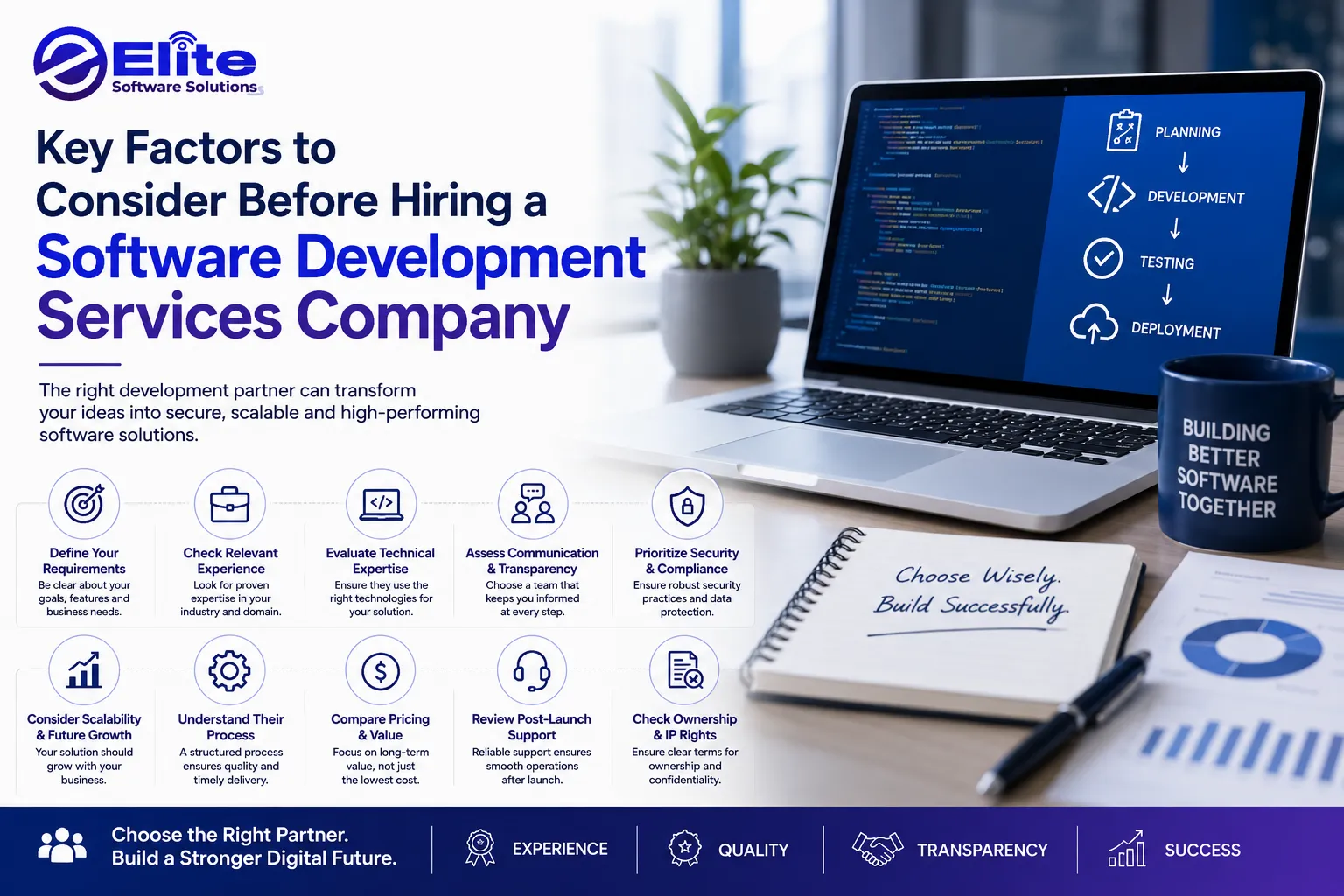
The right development service is not simply the team that can deliver an application at the lowest initial price. Businesses should evaluate technical expertise, communication practices, development methodology, portfolio quality, security capabilities, testing processes, and post-launch support.
A strong partner should be willing to understand the business before proposing a technical solution. Clear communication also matters because mobile applications often evolve during development as user feedback and market requirements become clearer.
The relationship should ideally extend beyond the first release. Updates, bug fixes, operating-system compatibility, security improvements, performance optimization, and new features all contribute to the application's long-term value.
Conclusion
Building a successful mobile app requires much more than writing code. It involves understanding users, defining a meaningful business objective, selecting appropriate technology, creating an intuitive experience, protecting data, planning for scalability, and continuously improving the product after launch.
With mobile technology continuing to influence commerce, communication, productivity, and digital services worldwide, businesses have significant opportunities to use applications as long-term growth platforms. GSMA's projection that mobile technologies could contribute $11.3 trillion to the global economy by 2030 demonstrates the broader importance of the mobile ecosystem.
The most effective approach is to treat mobile app development as a strategic business investment rather than a one-time technology project. When the right development expertise is combined with a clear purpose, user-focused design, strong engineering, and ongoing support, a mobile application can become a valuable and sustainable part of a company's digital strategy.
Hashtags:
#MobileAppDevelopment #MobileApplication #AppDevelopment #MobileTechnology #BusinessTechnology #DigitalTransformation #AppDesign #SoftwareDevelopment #MobileStrategy #BusinessGrowth























Sign in to leave a comment.