

Most SEO efforts fail not because the tactics are wrong, but because there's no real structure behind them. A blog post here, a few backlinks there, maybe a rushed audit before a big meeting—without a defined plan and a realistic budget, SEO turns into a collection of disconnected activities instead of a system that compounds over time.
This guide walks through how to build an SEO project plan from the ground up, including how to structure the work, assign ownership, and budget for it in a way that actually holds up over a full year.
Why SEO Needs Project Management, Not Just Tactics
SEO touches nearly every part of a website and, often, several departments—content, design, development, and sometimes PR or local outreach. Without a coordinated approach, tasks get duplicated, deadlines slip, and nobody's entirely sure what's actually driving results.
Treating SEO as a proper project rather than a loose set of tasks solves this. A structured SEO project management plan typically includes:
- Defined phases (audit, strategy, execution, measurement)
- Clear task ownership across teams
- Realistic timelines tied to actual capacity, not wishful thinking
- Regular check-ins to review progress against goals
- A single source of truth for what's been done and what's next
This structure doesn't need to be complicated. Even a shared spreadsheet or basic project board, used consistently, beats a scattered approach every time.
Step 1: Start With an Honest Audit
Before you can build any kind of plan, SEO teams will actually follow; you need a clear picture of where the site currently stands. This means reviewing:
- Technical health (site speed, crawlability, mobile usability, indexing issues)
- Current keyword rankings and organic traffic trends
- Content gaps compared to competitors
- Backlink profile strength and any toxic links to address
- On-page issues across key pages (titles, headers, internal linking)
Skipping this step is one of the most common reasons SEO plans fall apart within a few months—without a baseline, there's no way to know what's actually working later on.
Step 2: Set Priorities Based on Impact, Not Just Effort
Once the audit is done, it's tempting to try fixing everything at once. Resist that urge. Rank issues and opportunities by a mix of impact and effort, and build your roadmap around the highest-value work first—usually technical fixes and quick on-page wins, followed by content expansion and link building.
Good SEO plans typically organize this into phases:
1. Foundation phase—technical fixes, core page optimization, tracking setup
2. Growth phase—content expansion, internal linking, local SEO if relevant
3. Authority phase—link building, digital PR, community and partnership content
4. Optimization phase—ongoing refinement based on performance data
Breaking the work into phases keeps the plan manageable instead of overwhelming, and it gives you natural checkpoints to reassess before moving forward.
Step 3: Build a Realistic Budget
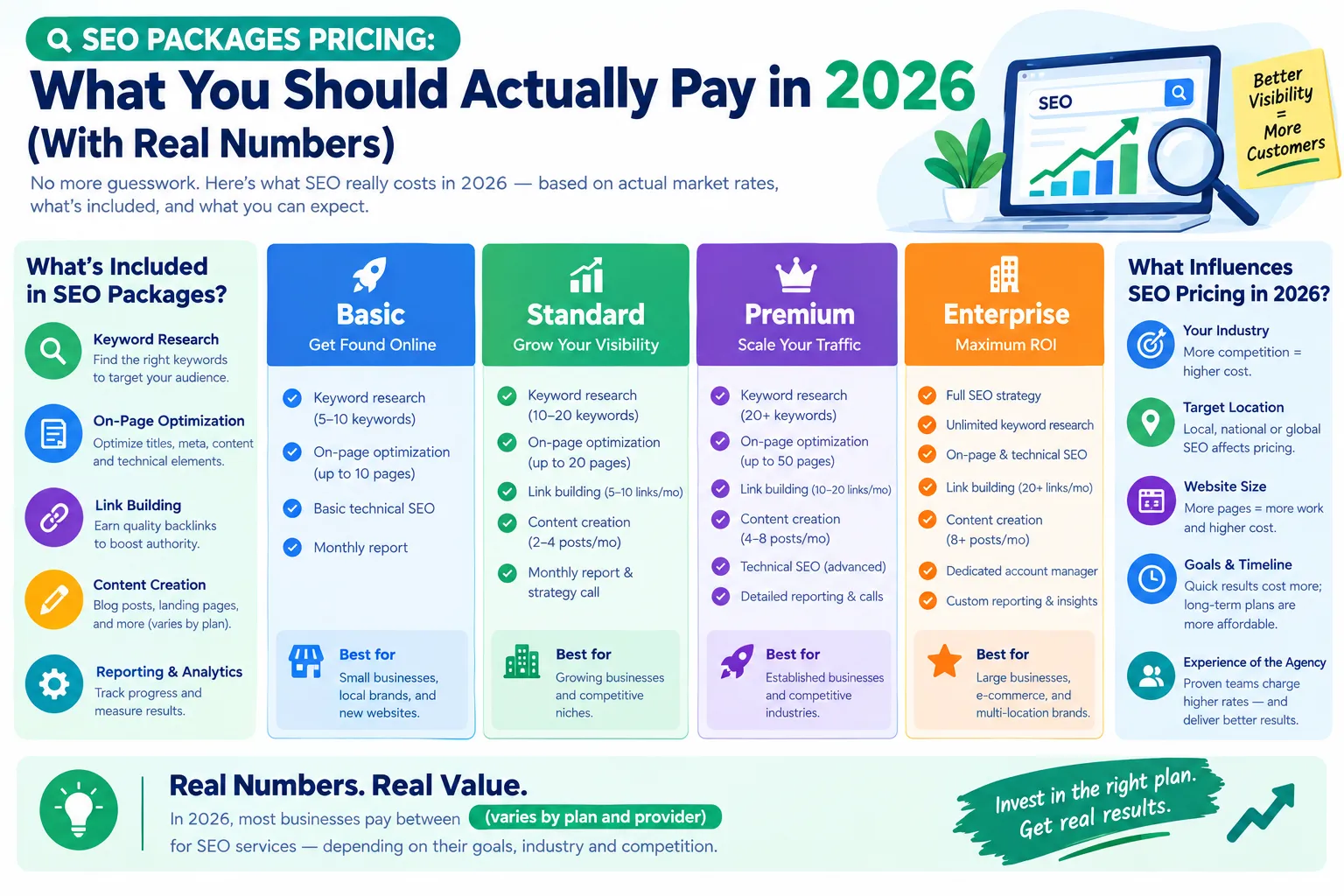
This is where a lot of SEO plans quietly fall apart. Teams sketch out an ambitious roadmap, then realize there's no budget attached to actually execute it. A workable SEO budget plan should account for:
| Category | What It Covers |
| Tools and software | Keyword research, rank tracking, technical auditing platforms |
| Content production | Writing, editing, and design for blog posts, guides, and landing pages |
| Technical work | Developer time for site speed, structured data, and fixes |
| Link building/PR | Outreach efforts, partnerships, or digital PR campaigns
| Local SEO | Citation management, review generation tools, Google Business Profile upkeep |
| Reporting/analysis | Time or tools for tracking progress and adjusting strategy |
Budgets don't need to be enormous to work—they need to be consistent. A modest monthly budget applied steadily over a year will almost always outperform a large one-time push followed by months of silence.
Step 4: Assign Ownership and Timelines
A plan without owners is just a wish list. For each task or initiative, define:
- Who's responsible for it
- When it's due
- What "done" actually looks like
- How it will be measured afterward
This is especially important when SEO work spans multiple people or departments. A content writer, a developer, and a link-building specialist all need to know their piece of the plan and how it connects to the larger goal.
Step 5: Track Progress and Adjust Quarterly
SEO results build gradually, so monthly check-ins should focus on activity and leading indicators (content published, technical issues resolved, links earned) rather than expecting dramatic ranking jumps right away. Every quarter, step back and look at the bigger picture:
- Are organic traffic and rankings trending in the right direction?
- Which content or pages are driving the most conversions?
- Does the budget need to shift toward what's working?
- Are there new competitors or search trends to account for?
Adjusting the plan quarterly keeps it realistic without abandoning the underlying structure every time results feel slow.
Bringing It All Together
A strong SEO project plan isn't about predicting every detail a year in advance—it's about creating a structure flexible enough to adapt while still keeping the work organized and accountable. Start with an honest audit, prioritize by impact, attach a realistic budget, assign clear ownership, and revisit the plan on a regular cadence.
Done this way, SEO stops feeling like a mysterious, unpredictable expense and starts functioning like any other well-run project—one with a clear roadmap, a defined budget, and measurable progress along the way.






















Sign in to leave a comment.