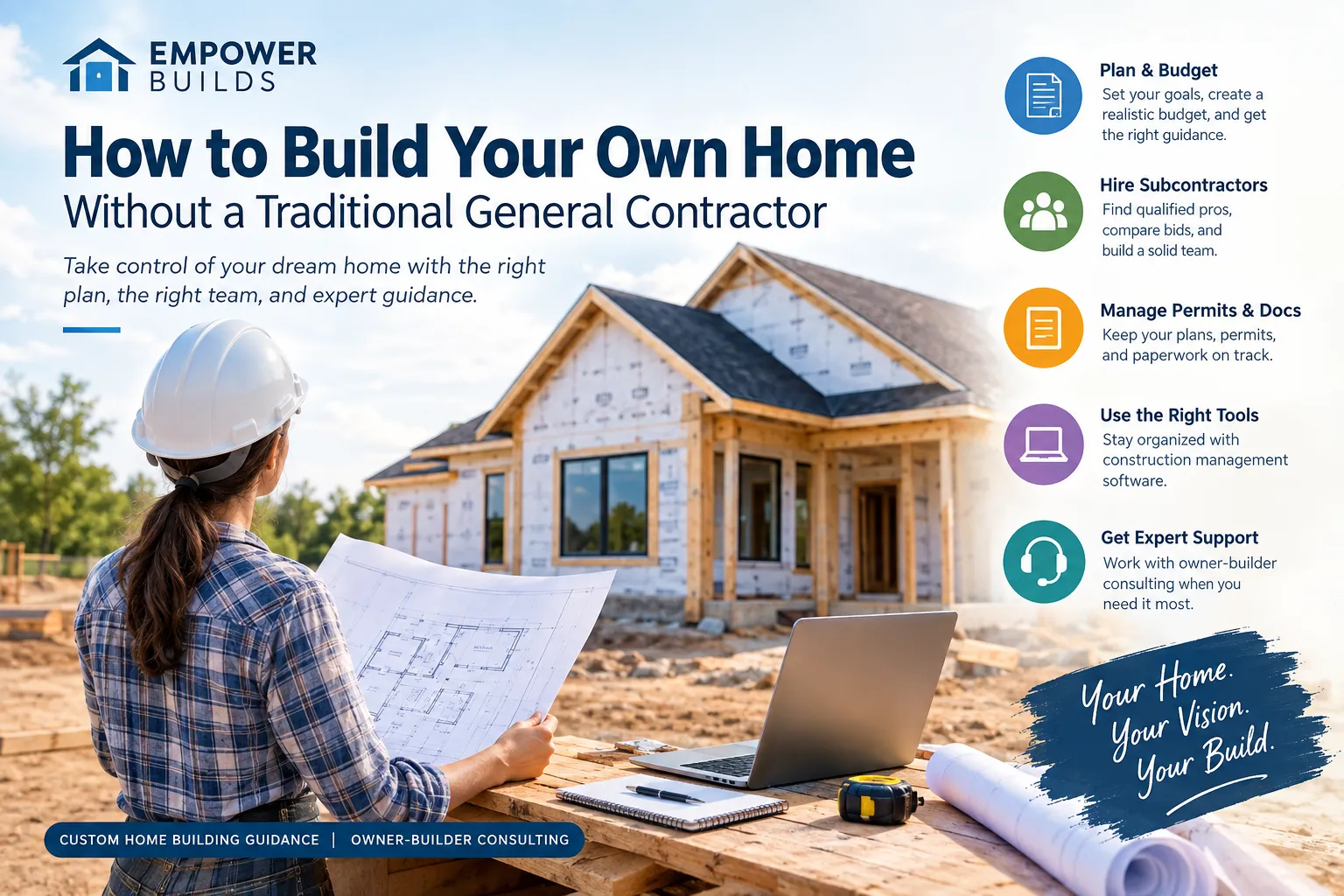

Building a custom home is a major undertaking, but hiring a traditional general contractor is not the only way to bring your plans to life. An alternative approach is to become an owner-builder, taking responsibility for coordinating the major parts of construction while hiring qualified professionals for specialized work.
For homeowners who are organized, willing to learn, and comfortable making decisions, this approach can provide greater control over the project and potentially reduce some of the costs associated with traditional builder fees. The key is understanding what the role involves and having the right systems and professional support in place.
Here is how to approach the process from planning through completion.
1. Start With a Realistic Plan and Budget
Before contacting subcontractors or ordering materials, establish a clear plan for your home.
Start by defining the size, layout, features, finishes, and overall priorities for the project. Then develop a detailed construction budget that separates major categories such as site work, foundation, framing, roofing, plumbing, electrical, HVAC, insulation, drywall, flooring, cabinets, and exterior work.
Do not forget costs that are sometimes overlooked, including permits, engineering, utility connections, insurance, financing expenses, inspections, temporary services, and contingency funds.
A realistic budget should also distinguish between estimated costs and committed costs. Keeping those numbers updated throughout construction makes it easier to identify potential overruns before they become serious problems.
This is where professional custom home building guidance can be valuable. Experienced advice can help you ask better questions, compare estimates, and make informed decisions before committing your money.
2. Understand Your Responsibilities as an Owner-Builder
When you build your own home as an owner-builder, you are essentially taking on many of the coordination responsibilities normally handled by a general contractor.
That does not mean you personally need to perform every construction task. Instead, you may coordinate qualified subcontractors responsible for specialized work.
Your responsibilities can include:
- Organizing the construction schedule
- Collecting and comparing subcontractor bids
- Reviewing contracts and proposals
- Coordinating different trades
- Tracking expenses and payments
- Monitoring project milestones
- Communicating with designers and professionals
- Keeping construction documents organized
- Working through permit and inspection requirements
Local regulations differ considerably, so homeowners should confirm owner-builder requirements with the appropriate building department and other authorities before starting.
3. Select and Coordinate Qualified Subcontractors
A successful owner-builder project depends heavily on the quality and reliability of the subcontractors you hire.
Instead of choosing the lowest bid automatically, look at the complete proposal. Compare scope of work, materials, allowances, schedule, payment terms, insurance, licensing requirements, references, and exclusions.
It is also important to understand how one trade affects another. For example, delays in foundation work can affect framing, while framing delays can push roofing, electrical, plumbing, insulation, and drywall schedules.
Create a written construction schedule showing when each trade should begin and what must be completed before the next trade arrives.
Good communication is just as important as good pricing. Every agreement should clearly establish expectations so there is less room for confusion later.
4. Manage Permits, Plans, and Construction Documents
Paperwork may not be the most exciting part of building a home, but it can have a major impact on the project.
Before construction begins, make sure your plans and required documentation are prepared according to local requirements. Depending on the location and project, this may involve architectural drawings, structural plans, engineering documents, permits, energy requirements, inspections, and other approvals.
Keep copies of contracts, bids, invoices, change orders, receipts, plans, inspection records, and correspondence in one organized system.
Empower Builds, for example, provides virtual guidance related to permitting, document review, bid packages, budgeting, and project organization rather than acting as a traditional general contractor.
5. Use Technology to Keep the Build Organized
Managing a home construction project involves a surprising amount of information. Spreadsheets, emails, text messages, invoices, schedules, drawings, and change orders can quickly become difficult to track.
A dedicated construction management platform can bring much of this information into one place.
Empower Builds supports homeowners with Buildertrend software for areas such as budgeting, scheduling, communication, documentation, and project tracking.
The goal is not simply to use technology for the sake of technology. The goal is to create a reliable record of what has been agreed upon, what has been completed, what has been paid, and what needs to happen next.
That organization becomes especially valuable when multiple subcontractors are working on the same project.
6. Know When to Get Professional Owner-Builder Support
Being an owner-builder does not mean you have to figure everything out alone.
One of the biggest advantages of owner-builder consulting is having an experienced resource available when you face an unfamiliar decision. Professional guidance can help with areas such as estimating, bid preparation, subcontractor vetting, construction scheduling, budget planning, blueprint reviews, financing processes, and problem-solving.
Empower Builds provides remote consulting rather than serving as a general contractor or physically supervising construction sites. Its stated services include virtual project management, permitting guidance, subcontractor vetting, budget planning, timeline development, document review, and ongoing support.
This type of support can be particularly useful for first-time owner-builders who want to remain in control while still having experienced guidance available when important questions arise.
Build With Control, Preparation, and the Right Support
Building a home without a traditional general contractor requires more involvement from the homeowner, but it can also provide greater visibility into the decisions that shape the project.
The most important step is recognizing that successful owner-building is not simply about finding ways to cut costs. It is about planning carefully, hiring qualified professionals, maintaining accurate records, controlling the schedule, and making informed decisions throughout construction.
If you are prepared to take an active role in your project, the owner-builder model can give you a different way to approach your custom home journey.
With the right planning, technology, and expert guidance, you can take greater ownership of the building process—from your initial plans and budget to the final construction milestones and move-in day.






















Sign in to leave a comment.