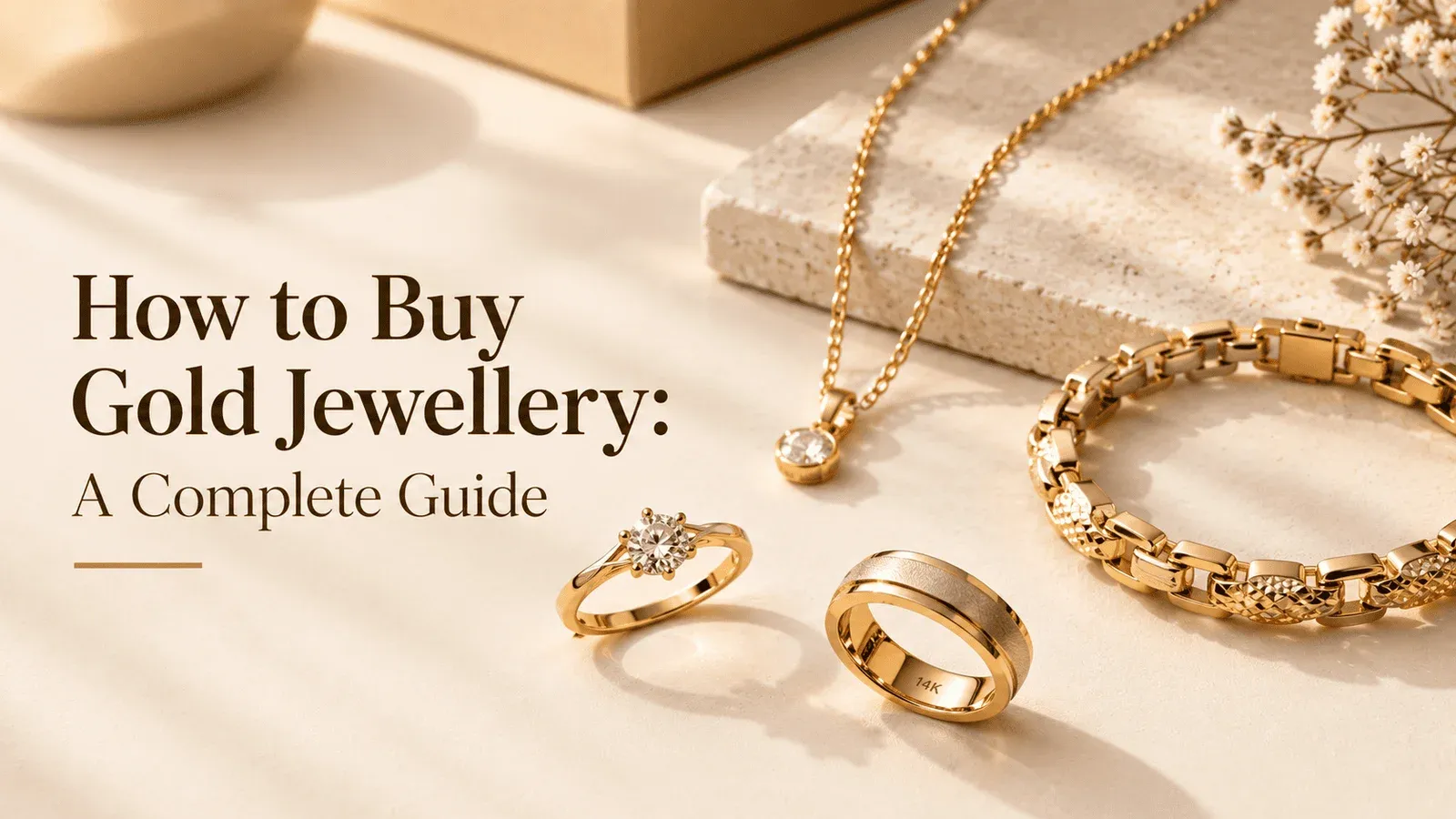

How To Buy Gold Jewellery: A Complete Guide
Buying gold jewelry sounds simple until you're standing in front of a display case trying to decide between a 14K chain and an 18K one, wondering whether the stamp on a ring actually means what you think it means. Knowing how to buy gold jewellery with confidence comes down to understanding a handful of things: purity, hallmarks, how to spot fakes, and what actually affects price. This guide covers all of it in plain terms.

Understanding Gold Purity Before You Buy
Karats are a measure of gold's purity. 24K is pure gold. Pure gold is too soft for everyday jewelry, so it is alloyed with other metals like copper, silver or zinc to make it stronger and more durable. The karat system is a way of expressing how much of that alloy is actual gold , out of 24 parts .
Here's the breakdown of common karats:
- 24K – 100% pure gold. Soft, bright yellow, easily scratched. Rarely used for everyday jewelry.
- 22K – 91.7% gold. Common in bridal and cultural jewelry, still fairly soft.
- 18K – 75% gold. Popular for fine jewelry. High quality balance of purity and durability.
- 14K – 58.3% gold. The most common choice for everyday wear in the US due to its durability.
- 10K – 41.7% gold. The minimum legal karat sold as "gold" in the US, most durable but least gold content.
For anyone deciding on daily-wear pieces, 14K or 18K gold is generally the most practical choice, since it holds up better against scratches and dents than 22K or 24K while still containing meaningful gold content.
Gold Jewelry Hallmark Meaning: What the Stamps Tell You
Every legitimate piece of gold jewelry should carry a hallmark stamp somewhere, usually on the clasp, inside a ring band, or on the back of a pendant. Understanding gold jewelry hallmark meaning is one of the fastest ways to verify what you're actually buying.
Common stamps include:
- 10K, 14K, 18K, 22K, 24K – karat purity, as described above
- 585 – equivalent to 14K (58.5% pure gold, expressed as a decimal)
- 750 – equivalent to 18K
- 417 – equivalent to 10K
- GF or 1/20 14K GF – gold-filled, meaning a real gold layer (at least 1/20th of the piece's total weight, mechanically bonded to a base metal)
- GP – gold-plated, a thin electroplated layer over a base metal
A missing stamp isn't automatically a red flag on very old or handmade pieces, but on modern jewelry, it's worth asking the seller directly why no hallmark is present.
Real Gold vs Fake Gold Jewelry: How to Tell the Difference
Distinguishing real gold vs fake gold jewelry doesn't require professional equipment for a first pass, though a jeweler's confirmation is always the more reliable step for anything valuable.
A few practical checks:
- Look for the hallmark. No stamp at all is a warning sign on contemporary pieces.
- Try the magnet test. Gold isn't magnetic, so if a piece is strongly attracted to a magnet, it likely isn't solid gold. This test alone isn't conclusive, since some fakes use non-magnetic base metals too, so treat it as one check among several rather than a final answer.
- Check for discoloration. Greenish tints, wear spots or fading reveal a different metal underneath, indicating plated rather than solid gold.
- Feel the weight. Solid gold is noticeably denser than most base metals of the same size, though this comparison takes some experience to judge accurately.
- Get it professionally tested. An acid test or electronic gold tester gives a definitive purity reading, and any reputable jeweler will test a piece for you before purchase.
Solid Gold vs Gold Plated Jewelry: Know What You're Paying For
The difference between solid gold vs gold plated jewelry affects both price and how long a piece will last, and the terms are often confused or misused in casual selling.
- Solid gold – gold alloy all the way through, at whatever karat is stamped. Holds its value and can be resold or melted down for its full metal content.
- Gold-filled – a real, mechanically bonded layer of gold (legally required to be at least 1/20th of the item's total weight in the US) over a base metal core, usually brass. Far more durable than plating and contains real, recoverable gold.
- Gold-plated – a thin electroplated layer of gold, often just millionths of an inch thick, over a base metal. The most affordable option, but the layer wears through over time, typically within a year or two of regular wear.
If you know what category a piece falls in before you buy it, you can avoid the common disappointment of paying gold-adjacent prices for a piece that is largely base metal under a thin coating.
Gold Jewelry Price Factors: What You're Actually Paying For
The price of gold jewelry is not only based on the daily spot price of gold, but the spot price sets the baseline. The cost of a finished piece normally includes:
- Metal value – weight x karat purity x current gold spot price (which changes daily based on global markets)
- Making charges – costs for labor and craftsmanship to cut, shape and finish the item
- Design complexity – labor cost adds in settings detailed, filigree work or custom designs
- Gemstones or accents – any stones that are set into the piece are priced separately to the gold
- Brand or designer markup – known designers or brands will generally charge a premium above the cost of materials and labor
Understanding these layers is key to understanding why 2 pieces that weigh the same amount of gold can have very different price tags at checkout.
Gold Jewelry Buying Tips: In-Store vs Online
If you buy in person you can see the hallmark, weight and finish before you decide to buy. If you buy online you will have a much wider selection but you need to be much more careful about the reputation of the seller and have clear return policies. A step-by-step buying guide covers additional considerations worth reviewing before a larger purchase.
A few practical gold jewelry buying tips regardless of where you shop:
- Ask for a receipt that itemizes karat purity, weight, and price breakdown separately
- Request a certificate of authenticity for higher-value pieces
- Confirm the return and exchange policy before paying
- Compare a few best gold jewelry stores near me options rather than settling on the first one visited
- Ask directly whether a piece is solid, gold-filled, or plated if it isn't clearly marked
Some general dos and don'ts worth reviewing before a purchase are also outlined in this buyer's checklist and this editor's buying perspective.
Gold Jewelry Buying Guide Little Rock: Local Considerations
A gold jewelry buying guide Little Rock shoppers can rely on should account for both selection and trust. Local jewelers who specialize in gold rings, gold chains, and gold earrings typically offer the advantage of hands-on inspection, transparent hallmark verification, and the ability to ask questions directly before purchase.
For buyers deciding between metal tones, understanding the difference between white gold and yellow gold is worth doing before narrowing down a style, since the underlying gold purity is the same across tones, with the color difference coming from the alloy mix. Rose gold pieces, for example, get their pink hue from a higher copper content in the alloy.
Older or secondhand pieces should also be checked against how to identify hallmarks that may differ slightly from modern stamping conventions, particularly on estate or vintage jewelry.
How to Test Gold Jewelry Before or After Purchase
Learning how to test gold jewelry protects buyers on new and second hand purchases. Other more definitive testing options include, in addition to the magnet and visual checks discussed above:
- Acid testing – a small scratch is tested with nitric acid at varying concentrations to determine approximate karat
- Electronic testing – a handheld device measures electrical conductivity, which correlates to gold purity
- XRF testing – X-ray fluorescence gives a precise, non-destructive purity reading and is the standard used by professional buyers and appraisers
Any jeweler offering to buy gold, including our valuation process, should be willing to test a piece in front of the customer and explain the result before making an offer.
Final Thoughts on How to Buy Gold Jewellery
Here are a few simple habits to buy gold jewelry with confidence: check the hallmark, know what karat and purity really means, know the difference between solid, filled and plated, and ask questions before you pay. Whether shopping online or in person, the more transparent a seller is about testing and documentation, the safer the bet.
Author: Mudassir Ali, writes about gold jewelry, purity standards, and buyer education for independent jewelers across the United States.
FAQ: How To Buy Gold Jewellery
Q1: What karat of gold is best for everyday jewelry?
14K or 18K gold is the most practical choice for daily wear since it's more durable and scratch-resistant than soft, pure 24K gold.
Q2: How can I tell if my gold jewelry is real?
Look for a karat stamp (10K, 14K, 18K, 24K) and use the magnet test as a first check, since real gold isn't magnetic, though a professional acid or electronic test gives a more definitive answer.
Q3: What is the difference between gold filled, gold plated and solid gold?
Solid gold is pure all the way through, gold-filled has a thick layer of bonded gold over a base metal, and gold-plated has only a thin coating on the surface that wears off over time.
Q4: Is the price of gold ornament fluctuating every day?
Yes, the base metal cost is associated with daily spot price of gold but the final price also accounts for making charges, design and craftsmanship.
Q5: Which is better to buy gold jewelry in-store or online? You can see it with your own eyes and check the hallmarks for yourselves. The internet offers you a wider selection, but you need to be more cautious about the seller’s reputation and the return policy.
Q6: What is gold jewelry accompanied by?
Look for a receipt from a reputable seller that shows the karat purity, weight, and price breakdown and a certificate of authenticity for higher value pieces.
Q7: Is gold jewelry a good investment?
The value of gold jewelry is based on the weight and purity of the metal. However, bullion or coins are usually a more efficient investment because jewelry has making charges which don’t add to the resale value.


























Sign in to leave a comment.