

A gold chain, a diamond tennis piece, and a pearl strand don't need the same care routine, even though they often end up tangled together in the same jewelry box. Treating every piece the same way is one of the most common reasons fine necklaces for women lose their shine faster than they should. A little material-specific attention goes a long way.
General Cleaning Rules That Apply to Most Necklaces
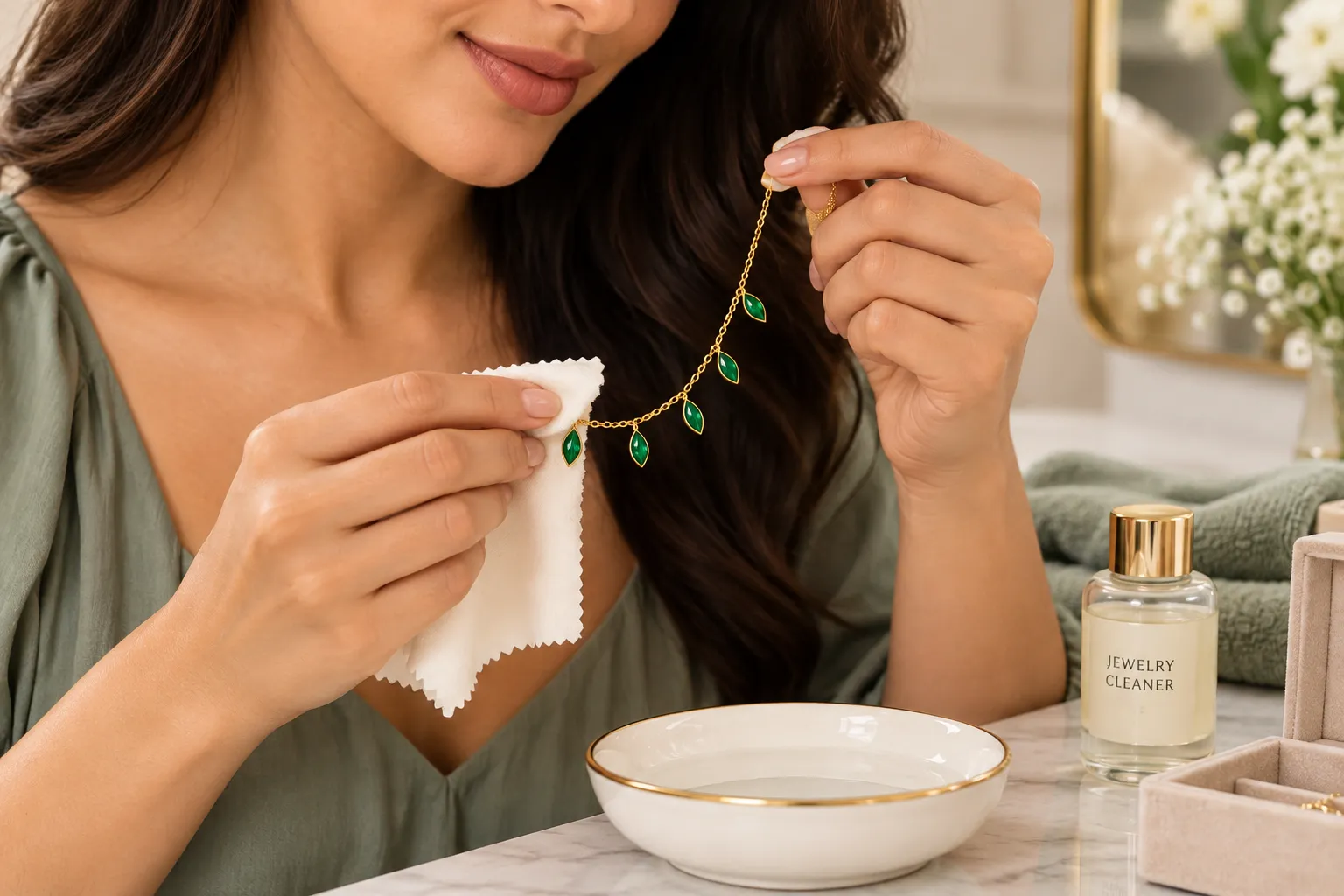
A few basics work across most metal and diamond jewelry, before getting into what's specific to each material. Warm water with a small amount of mild dish soap handles most everyday buildup, oils, lotion residue, general grime from wear. Let the piece soak briefly, then use a very soft brush, like a clean, unused toothbrush, to gently work into any detailed areas.
Avoid harsh chemicals across the board. Bleach, chlorine, and most household cleaners can damage metal finishes and loosen settings over time. Pat pieces dry with a soft cloth rather than air drying, since water spots can dull shine if left to dry on their own. These rules apply broadly, but a few materials need more specific handling beyond this baseline.
Caring for a Gold Pendant Necklace
A gold pendant necklace generally holds up well with the basic cleaning routine, but a couple of details deserve extra attention. The bail, the small loop connecting the pendant to the chain, gets a surprising amount of wear from daily movement and should be checked periodically for looseness or thinning.
The clasp deserves the same attention, since it's usually the first part of a necklace to fail with regular use. Wipe the pendant itself gently after wearing, especially if it sits close to skin all day, and store it separately from other necklaces to avoid tangling, since a pendant caught in a knot of other chains is more likely to get pulled or bent while working it loose.
Cleaning a Diamond Tennis Necklace Without Loosening the Setting
A diamond tennis necklace involves dozens of small individual settings, which makes it more delicate to clean than it might look. Each diamond is typically held by tiny prongs, and with that many settings in a row, even minor wear can add up over time.
At-home cleaning should stay gentle, the warm water and mild soap method works fine here too, using a soft brush to clean around each setting individually rather than scrubbing across the whole piece at once. Avoid ultrasonic cleaners unless a jeweler has specifically confirmed the piece can handle one, since the vibration can loosen prongs that are already slightly worn. Given how many settings are involved, it's worth having a jeweler inspect a tennis necklace roughly once a year, checking for loose stones or worn prongs before a diamond is lost rather than after.
Keeping a Gold Chain Necklace Tangle-Free and Untarnished
A gold chain necklace runs into two main issues over time: tangling and dulling. Tangling happens easily with finer chains, and pulling a knot apart forcefully can stretch or weaken individual links. When a chain does tangle, working it loose slowly, sometimes with a bit of baby powder to reduce friction between links, prevents unnecessary stress on the metal.
Storage plays a big role in preventing tangles in the first place. Laying a chain flat in a lined tray, or hanging it separately on a hook, keeps it from twisting around other pieces the way a jewelry box drawer often causes. For cleaning, the same mild soap and water method works well, followed by a gentle pat dry rather than letting the chain air dry in a bunched-up pile.
Special Care for Pearl Necklaces
Pearl necklaces need noticeably gentler treatment than metal or diamond pieces, since pearls are organic and more porous than most gemstones. Skip the soap and water method entirely here. A soft, slightly damp cloth wiped gently after each wear is enough to remove residue without risking damage to the nacre.
Never soak pearls or use ultrasonic or steam cleaners, both of which can strip or crack the surface. It's also worth keeping an eye on the stringing itself. Pearl necklaces are traditionally strung on silk thread with knots between each pearl, and that thread stretches and weakens with regular wear. Restringing every one to two years for a frequently worn strand keeps the necklace secure and prevents pearls from rubbing against each other.
Storage That Protects Women's Necklaces Long-Term
A few storage habits protect women's necklaces across all materials, not just one type. Keep pieces in separate compartments or pouches rather than piled together, since metal, gemstones, and pearls can all scratch each other during storage.
Avoid extreme humidity in either direction. Very dry environments can affect pearls specifically, while damp conditions can accelerate tarnishing on silver and some gold alloys. Always untangle and lay pieces flat, or hang them individually, before closing them away for any length of time, since a necklace stored in a knot only gets harder to work loose the longer it sits that way.
Conclusion
Fine jewelry lasts a lot longer with care that actually matches the material. Gold holds up well with basic cleaning and occasional clasp checks. Diamond settings need gentle handling and periodic professional inspection. Pearls need the gentlest treatment of all, wipe only, no soaking. Get the routine right for each piece, and these necklaces stay wearable for decades instead of losing their shine within a few years.Understanding Fine Jewelry Necklaces
























Sign in to leave a comment.