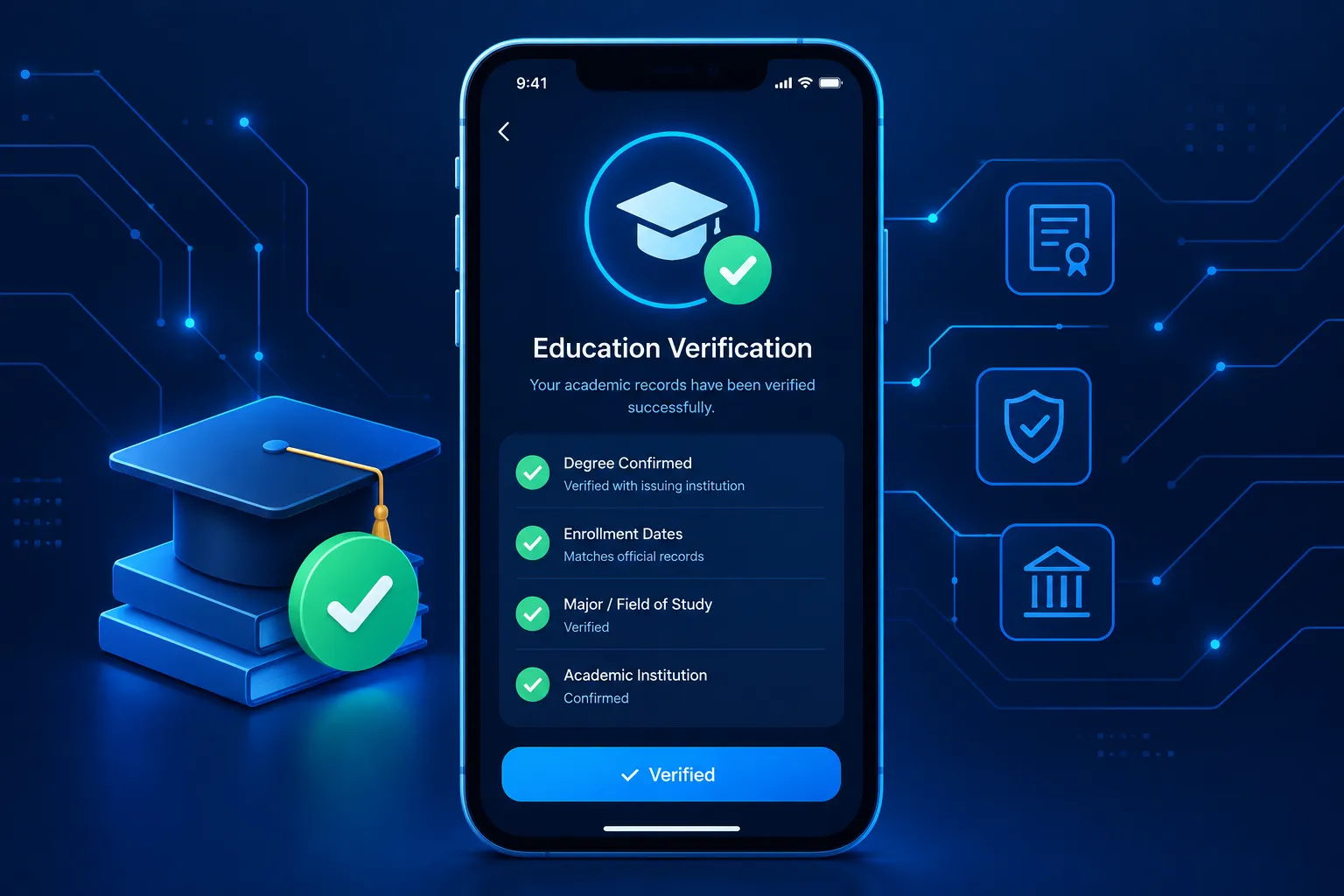

Quick Answer: To check employee education history, ask the candidate for the school name, dates of attendance, and degree earned, then confirm those details directly with the institution or through a verification platform like VEVR. Most checks take a few hours to a few days and require the candidate's signed consent under the Fair Credit Reporting Act.
Nearly one in four candidates has stretched the truth about a degree, a graduation date, or a school they never finished attending. For hiring teams, that gap between what a resume says and what actually happened can turn into a costly mistake. Learning how to check employee education history properly protects your company from bad hires, compliance headaches, and the kind of reputational damage that follows a public misrepresentation.
This guide walks through what an education verification actually confirms, the legal steps you need to follow, and how to build the process into your hiring workflow without slowing down your team.
What Does an Education History Check Actually Confirm?
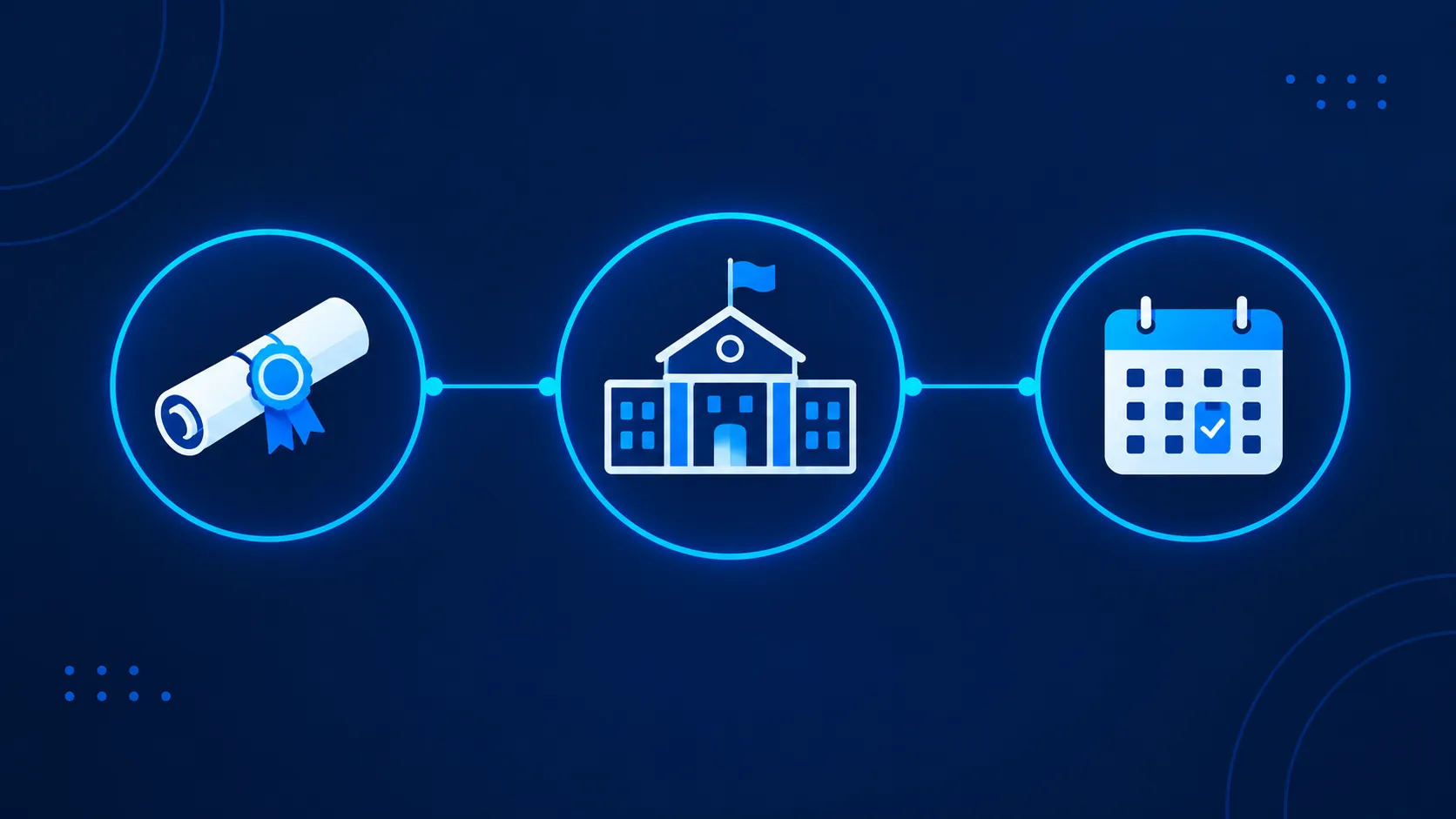
An education history check confirms that the schools, dates, and degrees a candidate listed on their application match official institutional records. It does not evaluate a candidate's intelligence or job fit. It simply checks whether the claims are true.
A standard report typically includes:
- The name and address of each school attended
- Dates of enrollment (month and year)
- The degree, diploma, or certificate earned
- The field of study or major
- Honors or distinctions, when applicable
Some checks also confirm whether a school or program holds proper accreditation, which matters for regulated roles in healthcare, finance, and education. A verification report will not tell you how well a candidate performed academically unless honors or class rank were part of what the school released, so it should be treated as a fact check rather than a performance review.
Why Does Verifying Education History Matter?
That number matters because unverified credentials create real exposure. A finance role filled by someone without the accounting degree they claimed can lead to compliance failures. A healthcare position filled by someone without proper certification can create safety and licensing risks. Beyond the legal exposure, a bad hire also costs time and money in lost productivity, retraining, and turnover.
Real-world example: A mid-size logistics company hired a candidate for a controller position based on a resume that listed a finance degree from a well-known university. During a routine audit six months later, the company discovered the degree did not exist. The employee had actually completed two years of coursework without graduating. The company had to terminate the hire, restart a lengthy search, and revisit its internal screening policy, all of which could have been avoided with a verification check before the offer went out.
How Do Employers Verify Education History?
There are three common paths employers use to confirm educational claims.
Method 1: Request Official Transcripts
Employers can ask candidates to provide an official transcript directly from the issuing institution. This method works but takes time, since transcripts often have to be mailed or released through a registrar's office, and candidates can delay the process.
Method 2: Contact the Institution Directly
HR teams can call or email the school's registrar to confirm dates of attendance and degrees conferred. This requires the candidate's written consent and can be slow when a school has limited staff handling verification requests.
Method 3: Use a Verification Platform
Most employers now use a third-party service or platform to handle the process. VEVR's background verification services connect directly with institutions and verified databases to confirm education claims quickly, often within hours instead of days, while keeping every step compliant and audit-trailed.
| Method | Speed | Effort for HR Team | Best For |
|---|---|---|---|
| Official transcripts | Slow (days to weeks) | High | Small hiring volume |
| Direct institution contact | Moderate | High | One-off verifications |
| Verification platform | Fast (hours) | Low | Ongoing or high-volume hiring |
What Legal Steps Do You Need to Follow?
Education verification counts as a consumer report under the Fair Credit Reporting Act (FCRA) when it is conducted through a third party. That means employers have specific obligations before running a check.
- Provide a standalone disclosure telling the candidate you intend to run a background check
- Get the candidate's signed, written consent before you begin
- Apply the same screening standard to every candidate in a similar role, per Equal Employment Opportunity Commission (EEOC) guidance
- Follow adverse action procedures if the results affect your hiring decision, including a pre-adverse action notice and a chance to respond
What Should You Do If a Candidate's Education Doesn't Check Out?
Not every mismatch is intentional. Schools merge, change names, or lose old records. Before making a decision, give the candidate a chance to explain and provide supporting documentation.
If the discrepancy turns out to be a genuine misrepresentation, most employers move to disqualify the candidate from the current hiring process. Consistency matters here. Apply the same standard across every candidate so your process stays defensible if it's ever challenged.
It also helps to document the outcome. Keep a clear record of what was checked, what the institution confirmed, and what decision your team made. If a rejected candidate ever questions the process, a documented, consistent approach shows the decision was based on facts rather than bias.
Frequently Asked Questions
How long does an education verification check take?
Most checks completed through a verification platform return results within a few hours to two business days. Checks that rely on manually contacting a school can take one to three weeks depending on the institution's response time.
Can an employer verify education without the candidate's consent?
No. Under the FCRA, employers must get written consent before running a third-party education verification. Running a check without consent can expose the company to legal liability.
What if the school no longer exists or has closed?
Records from closed schools are often transferred to a state education agency or a national database. A verification provider can usually still confirm attendance and degrees through these secondary sources.
Does education verification cover professional certifications too?
Yes. Many verification checks can also confirm professional certifications and licenses, which is useful for regulated roles in healthcare, finance, and skilled trades.
How much does an education background check cost?
Costs vary by provider and turnaround speed, but most standard education verifications run between fifteen and fifty dollars per candidate when handled through a dedicated platform.
Conclusion
Checking employee education history is one of the simplest ways to protect your hiring decisions from costly surprises. Request the right details up front, follow FCRA and EEOC requirements, and apply the same standard to every candidate. Whether you handle verification in-house or through a dedicated platform, the goal stays the same: confirm the facts before you make the offer.
Ready to see how VEVR handles background verification? Have questions about your verification setup? Contact the VEVR team.


























Sign in to leave a comment.