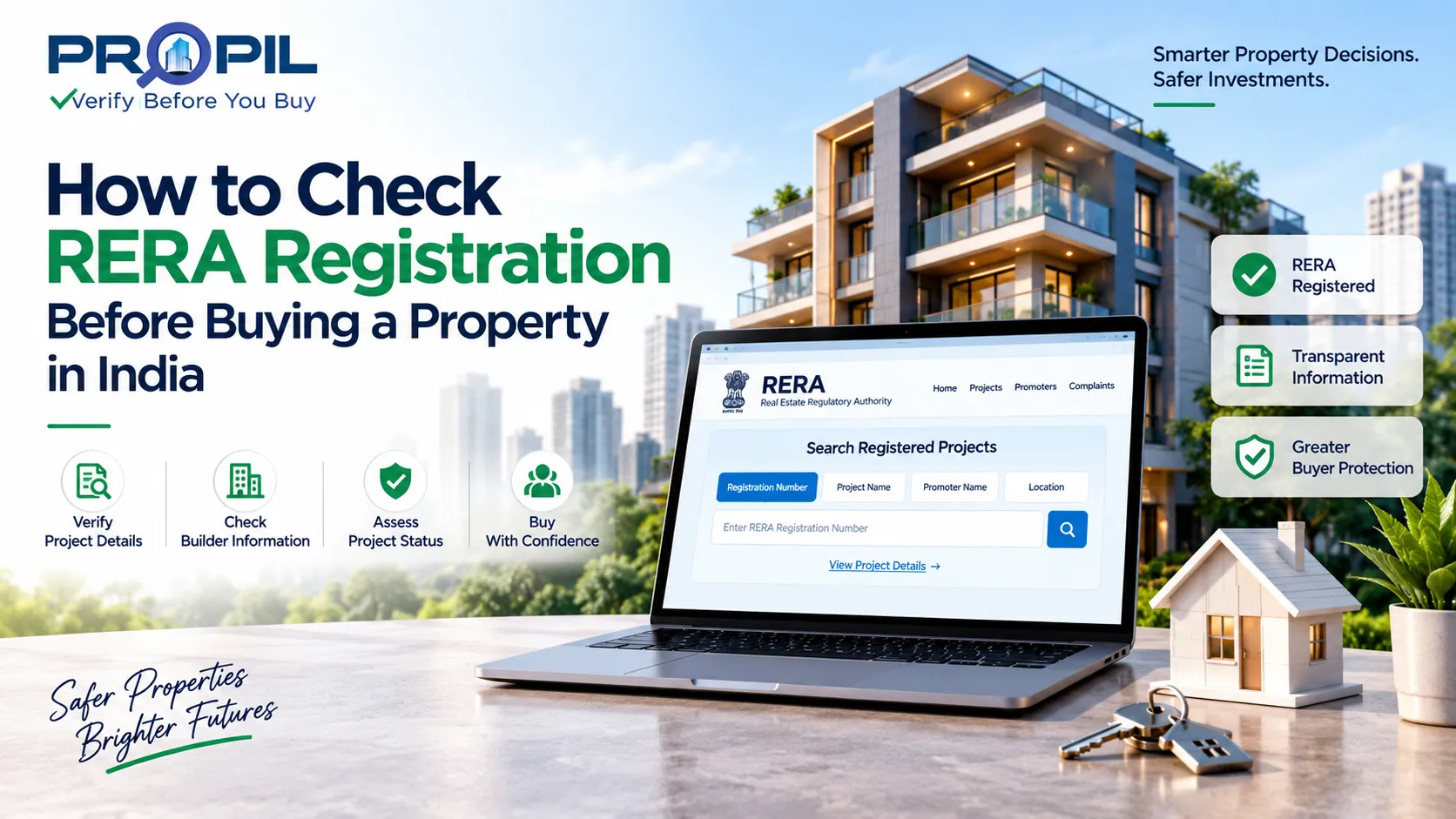


Buying a property because a builder says “RERA registered” is not the same as actually verifying the project. Before paying a booking amount, check the project's RERA registration number on the relevant State/UT RERA portal, confirm the project and promoter details, review available disclosures and status, and compare them with the documents and promises given by the seller. Under the RERA Act, covered projects generally require registration before being advertised, marketed, booked or sold, subject to statutory exemptions.
RERA verification is an important step but it is not a substitute for complete property verification.
What Is RERA Registration and Why Does It Matter Before Buying Property?
RERA registration is the registration of a covered real estate project with the applicable Real Estate Regulatory Authority under the Real Estate (Regulation and Development) Act, 2016. It creates a regulatory record for the project and provides buyers with access to information that can be used during due diligence.
The RERA Act was introduced to regulate and promote the real estate sector, improve transparency and protect consumers.
For a buyer, RERA verification can help answer questions such as:
- Is the project registered?
- What is its official registration number?
- Who is the registered promoter?
- What is the project's registered status?
- What completion information is available?
- Are project details consistent with what the developer is advertising?
Example: A sales representative gives you a RERA number. Instead of accepting it at face value, search that number on the relevant official RERA portal and compare the registered project name, promoter and other details.
Key takeaway: Treat the RERA number as something to verify, not merely something to collect from the builder.
How Do I Check RERA Registration Online?
To check RERA registration online, first identify the State or Union Territory in which the project is located, then use the corresponding official RERA authority's website. Search using the project's registration number, project name or other available fields, and compare the official record with the information supplied by the developer.
The exact interface varies by jurisdiction. For example, UP-RERA provides a dedicated “Verify RERA Registration” facility, while its portal also provides searches for registered projects, promoters, completed projects and other project-status categories.
MahaRERA's official project search allows users to search using the project name or MahaRERA registration number, along with filters such as location, pincode and completion date.
General RERA check process
- Identify the property's state/UT.
- Find the official RERA authority for that jurisdiction.
- Open its project-search or registration-verification facility.
- Enter the RERA registration number supplied by the promoter.
- If necessary, search by project name or other available criteria.
- Open the official project record.
- Compare the information with the builder's documents and advertisements.
- Investigate discrepancies before paying or signing.
Practical application: Save or download the relevant official project information for your due-diligence file.
Key takeaway: Always verify RERA information through the applicable official authority, rather than relying on a screenshot, brochure or sales representative.
How Can I Verify a RERA Registration Number?
Verify a RERA registration number by entering it into the applicable State/UT RERA authority's official search or verification system and checking whether the returned project and promoter details match the property you intend to buy. A number that exists is not enough; the underlying project information must also make sense.
Check:
- Registration number
- Project name
- Promoter/developer name
- Project location
- Project address
- Registered phase, where applicable
- Project status
- Declared completion information
- Available project disclosures
UP-RERA, for example, provides a dedicated registration-number verification page.
Example
Imagine a brochure says:
“ABC Heights — RERA Registered.”
But the official record shows a different promoter or a different project location.
Do not assume the discrepancy is harmless. Ask the developer to explain it and independently verify the documents before proceeding.
Key takeaway: A genuine RERA number must correspond to the correct project not merely exist somewhere in the database.
What Should I Check on the RERA Website Before Buying?
After finding a RERA registration, review the project and promoter information available through the official portal rather than stopping at the registration number. Look for consistency in the project's identity, location, promoter, status, timelines and disclosures, then compare these details with the developer's sales material and contractual documents.
Depending on the State/UT portal, information may include:
- Project name and location
- Promoter details
- Registration number
- Project status
- Completion-related information
- Registered project details
- Project documentation
- Extensions or changes
- Complaints or regulatory information, where publicly searchable
For example, MahaRERA's official system provides project searches and separate complaint searches, including searches by project registration number.
A useful buyer rule
If the official RERA record and the builder's sales pitch don't match, pause the transaction until the difference is explained and independently verified.
Key takeaway: RERA verification should involve reading the record, not just checking whether the word “registered” appears.
How Can I Verify a Builder or Promoter Through RERA?
You can use the relevant RERA portal to investigate the registered promoter associated with a project and, where the portal provides the information, review the promoter's other projects, project status and regulatory records. This helps buyers assess whether the developer's claims align with the regulator's available information.
Look for:
- Correct legal/promoter name
- Previous registered projects
- Current project status
- Completion information
- Regulatory actions or available complaints
- Differences between advertised and registered information
UP-RERA, for instance, provides public search categories for registered promoters, registered projects, completed projects, de-registered projects and other project statuses.
Practical application: If you are considering a large investment, don't evaluate only the project's brochure. Investigate the promoter and project history as part of broader due diligence.
Key takeaway: Project verification and promoter verification should go together.
What Are the Red Flags to Look for During a RERA Check?
RERA red flags include a registration number that cannot be verified, mismatched project or promoter information, unexpected project-status differences, inconsistent timelines, or regulatory information that conflicts with the developer's claims. A red flag does not automatically prove fraud, but it should trigger further investigation before you commit funds.
Watch for:
- RERA number cannot be found
- Project name doesn't match
- Promoter name doesn't match
- Location differs from the advertised property
- Project status is inconsistent with sales claims
- Completion information raises unexplained concerns
- Registration appears revoked, withdrawn or otherwise inactive where the portal identifies such status
- Developer refuses to provide documentation supporting its claims
Official portals can distinguish different project statuses. UP-RERA, for example, lists registered, completed, de-registered, abeyance and withdrawn-registration categories.
Key takeaway: A mismatch is a reason to investigate, not a reason to ignore the official record.
Is RERA Registration Enough to Make a Property Safe to Buy?
No. RERA registration is an important regulatory check, but it does not mean that every legal, financial, technical or physical aspect of a property has been independently verified. Buyers should also investigate ownership, title, encumbrances, approvals, land records, construction and the property's actual physical condition.
This is one of the most important distinctions in property due diligence.
RERA verification can answer questions about the project's regulatory registration. It does not automatically replace checks such as:
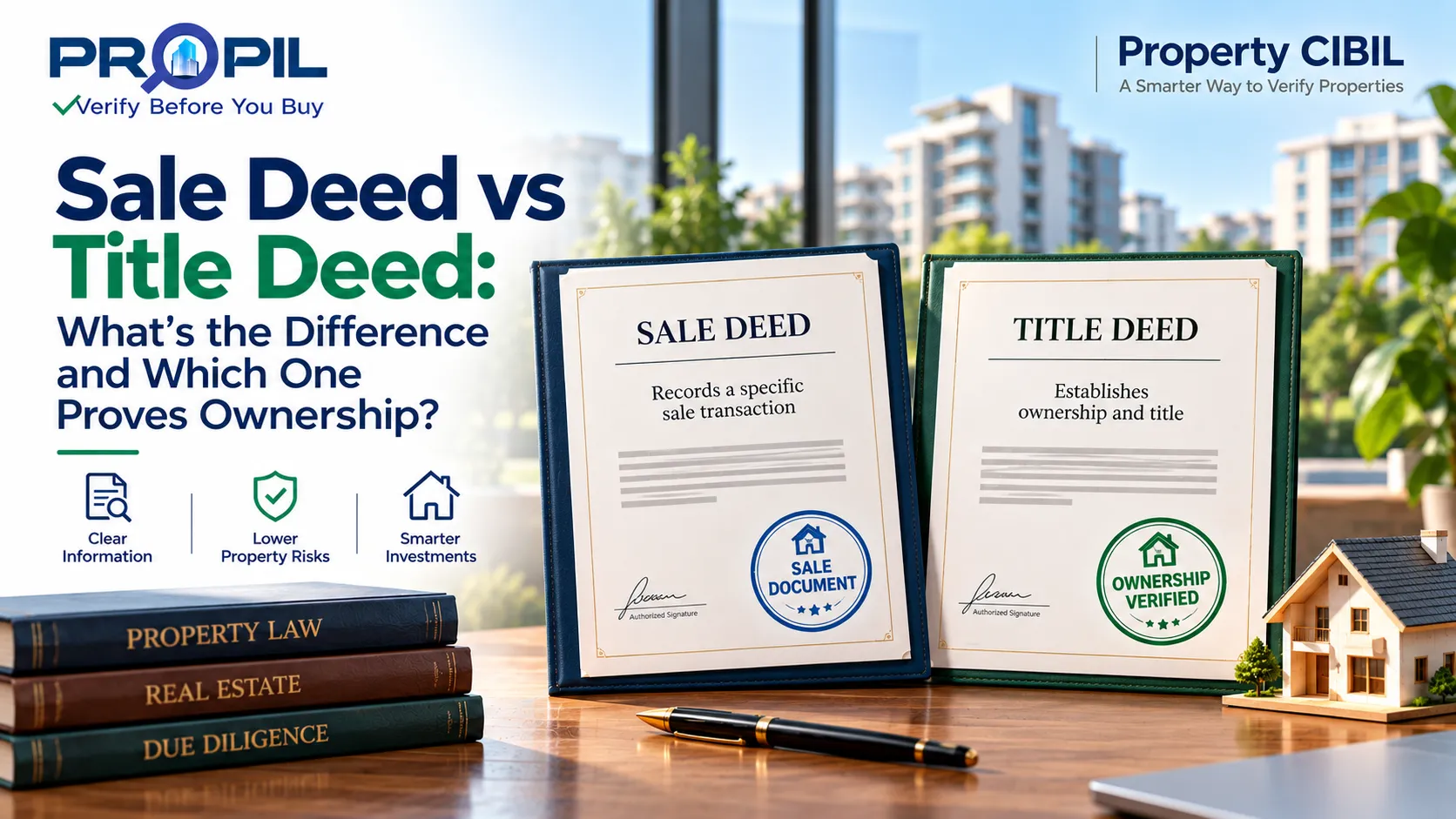
- Title Deed and ownership
- Sale Deed
- Encumbrance Certificate
- Mutation and revenue records
- Approved building plans
- Occupancy Certificate, where applicable
- Completion Certificate, where applicable
- Land use
- Litigation
- Physical boundaries
- Construction quality and actual site condition
The RERA Act itself contains separate provisions dealing with promoter duties, sanctioned plans, title transfer and other obligations, illustrating that registration is only one part of the wider regulatory framework.
Key takeaway: RERA registered ≠ completely risk-free property.
Does Every Property Need RERA Registration?
No. The RERA Act contains statutory exemptions from project registration, including certain projects below specified land-area or apartment thresholds, projects that had received completion certificates before commencement of the Act, and certain renovation or redevelopment projects that do not involve marketing, selling or new allotment. State-specific rules and applicable government notifications also matter.
Under Section 3 of the central Act, one exemption applies where the proposed development does not exceed 500 square metres or eight apartments, subject to the statutory wording and the possibility of lower thresholds being prescribed by the appropriate government.
Therefore, “I can't find this project on RERA” does not automatically mean “this is an illegal project.”
You need to determine whether the project is actually required to be registered.
Practical application: If a developer says registration isn't required, ask for the basis and verify the position under the applicable State/UT rules.
Key takeaway: RERA applicability itself may need verification.
RERA Verification vs Complete Property Verification
RERA verification focuses primarily on the regulatory registration and publicly available project information of a covered real estate project. Complete property verification is broader and may include legal title, ownership, encumbrances, land records, approvals, physical inspection, technical assessment and other risk checks.
| RERA Verification | Broader Property Verification |
| Project registration | Ownership verification |
| Promoter details | Title history |
| Project information | Encumbrance check |
| Project status | Land/revenue records |
| Regulatory disclosures | Litigation check |
| RERA-related records | Physical/site verification |
| Project-specific information | Technical and risk assessment |
This distinction matters especially for NRIs, investors, commercial buyers and businesses, who may be making large investments without being physically present at the property.
Key takeaway: RERA is one layer of due diligence; Property Verification Online should consider the wider risk picture.
What Documents Should You Check Along With RERA?
RERA should be checked alongside the property's legal, financial, government and physical records. The exact document set depends on the property and transaction, but buyers should typically investigate title, transfer documents, encumbrances, applicable approvals, land records and relevant completion or occupancy documentation.
A practical Property Verification Checklist can include:
- RERA registration and project details
- Sale Deed
- Title Deed/document chain
- Encumbrance Certificate
- Mutation Record
- Khata Certificate, where applicable
- Approved building/layout plans
- Occupancy Certificate, where applicable
- Completion Certificate, where applicable
- Relevant municipal approvals
- Land/revenue records
- Litigation/court checks
- Physical property and boundary verification
Example: A project may have valid RERA registration, while a buyer still needs to investigate whether the specific property being sold corresponds with the registered project, sanctioned plans and underlying land/title records.
Key takeaway: Build a document-to-property cross-check, rather than treating every document independently.
How Does RERA Verification Fit Into Property CIBIL's Approach?
RERA verification answers an important project-level question, but Property CIBIL's broader approach is designed around verifying multiple dimensions of a property. The objective is to move beyond a single document or database and create a more structured assessment of legal, financial, technical and property-related risks.
This is where Property CIBIL / PROPIL can become part of the buyer's broader verification process.
A buyer may need to connect:
RERA
→ Project verification
→ Encumbrance Certificate
→ Title and ownership
→ Sale Deed
→ Land/revenue records
→ Land Survey
→ Physical boundaries
→ Approvals
→ Risk assessment
→ Prop Map
Instead of asking only:
“Is this property RERA registered?”
the better question is:
“What evidence do I have that this property is legally, technically and physically what the seller says it is?”
That is the philosophy behind Property Verification Online.
Key takeaway: RERA verification is a valuable input; comprehensive property verification connects that input with the rest of the property's risk profile.
Common Mistakes Buyers Make During RERA Verification
The most common mistakes are checking only the RERA number, relying on screenshots supplied by the developer, ignoring project-status information, failing to compare official records with sale documents, and assuming RERA registration replaces legal due diligence.
Avoid these mistakes:
- Checking only the registration number
- Using a non-official website as the final source
- Not checking the promoter name
- Ignoring project location
- Not reviewing project status
- Ignoring changes or extensions
- Assuming RERA registration guarantees clear title
- Skipping the Encumbrance Certificate
- Skipping physical verification
- Paying a large advance before completing due diligence
Key takeaway: The safest workflow is verify → cross-check → investigate → then commit.
Key Takeaways
- RERA verification should happen before booking or purchasing a covered real estate project.
- Use the official State/UT RERA authority to check registration.
- Verify the RERA number, project name, promoter and location.
- Review available project status and regulatory information.
- A RERA registration number should correspond to the actual project you intend to buy.
- Not every project necessarily requires registration; statutory exemptions exist.
- RERA registration does not replace title, ownership, EC, land-record, approval or physical verification.
- For high-value transactions, use a broader Property Verification Checklist and consider professional legal/technical advice.
Frequently Asked Questions
How do I check RERA registration before buying a property?
Go to the official RERA authority website for the state/UT where the project is located. Search using the RERA registration number, project name or available search fields and compare the official record with the developer's documents.
How do I verify a RERA registration number?
Enter the registration number into the applicable official RERA verification/search facility. Confirm that the project name, promoter and location correspond to the property you are considering. UP-RERA, for example, provides a dedicated registration-number verification facility.
Is RERA registration enough to buy a property?
No. RERA verification is one part of due diligence. Buyers should also verify title, ownership, encumbrances, approvals, land records, litigation and the property's physical condition.
Can I buy a property that is not RERA registered?
It depends on whether the project falls within a statutory exemption or another applicable category. Section 3 of the RERA Act specifies circumstances in which project registration is not required.
What should I check on the RERA website?
Check the project registration number, project name, promoter, location, status, completion information and other available project disclosures. Where available, also investigate relevant complaints or regulatory records.
Can an NRI verify RERA registration online?
Yes. An NRI can use the applicable State/UT RERA portal to conduct online project verification, although additional legal, title and physical due diligence may be particularly valuable when the buyer cannot inspect the property personally.
Does RERA verify property ownership?
RERA registration provides regulatory/project information, but buyers should not treat RERA registration as a substitute for independent title and ownership verification.
Conclusion
RERA verification is one of the smartest first checks a property buyer can perform but it should never be the last.
A registration number can tell you that a project has a regulatory record. Your broader due diligence should establish whether the project, promoter, land, documents, approvals and physical property all tell the same story.
Before you invest, verify the project, verify the documents, verify the property.
Verify Before You Buy. Invest With Confidence.
Property CIBIL by PROPIL helps bring broader property verification into one structured process going beyond a single RERA check to support a more comprehensive view of property-related risks.


























Sign in to leave a comment.