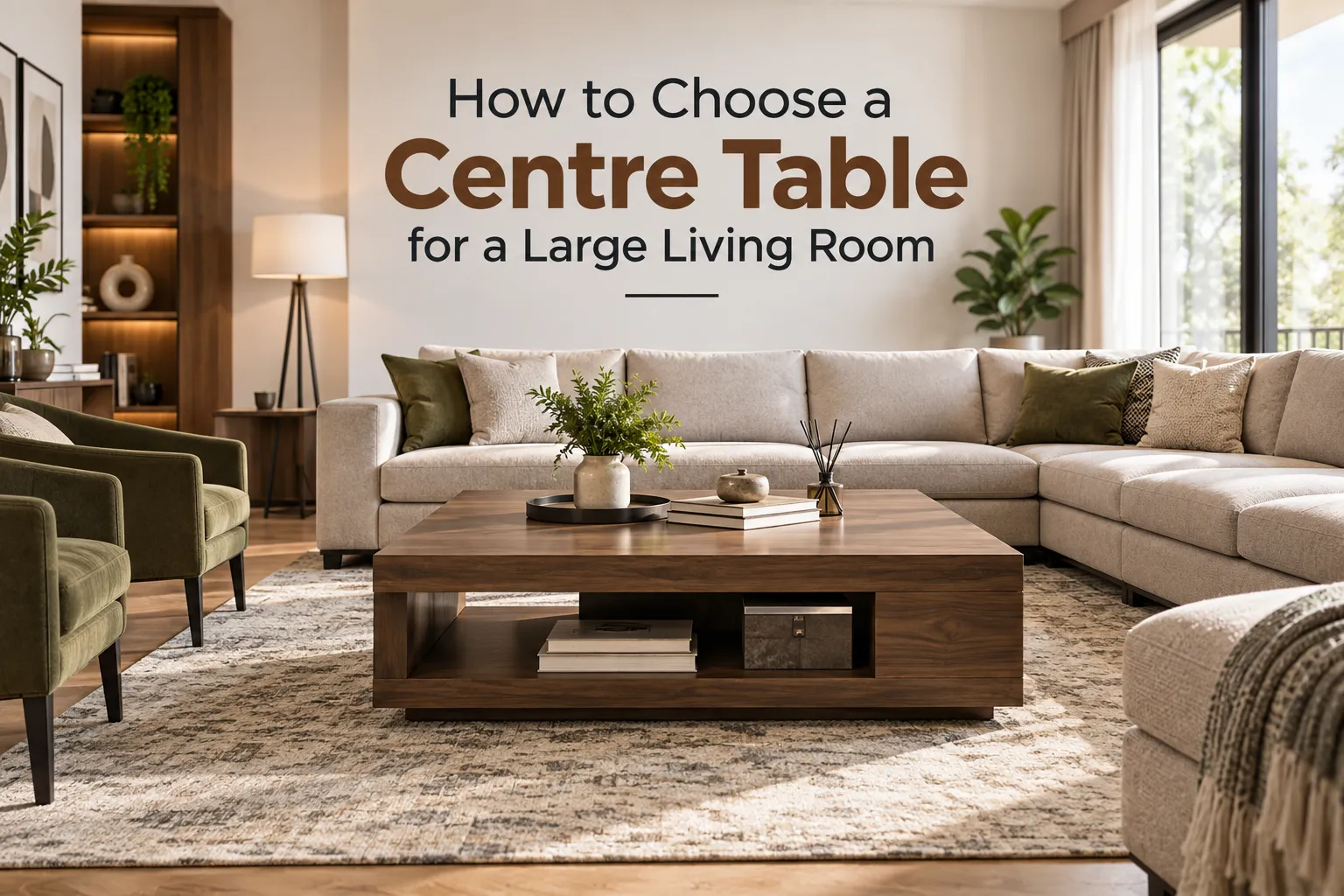

A large living room gives you plenty of freedom when it comes to furniture, but choosing the right pieces can still be challenging. A centre table is one of the most important elements in a living room because it connects the seating area, provides a practical surface, and adds to the overall appearance of the space. In a large room, however, a table that is too small can look out of place, while an oversized table can make movement difficult.
The right centre table should balance size, proportion, functionality, material, shape, and design. It should complement your sofa without taking over the room and provide enough surface area for everyday use.
Here is a practical guide to help you choose a centre table that works well in a large living room.

1. Start With the Size of Your Seating Area
Before choosing a centre table, measure the seating arrangement around which the table will be placed. A large living room may have a three-seater sofa, sectional sofa, accent chairs, or multiple sofas.
The centre table should be proportionate to this seating arrangement. A very small table placed in front of a large sectional can make the seating area look disconnected. Similarly, an extremely large table can make the room feel crowded.
Measure the length and width of the seating zone rather than looking at the entire room. This gives you a better idea of how much table space you actually need.
As a general approach, the table should have enough presence to visually connect the seating pieces while leaving comfortable walking space around it.
2. Choose the Right Centre Table Shape
The shape of your centre table can influence both the appearance and functionality of a large living room.
Rectangular Centre Tables
Rectangular tables work particularly well with long sofas and large sectional seating. They provide a generous surface area and create a structured appearance.
They are suitable if you frequently use the table for serving snacks, keeping books, placing decorative objects, or storing everyday items.
Square Centre Tables
A square centre table can work well when your seating arrangement surrounds the table from multiple sides. It can create a balanced and symmetrical appearance.
For a large living room with a spacious central seating arrangement, a square design can help fill the area without making the furniture arrangement look scattered.
Round Centre Tables
Round tables can soften a room that contains many straight lines. They also work well when there are chairs or sofas positioned around the table.
Another benefit is easier movement around the table because there are no sharp corners. This can be useful in living rooms where people frequently walk through the seating area.
Oval Centre Tables
An oval table combines some of the advantages of rectangular and round designs. It offers a relatively large surface while maintaining softer edges.
The best shape ultimately depends on your sofa configuration, room layout, and preferred interior style.
3. Consider the Distance Between the Sofa and Table
Size is not the only measurement that matters. The space between your sofa and centre table is equally important.
There should be enough room for people to sit comfortably, stretch their legs, and move around the table. At the same time, the table should not be positioned so far away that it becomes difficult to reach.
Before buying, use your existing furniture to mark the approximate table dimensions on the floor. You can use masking tape or temporary objects to visualize the footprint.
This simple exercise can help you understand whether the proposed centre table will fit naturally within the seating arrangement.
4. Think About the Table Height
The height of the centre table should relate to the height of your sofa seating.
A table that is significantly higher than the sofa seat can feel uncomfortable and visually dominant. A table that is extremely low may be difficult to use for everyday activities.
Look at the height of your sofa cushions and armrests before selecting a table. The goal is to create a comfortable relationship between the table and seating rather than choosing the table based only on its appearance.
For a large living room, this becomes especially important because furniture is more visible from different angles and distances.
5. Choose a Material That Matches Your Interior
The material of your centre table can influence the overall character of the living room.
Wood
Wooden centre tables are versatile and work with many interior styles. They can add warmth and a natural appearance to a large living room.
If your room already has wooden furniture, shelves, cabinets, or flooring elements, a wooden centre table can help create visual consistency.
Glass
Glass-top centre tables can make a large space feel visually lighter. They are useful when you want the table to provide functionality without appearing too heavy.
However, glass requires regular cleaning because fingerprints and dust can be more noticeable.
Metal
Metal can provide a contemporary and structured appearance. It can work particularly well in modern or industrial-style interiors.
Combination Materials
Tables combining wood with metal or glass can provide a more distinctive look. These designs allow you to combine the warmth of one material with the clean appearance of another.
When selecting a material, consider not only the design but also cleaning requirements, durability, household usage, and the other furniture in the room.
6. Look for Useful Storage
A large centre table does not have to be purely decorative. Storage can make it more useful for everyday living.
Consider designs with drawers, shelves, cabinets, or lower compartments if you need additional space for items such as remote controls, books, magazines, coasters, or small accessories.
However, avoid selecting a table simply because it has more storage. Think about what you actually need to store.
Open shelves can make frequently used items easy to access, while drawers can keep smaller objects hidden and help maintain a cleaner appearance.
7. Match the Centre Table With Your Sofa
Your centre table does not necessarily need to match your sofa exactly, but the two should look coordinated.
For example, a neutral sofa can work with a wooden table that introduces warmth and texture. A contemporary sofa can be paired with a table featuring clean lines and a minimal design.
Pay attention to:
- Sofa colour
- Upholstery texture
- Furniture finishes
- Flooring
- Wall colours
- Existing wooden elements
- Decorative accessories
The centre table should feel like part of the same design scheme rather than looking like a separate piece of furniture.
8. Consider the Overall Room Layout
A large living room often contains multiple furniture zones. You may have a television area, reading corner, seating arrangement, display unit, or dining area nearby.
The centre table should support the main seating zone without blocking movement between these areas.
Think about how people enter and leave the room. Identify the main walking paths and avoid placing a table where it creates an obstruction.
A beautiful centre table will not be useful if people constantly have to walk around it.
9. Choose a Design That Fits Your Interior Style
The centre table should complement the overall design language of the room.
For a modern interior, consider clean lines, simple finishes, and minimal detailing. A traditional room may work better with wooden finishes and more decorative details.
If your living room already contains several statement pieces, a simpler centre table may create better balance. If the rest of the furniture is minimal, the centre table can become a visual focal point.
The goal is not to make every furniture piece identical. Instead, choose pieces that share complementary colours, materials, shapes, or finishes.
10. Think About Everyday Use
Consider how your family actually uses the living room.
If the centre table is mainly decorative, you may prioritize design and proportions. If it is used every day for snacks, drinks, books, laptops, or games, functionality becomes more important.
Families with children may prefer designs with rounded edges. Homes with frequent guests may benefit from a larger surface area.
Your lifestyle should influence the design you choose just as much as the appearance of the table.
11. Avoid Making the Table Too Large
A common mistake in a large living room is assuming that a bigger room automatically requires the biggest possible centre table.
A large table can dominate the seating area and reduce the sense of openness. It may also make cleaning and movement more difficult.
Instead of filling every available space, aim for proportion. The centre table should have enough visual weight to anchor the seating arrangement while leaving the room comfortable and functional.
12. Consider Maintenance Before Buying
The centre table is likely to experience regular use, so maintenance should be part of your decision.
Think about how easily the surface can be cleaned and whether the finish shows dust, fingerprints, scratches, or stains.
If the table will be used frequently, a practical finish may be more suitable than a highly delicate decorative surface.
Also consider whether the table has accessible corners and surfaces that are easy to clean. A stylish design that requires excessive maintenance may not be ideal for everyday use.
13. Use the Centre Table to Balance the Room
In a large living room, furniture can sometimes feel spread out. A well-chosen centre table can visually bring the seating arrangement together.
For example, a large rectangular table can connect a sectional sofa with nearby chairs. A round table can create a central focal point in a seating arrangement with furniture placed around it.
You can further enhance the table with a tray, a few books, a decorative bowl, or a small plant. Keep the arrangement simple so the table remains functional.
Final Thoughts
Choosing a centre table for a large living room is mainly about finding the right balance between proportion, comfort, functionality, and design. The table should suit the size of your seating arrangement, provide enough usable surface, complement your existing furniture, and allow people to move comfortably around the room.
Start by measuring your seating area and identifying the available space. Then consider the table's shape, height, material, storage, maintenance requirements, and overall design. Most importantly, think about how the table will be used in your everyday life.
A well-chosen centre table can do more than fill an empty space. It can connect the furniture, improve the functionality of the seating area, and give your large living room a more balanced and finished appearance.

























Sign in to leave a comment.