

India added 11 new flying schools this August. Letters of intent handed over at a ceremony in Delhi, seven airports involved, roughly 750 new cadet seats expected once they're operational. That brings the country's approved training organisations to 41, and the number of flying schools in India keeps climbing every year. Sounds like plenty, until you notice something odd sitting right next to that number. Close to a third of Indian CPL holders still end up doing some or all of their flying abroad, not because Indian training is worse, but because seats at the well-run schools fill up fast and waiting lists stretch for months.
So more schools is genuinely good news. It doesn't solve the actual problem most eighteen year olds face though, which is figuring out which of these 41 options is worth their family's savings and two years of their life. Here's how to actually think about it.
1. Start With What "Flying School" Even Means
Every flying school in India that trains toward a licence has to be a DGCA-approved Flying Training Organisation, FTO for short. That's the legal minimum, not a mark of quality. An FTO gets you access to trainer aircraft, usually Cessna 172s or Piper models, DGCA-approved instructors, and the infrastructure to actually log your required hours. Past that baseline, differences between schools get large fast, and this is where most people stop reading the fine print.
A Commercial Pilot Licence in India needs a minimum of 200 hours of flight time. That total splits into specific categories, pilot-in-command hours, cross-country flying, instrument time, night flying, each with its own minimum. On paper this looks identical everywhere. In practice, how fast you complete those 200 hours, and how well trained you actually are once you do, depends almost entirely on which school you picked.
2. The New Ranking System, and Why It's Only a Starting Point
Since October 2025, DGCA has run a bi-annual ranking of every approved FTO, graded Category A down to C based on safety record, compliance, infrastructure, and student outcomes. The first round that October didn't have a single school reach the top category. The second round this April finally produced one, Avyanna Aviation. Seventeen others landed in Category B, a few well-known names among them.
Useful information. Genuinely didn't exist eighteen months ago. Worth checking before you shortlist anywhere. But treat it as one input, not the whole decision, because a ranking captures compliance and safety data. It says nothing about whether a school's fleet has enough aircraft that you won't spend three months waiting for a slot, or whether their ground school actually prepares you for DGCA's written exams, or whether instructors stick around long enough to build any continuity with students.
3. What Actually Separates a Good School From an Average One
Ask about fleet size relative to student intake first. A school running fifteen students per aircraft moves people through their 200 hours very differently than one running four per aircraft. Weather cancels flights everywhere in India during monsoon months. What matters is how much slack a school has built into its schedule to absorb that.
Ask where the flying actually happens too. Some pilot training institutes in India run the entire program domestically. Others send cadets abroad for the flight-hours phase, commonly South Africa, the US, or New Zealand, then bring them back for DGCA conversion. Neither path is inherently better than the other. What matters is whether the school is upfront about which one you're signing up for, because the two look completely different once you're actually living through them.
Instructor retention is worth asking about directly, and most applicants never think to. High turnover usually means a school is constantly retraining new hires on its own procedures instead of refining how it teaches, and that inconsistency shows up later in how prepared students are.

And ask, plainly, what happens if you fail a stage check or need extra hours past the minimum. Every legitimate school has cadets who need more time somewhere along the way. How a school handles that, transparently with clear costs stated upfront, or vaguely with surprises later, tells you a lot about how they'll treat you generally, not just on that one occasion.
4. Integrated Versus Independent: Two Roads, Same Licence
Broadly you're choosing between two paths. Going independent means enrolling at a flight school on your own, funding it yourself, then job-hunting once you're licensed. Plenty of working pilots took exactly this route, and it remains completely viable today.
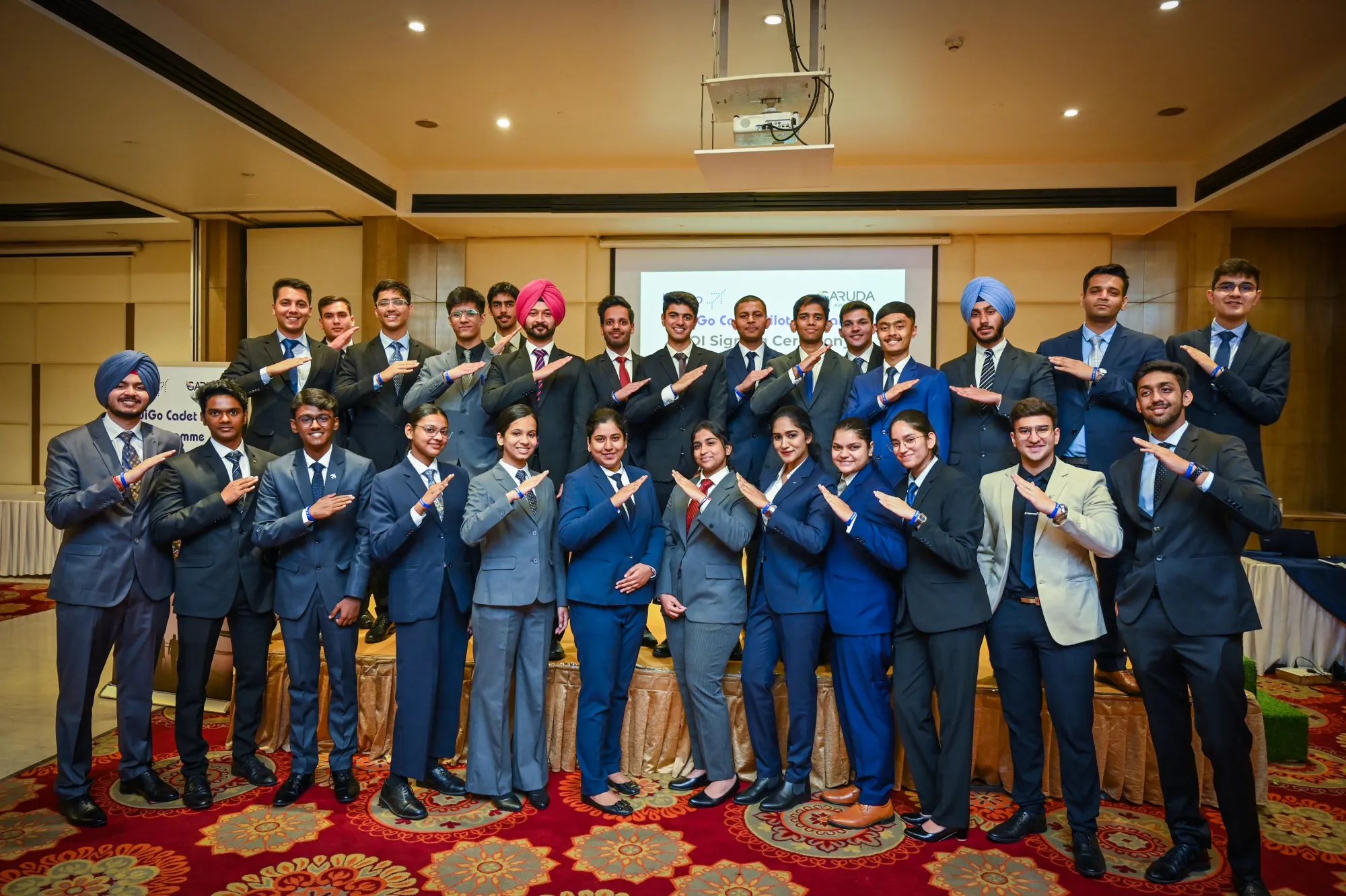
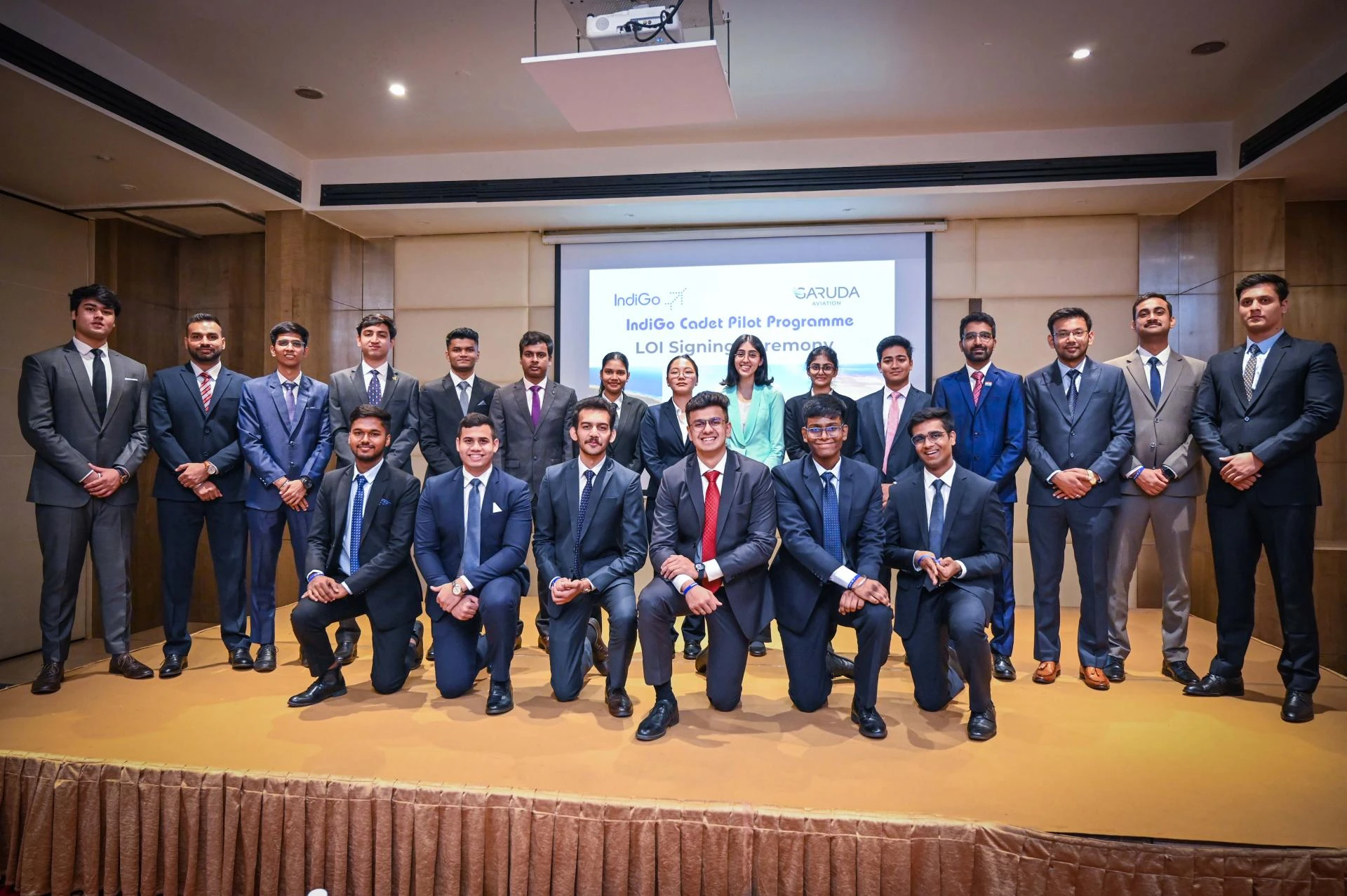
The other option is an airline-partnered cadet program, where an aviation training school runs its curriculum specifically aligned with an airline's own hiring pipeline, sometimes with a type rating and a placement pathway built in from day one. Garuda Aviation runs training this way, structured around IndiGo's cadet pipeline: ground school in Delhi-NCR, flight training abroad, an A320 type rating at the end. The trade-off is straightforward. You get a clearer, more structured road to an airline seat, but you commit to one airline's pipeline instead of keeping every option fully open.
Neither path is objectively the right answer. It depends on whether you already know which airline you want to fly for, how much structure you actually want during your training years, and how you personally weigh flexibility against a clearer runway toward one specific cockpit.
5. What to Actually Do With All This
Whichever flight school in India you're eyeing, shortlist three or four using the DGCA ranking as a first filter, never a final answer. Call each one and ask the fleet, instructor, and stage-check questions above, roughly in that order. Talk to a current or recent student if you can track one down, ideally someone the school's admissions office didn't hand-pick for you. And be honest with yourself about which path, independent or airline-partnered, actually matches what you want from the next two years. A fantastic school on the wrong path for you still leaves you in the wrong place.
The best pilot academy in India isn't the same one for every applicant. It's whichever one's structure, location, and pipeline line up with what you're actually trying to build for yourself.
To see how one structured, airline-partnered pathway works end to end, visit https://garudaaviation.in/



















Sign in to leave a comment.