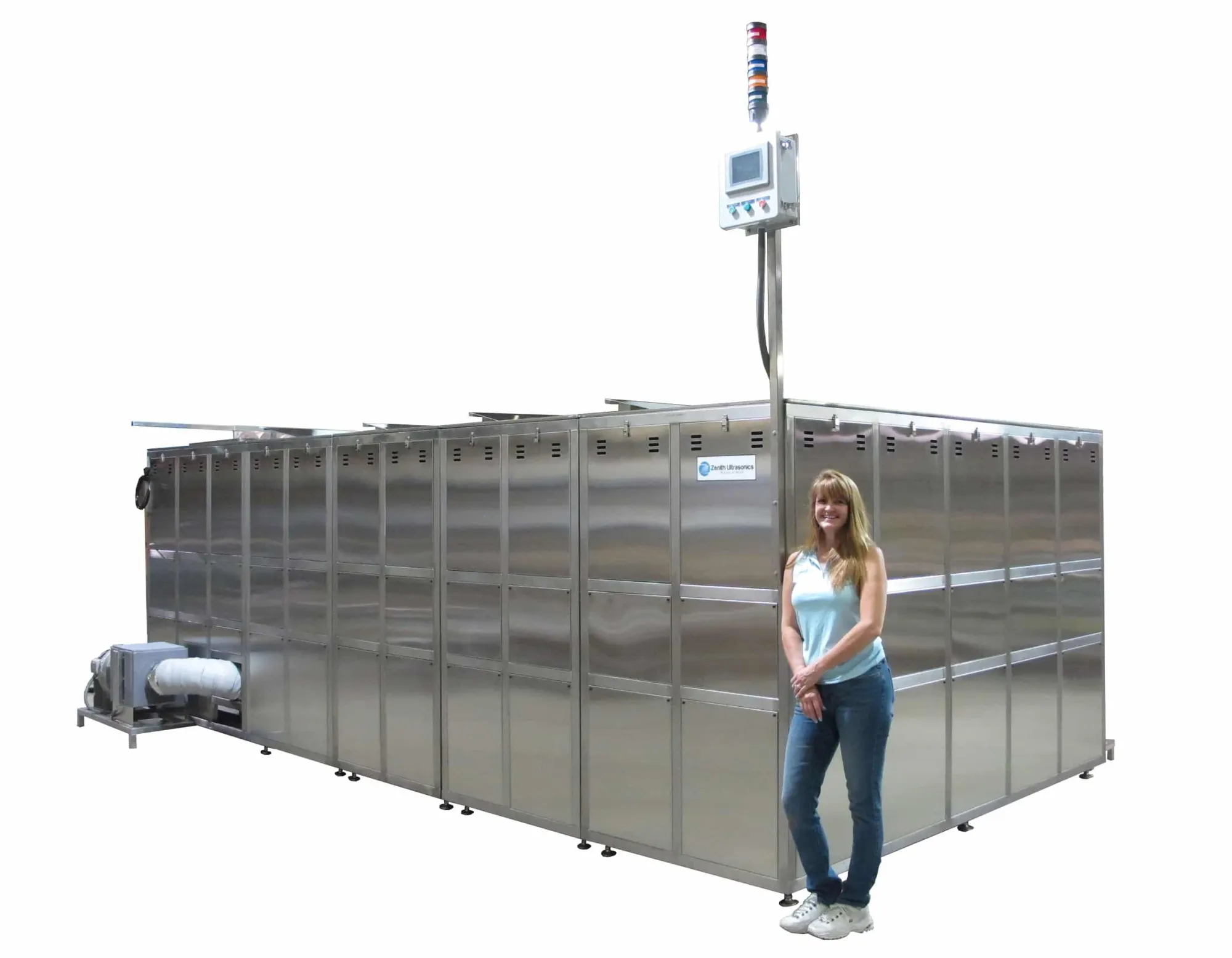

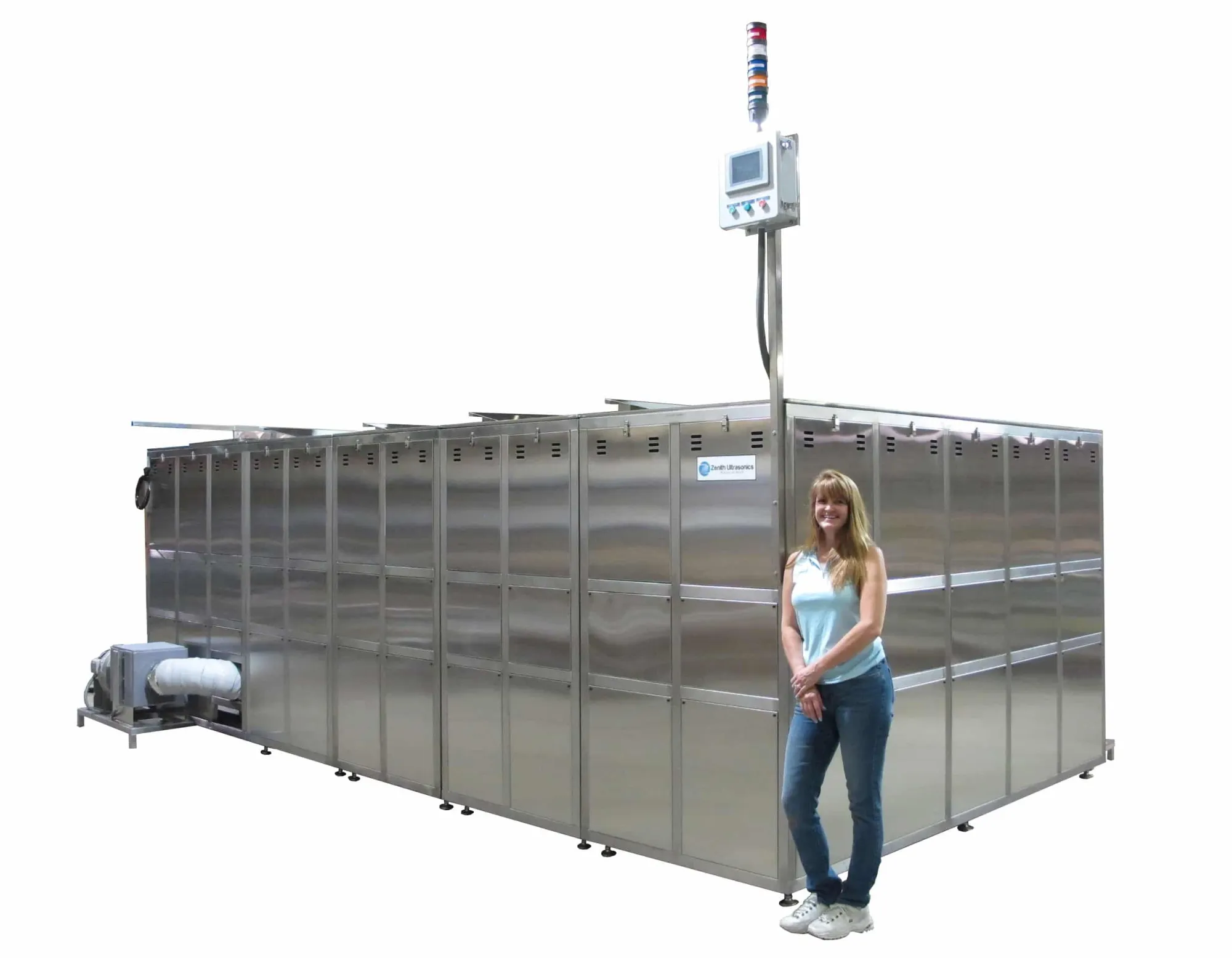
Cleaning oversized industrial parts requires more than simply choosing a larger tank. Part dimensions, contamination, production volume, handling requirements, and the required cleaning process all affect which large ultrasonic cleaner is appropriate for your application.
The right system should provide consistent cleaning while accommodating your parts safely and efficiently. Here are the key factors to consider when selecting a large ultrasonic cleaning system.
1. Start With Part Size and Weight
Tank dimensions should be based on the largest parts you need to clean, including enough clearance for proper loading and ultrasonic activity. Consider the part's length, width, height, weight, and shape.
Heavy components may also require specialized loading equipment or automated material handling. Providing accurate part dimensions and weights helps an equipment manufacturer determine the appropriate tank configuration and handling method.
2. Identify the Contaminants
The type of contamination determines the cleaning process. Machining oils, grease, coolants, carbon deposits, chips, and other industrial soils may require different cleaning chemistry, temperature, ultrasonic power, and processing time.
A system designed around the actual contamination can provide more consistent results than using a standard cleaning cycle for every application.
3. Determine the Required Ultrasonic Power
Large parts have greater surface areas and may contain complex geometries, internal passages, or difficult-to-reach areas. The ultrasonic system must provide sufficient cavitation throughout the cleaning area.
Ultrasonic frequency and power should be selected based on the part material, geometry, contamination, and cleaning requirements rather than relying on tank size alone.
4. Choose the Right Tank Configuration
A single-tank system may be suitable when the application requires one primary cleaning stage. Multi-stage systems can combine cleaning, rinsing, and drying when the process requires additional steps.
For higher production requirements, automated transfer between stages can also reduce manual handling and improve process consistency.
5. Consider Automation and Handling
Oversized parts can be difficult and labor-intensive to move manually. Depending on the component and production environment, an ultrasonic cleaning system may incorporate lifting equipment, automated material handling, or other loading solutions.
Reducing manual handling can also make the cleaning process easier to repeat from one cycle to the next.
6. Evaluate Customization Requirements
Large industrial components do not always fit standard equipment configurations. A custom-engineered system may be necessary when you have unusual part dimensions, high production volumes, specific process stages, or facility limitations.
Before selecting equipment, provide the manufacturer with your part drawings, dimensions, weight, contaminants, production requirements, and desired cleaning results.
Choose a System Around Your Application
The right large ultrasonic cleaner should be designed around the parts and process—not simply selected by tank capacity. Zenith Ultrasonics can evaluate your application requirements and help determine the appropriate system configuration, ultrasonic technology, handling, and process stages.
Need help selecting a system for oversized parts? Contact Zenith Ultrasonics for an application consultation or request a quote.























Sign in to leave a comment.