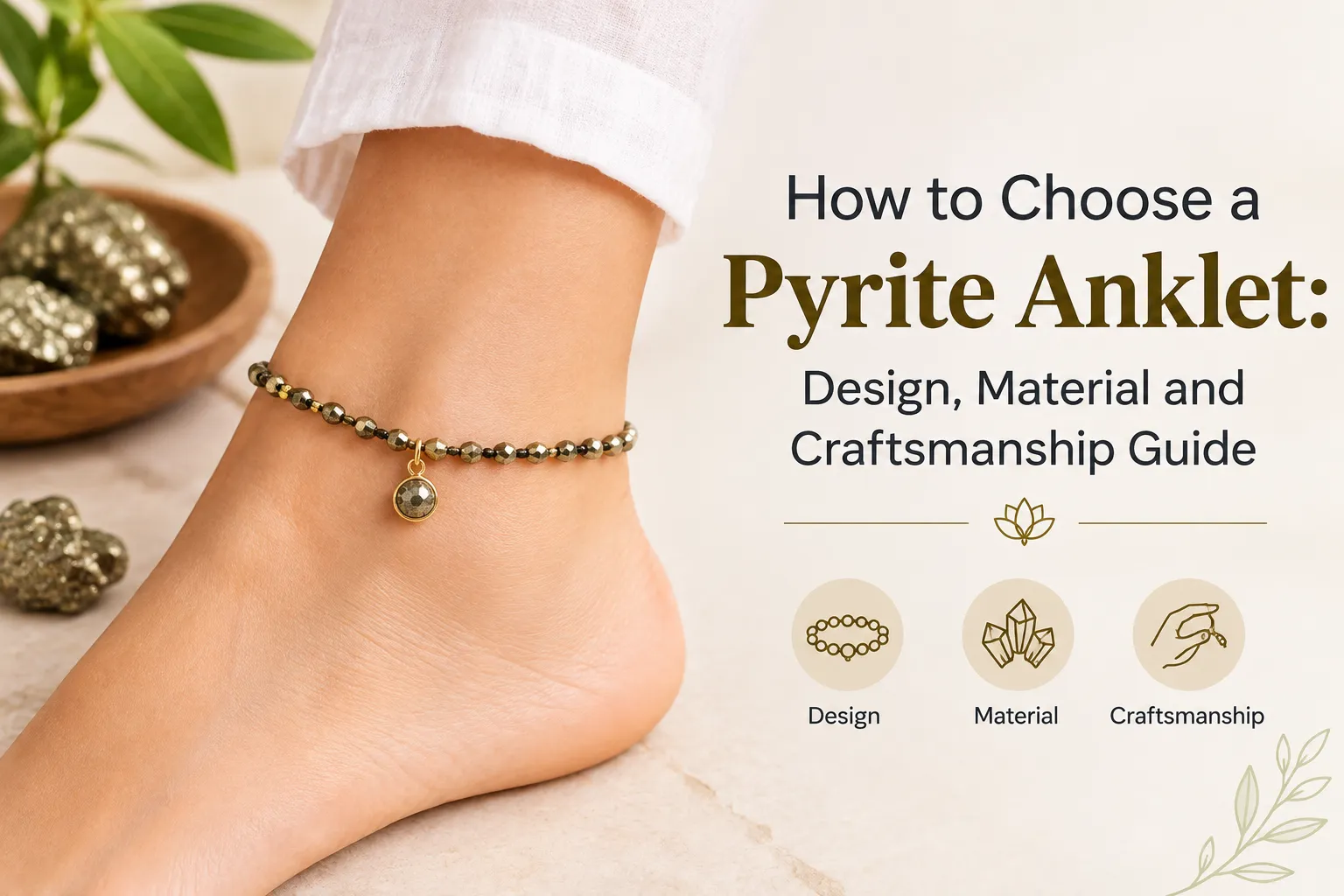

Choosing jewellery is usually about more than appearance. You want something that looks good, feels comfortable, and holds up when you actually wear it. The same applies when choosing a pyrite anklet. With its metallic golden appearance and naturally distinctive texture, pyrite can make an anklet stand out, but the stone is only one part of the equation.
The design, material, construction, and finishing all influence how the final piece looks and feels. Here is what to consider before making your choice.
Start With the Pyrite Itself
Pyrite is known for its brassy, metallic appearance, which is one of its most recognizable characteristics. Natural pieces can show variations in color, texture, shape, and surface.
When choosing an anklet, look closely at the pyrite beads or decorative pieces. They do not necessarily need to look perfectly identical. Natural variation can give the jewellery a more organic character.
If every bead looks exactly the same, the piece may have a highly uniform manufactured appearance. That is not automatically a problem, but understanding the difference can help you choose a style that matches your preference.
Pick a Design That Fits Your Style
Pyrite anklets come in many designs. Some are delicate and understated, while others use larger stones, charms, metal elements, or multiple layers.
For everyday wear, a simple anklet with small pyrite beads can be easy to style with sandals, sneakers, or casual outfits. If you prefer statement jewellery, a design with larger beads or decorative charms can create more visual impact.
Think about your existing accessories too. If you already wear several anklets, a slimmer design may layer more comfortably. If this will be your only anklet, you can choose something more noticeable.
Consider the Base Material
The pyrite may get most of the attention, but the material connecting everything together matters just as much. Anklets can use thread, elastic, chains, beads, or metal components.
A metal chain can create a polished and structured appearance. Thread-based designs may feel more relaxed and lightweight, while stretch constructions can make the anklet easier to put on and remove.
Check the material used for clasps, links, and connectors as well. These smaller components experience regular movement and can affect how long the anklet remains secure.
Pay Attention to Craftsmanship
Good craftsmanship often becomes obvious in the small details. Look at how securely the stones are attached and whether the beads sit evenly along the anklet.
The finishing should feel smooth rather than rough or poorly assembled. If there is a clasp, it should open and close properly without feeling fragile. Metal links should connect cleanly, and decorative elements should not appear loosely attached.
A beautiful stone cannot compensate for weak construction. When jewellery is worn regularly, durability becomes part of its overall value.
Check the Size and Fit
An anklet should sit comfortably without feeling excessively tight or loose. Before buying, check the listed length and compare it with the measurement of your ankle.
If the design has an adjustable chain or fastening, you may have more flexibility with the fit. Stretch styles can also be convenient, but their elasticity and construction should be considered.
Remember that an anklet moves constantly as you walk. A comfortable fit is therefore not just a small detail; it can determine whether you actually enjoy wearing the piece.
Think About Weight
Large natural stones can add weight. While a heavier anklet may feel substantial and luxurious, it may not be comfortable for everyone throughout the day.
If you want something for regular wear, consider smaller pyrite pieces or a design that balances the stones with lighter materials.
For occasional use, you may be more comfortable choosing a bolder design. The right choice depends largely on your routine and how long you intend to keep it on.
Look at the Overall Finish
Pyrite has a distinctive metallic look, so the finishing of the stones can dramatically change the appearance of the anklet. Polished pieces tend to look cleaner and more refined, while rougher pieces can create a natural, earthy aesthetic.
Neither style is automatically better. The important thing is consistency. If the design is intentionally rustic, natural variations can add character. If it is meant to look elegant, uneven or poorly finished components may stand out for the wrong reasons.
Understand the Symbolic Meaning
Pyrite is often associated with abundance, confidence, prosperity, and protection in crystal and spiritual traditions. These are traditional or symbolic associations, not scientifically established effects.
If those meanings are important to you, look for a design that feels personally meaningful. At the same time, choose the anklet based on its actual quality rather than expecting it to guarantee a particular outcome.
The jewellery can represent an intention while still being appreciated for its craftsmanship and appearance.
Final Thoughts
Choosing a pyrite anklet involves more than finding an attractive piece. Consider the quality and appearance of the pyrite, the base material, craftsmanship, size, weight, finishing, and how easily the design fits into your wardrobe.
A well-chosen anklet should feel comfortable, look appealing, and suit the way you actually live. Whether you prefer a subtle everyday design or a bold statement piece, paying attention to these details can help you find jewellery that you will genuinely enjoy wearing.
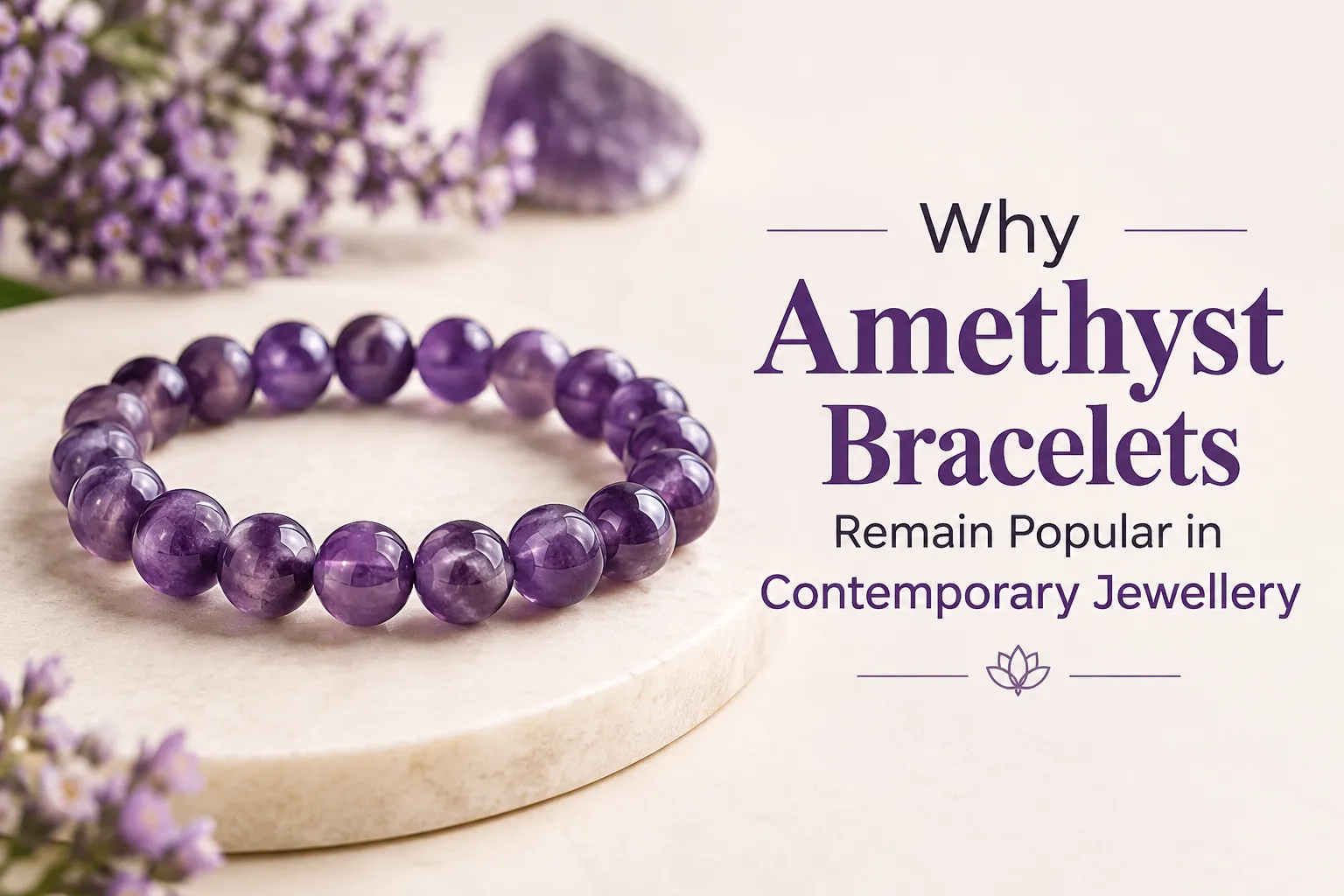
Also read: Why Amethyst Bracelets Remain Popular in Contemporary Jewellery
Frequently Asked Questions
What should I look for when choosing a pyrite anklet?
When choosing a pyrite anklet, consider the quality and appearance of the pyrite itself, the design style, and the base material used. Additionally, pay attention to craftsmanship, size and fit, weight, and the overall finish of the anklet to ensure it meets your personal preferences and comfort.
Is pyrite anklet suitable for everyday wear?
Yes, a pyrite anklet can be suitable for everyday wear, especially if you opt for a simpler design with smaller beads. These designs can easily complement casual outfits like sandals or sneakers, making them versatile accessories for daily use.
How do I ensure the anklet fits comfortably?
To ensure a comfortable fit, check the listed length of the anklet and compare it with your ankle measurement. Look for designs with adjustable chains or stretch styles that can accommodate movement while still feeling secure and comfortable.
Are heavier pyrite anklets comfortable?
While heavier pyrite anklets can feel luxurious, they may not be comfortable for extended wear, especially if you plan to wear them daily. If comfort is a concern, consider lighter designs or smaller stones that won't add excessive weight.
What does pyrite symbolize?
Pyrite is often associated with abundance, confidence, prosperity, and protection in various spiritual traditions. While these meanings can add personal significance to your choice, it's essential to prioritize the anklet's quality and craftsmanship over its symbolic associations.
How can I tell if a pyrite anklet is well-made?
A well-made pyrite anklet will have securely attached stones, evenly placed beads, and smooth finishing. Additionally, check the sturdiness of clasps and connectors, as good craftsmanship is crucial for durability and long-term wearability.
Can I layer pyrite anklets with other jewelry?
Yes, pyrite anklets can be layered with other jewelry, especially if you choose a slimmer design that fits comfortably alongside your existing pieces. Just ensure that the combined weights and styles complement each other for a cohesive look.






















Sign in to leave a comment.