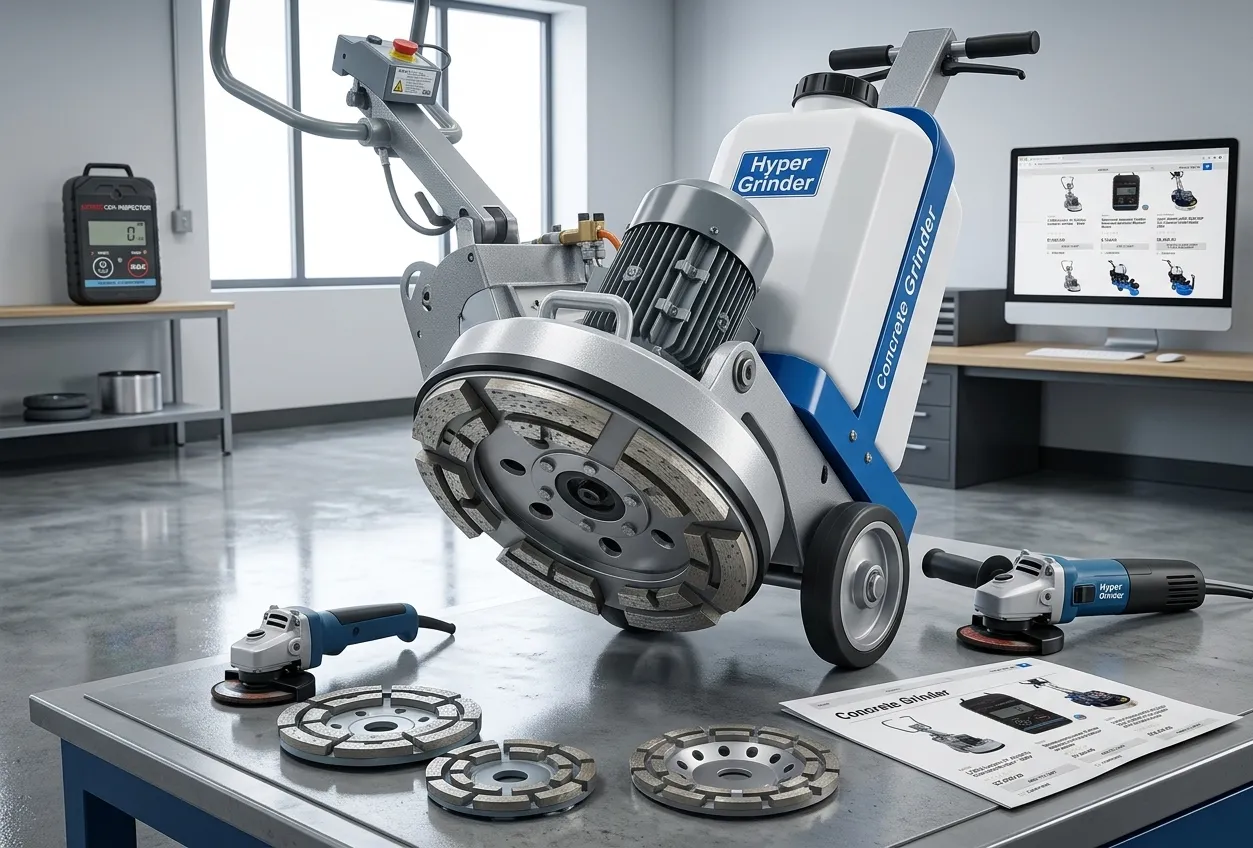

Choosing the right abrasive is an important part of concrete surface preparation. Different concrete surfaces can vary in hardness, condition, coating, and level of wear, so one abrasive may not work equally well for every project. The right combination of equipment and abrasive can help create a more consistent surface while making the grinding process easier to manage. Whether working with a concrete grinder or a larger floor-grinding setup, understanding abrasive selection is essential.

Understand the Concrete Surface First
Before selecting an abrasive, inspect the concrete surface carefully. Look for cracks, coatings, uneven areas, old adhesive, paint, and other materials that may affect grinding. Concrete hardness can also vary from one floor to another.
A concrete floor grinder can be used for different preparation tasks, but the abrasive needs to match the surface condition. A harder concrete surface may require a different diamond bond than softer concrete. Choosing an abrasive without considering the floor can lead to slower grinding or uneven results.
Surface inspection should therefore be the first step before deciding which abrasive to use.
Match Abrasive Hardness to Concrete
Diamond abrasives are commonly selected according to the hardness of the concrete. Softer concrete can be more challenging for certain abrasive configurations because the abrasive may wear differently during grinding. Hard concrete can require an abrasive designed to maintain effective cutting action.
When operating a concrete grinder, the goal is to maintain a suitable balance between cutting performance and abrasive wear. The right selection can help prevent unnecessary replacement of tooling during a project.
Operators should consider the actual concrete condition rather than assuming every floor requires the same abrasive.
Consider Surface Coatings and Residue
Existing coatings can change the grinding process significantly. Paint, epoxy, adhesive, and other materials may require specific approaches before the underlying concrete can be properly prepared.
A concrete floor grinder can help remove surface materials, but the tooling should be appropriate for the coating or residue being addressed. In some cases, a preliminary removal method may be necessary before conventional concrete grinding begins.
The thickness and type of coating should be evaluated before selecting the abrasive. This can help avoid choosing tooling that becomes clogged or wears unnecessarily quickly.
Choose the Right Abrasive for the Project Goal
Not every grinding project has the same objective. Some projects involve removing surface imperfections, while others focus on creating a suitable profile for a coating or smoothing an uneven surface.
This is where epoxy floor classes can provide useful knowledge for professionals learning about coating preparation. Understanding how concrete surface profiles relate to coating adhesion can help operators recognize why surface preparation matters before an epoxy system is applied.
The abrasive should therefore be selected according to the desired final surface, not simply the type of grinder being used.
Consider Grit Selection
Grit size also influences the grinding process. Coarser abrasives are generally associated with more aggressive material removal, while finer grits can be used later when a smoother finish is required.
When using a concrete grinder, the progression from more aggressive grinding to finer refinement should be planned according to the condition of the floor and the intended finish.
A project involving coating preparation may require a different sequence from one focused only on surface correction. Understanding the final application can help determine which grit progression makes sense.
Think About Equipment Compatibility
Abrasives must be compatible with the grinder being used. Before purchasing tooling, check the grinder's attachment system, dimensions, operating requirements, and manufacturer's recommendations.
A concrete grinder designed for larger areas may use a different tooling configuration from a smaller machine. Selecting the correct abrasive size and attachment system helps ensure that the equipment can operate as intended.
Proper compatibility also reduces the risk of interruptions caused by unsuitable or incorrectly fitted tooling.
Training Can Improve Abrasive Selection
Equipment knowledge is only part of successful surface preparation. Operators also need to understand concrete conditions, surface profiles, coatings, and preparation requirements.
Professional epoxy floor classes can introduce these concepts and help learners understand the relationship between concrete preparation and coating performance. This knowledge can be useful when determining how aggressively a surface should be prepared.
Training does not replace manufacturer instructions or project specifications, but it can help operators make more informed equipment and preparation decisions.
Consider Dust and Worksite Conditions
Grinding produces dust and debris, so worksite conditions should be considered when planning abrasive use. Dust-control equipment and appropriate procedures can help maintain a cleaner work environment and improve visibility during the job.
The performance of a concrete grinder can also be affected by the way the work area is organized. Clear access, suitable ventilation, and appropriate dust management can make the grinding process easier to monitor.
Operators should follow applicable safety requirements and the equipment manufacturer's instructions throughout the project.
Keep Other Equipment in Its Proper Role
Professional surface-care projects can involve several types of specialized equipment. However, each machine has a specific purpose.
For example, the Aircross 300HXR is heated carpet extraction equipment used for carpet cleaning rather than concrete grinding. It should not be treated as an alternative to a concrete floor grinder. Understanding the intended role of each machine helps ensure that the right equipment is used for the right stage of a project.
Likewise, epoxy floor classes may help professionals understand preparation concepts, while grinding equipment performs the physical surface-preparation work.
Final Thoughts
Choosing the right abrasive requires an understanding of concrete hardness, coatings, desired surface profile, grit progression, equipment compatibility, and worksite conditions. A properly selected concrete grinder abrasive can make surface preparation more controlled and consistent.
Professionals should also consider the capabilities of their concrete floor grinder and ensure that the tooling matches the machine and project requirements. Knowledge gained through epoxy floor classes can provide additional understanding of surface preparation, while equipment such as the Aircross 300HXR has a separate role in professional carpet extraction.
Matching the abrasive to the surface and project objective is ultimately the key to a well-planned grinding process.



















Sign in to leave a comment.